
Seasonal and second homes
Mold in seasonal and closed-up Florida homes
You locked up in spring and came back to a musty house. We fix it, even while you're still away.
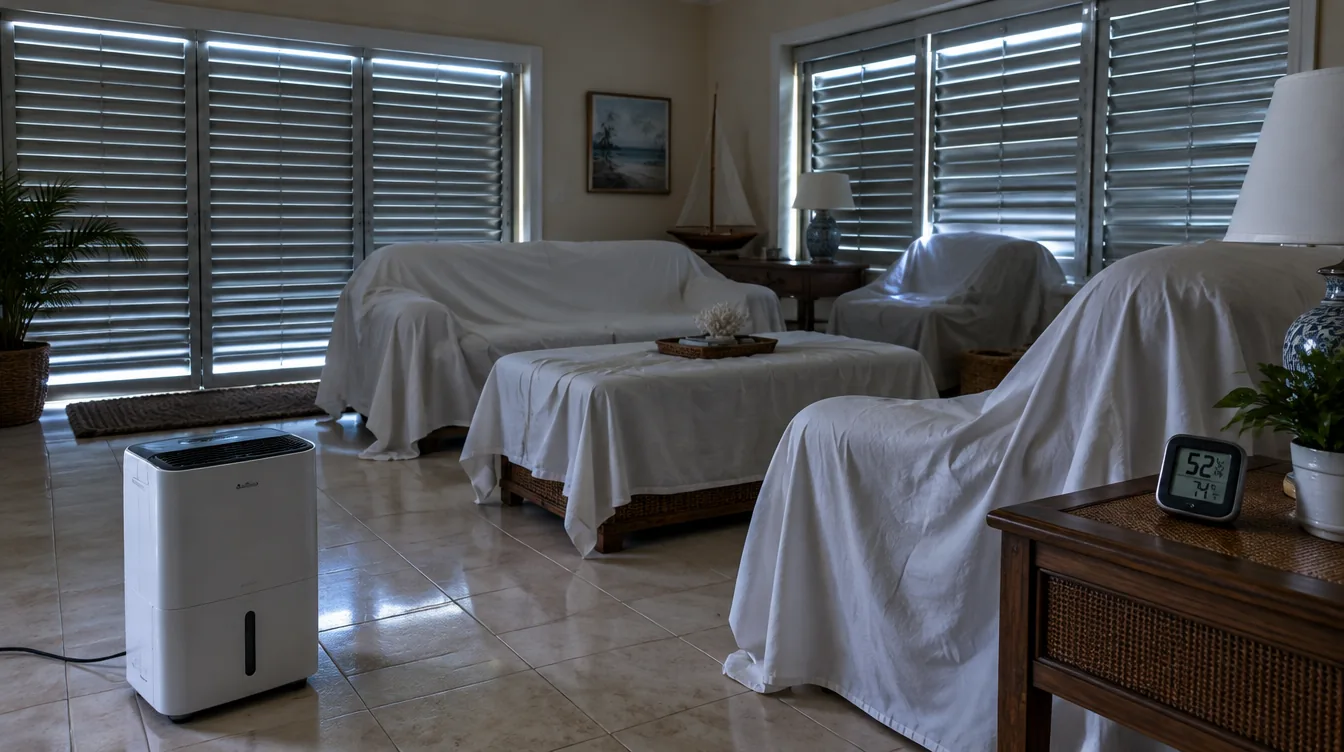
Why does mold grow in a closed-up Florida home?
Mold grows in a closed-up Florida home because humidity builds up when nobody is there to notice. The AC is set high or cycles less, shutters block air and light, and a small leak, a clogged AC drain or a summer storm can go unseen for months. Remediation means finding that moisture source, removing and cleaning what grew, cleaning the AC system if needed, and independent clearance testing before you move back in.
What happens in an empty house over a Florida summer
Many Southwest Florida homes sit empty from late spring to fall, which is exactly when the heat, humidity, rain and storms peak. With nobody home, the AC runs less and the house stops being dried out. Closets, cabinets and rooms with closed doors get little air. A drip under a sink, a backed-up condensate line or a bit of wind-driven rain has months to become a mold problem, and by the time you open the door, it has usually spread past the spot where it started.
Sound familiar?
- You walked in after the summer and the house smelled musty.
- There's growth on furniture, clothes in closets, or leather goods.
- The home-watch service reported high humidity or water, and you're out of state.
- The power went out in a storm while you were away and you don't know for how long.
We do it differently.
| Wipe it down and air it out | AME seasonal home remediation | |
|---|---|---|
| The cause | Assumed to be the humidity | The actual moisture source found and fixed |
| Belongings | Wiped and put back | HEPA cleaned, laundered or set aside by material |
| AC system | Turned back on | Inspected, and cleaned if it's part of the problem |
| Testing | None | Independent licensed assessor, before and after |
| While you're away | Wait until you're back | Coordinated with your home-watch service or manager |

Why families trust us with their homes
-
Family-owned since 2008
A multigenerational family business. Not a franchise, not a private-equity rollup.
-
Trained and certified
Our team holds IICRC, CMR, CRMI and CCMI credentials in mold remediation and inspection.
-
Called on as experts
Attorneys bring us into legal cases involving mold and mycotoxins.
-
Documentation at every step
Photos, moisture logs and lab reports you can hand to your insurer or FEMA.
- IICRC Certified Firm
- CMR
- CRMI
- CCMI
- BBB A+ Accredited
- NAMRI
- IAQA
- NORMI
- AMMA
- PMII
The AME Clearance Method
How we handle a closed-up home, step by step
Seven steps. They work the same whether you're standing in the kitchen or getting updates from out of state.
Talk to a specialist-
Get in and look
We meet you, your home-watch service or your property manager at the house and check every closed room, closet, cabinet and the AC closet.
-
Independent assessment
A licensed Florida mold assessor, independent of us, samples the home and writes the scope, so you know what is growing and how far it spread.
-
Find what went wrong
A leak, an overflowing AC drain, storm water, a power outage or humidity the system couldn't control. It gets fixed before cleaning begins.
-
Dry and contain
Dehumidifiers bring the house down to a normal humidity, and affected rooms are sealed under negative air.
-
Remove, clean and treat
Damaged materials come out. Surfaces are HEPA vacuumed and wiped, and cavities and block are treated with plant-based enzymes.
-
Sort the belongings
Furniture, clothing, linens and leather are cleaned, laundered or set aside for your decision, with photos of each.
-
Independent clearance
The assessor retests. You get the report, photos and a short list of what to change before you leave next time.
What every seasonal home project includes
- A walkthrough of every closed room, closet and cabinet
- Coordination with an independent licensed assessor
- Moisture source investigation and correction
- Dehumidification and moisture readings
- Containment with negative air
- Removal, HEPA cleaning and enzyme treatment
- AC closet and air handler check
- A room-by-room plan for belongings
- Photo updates if you're out of state
- Independent clearance testing
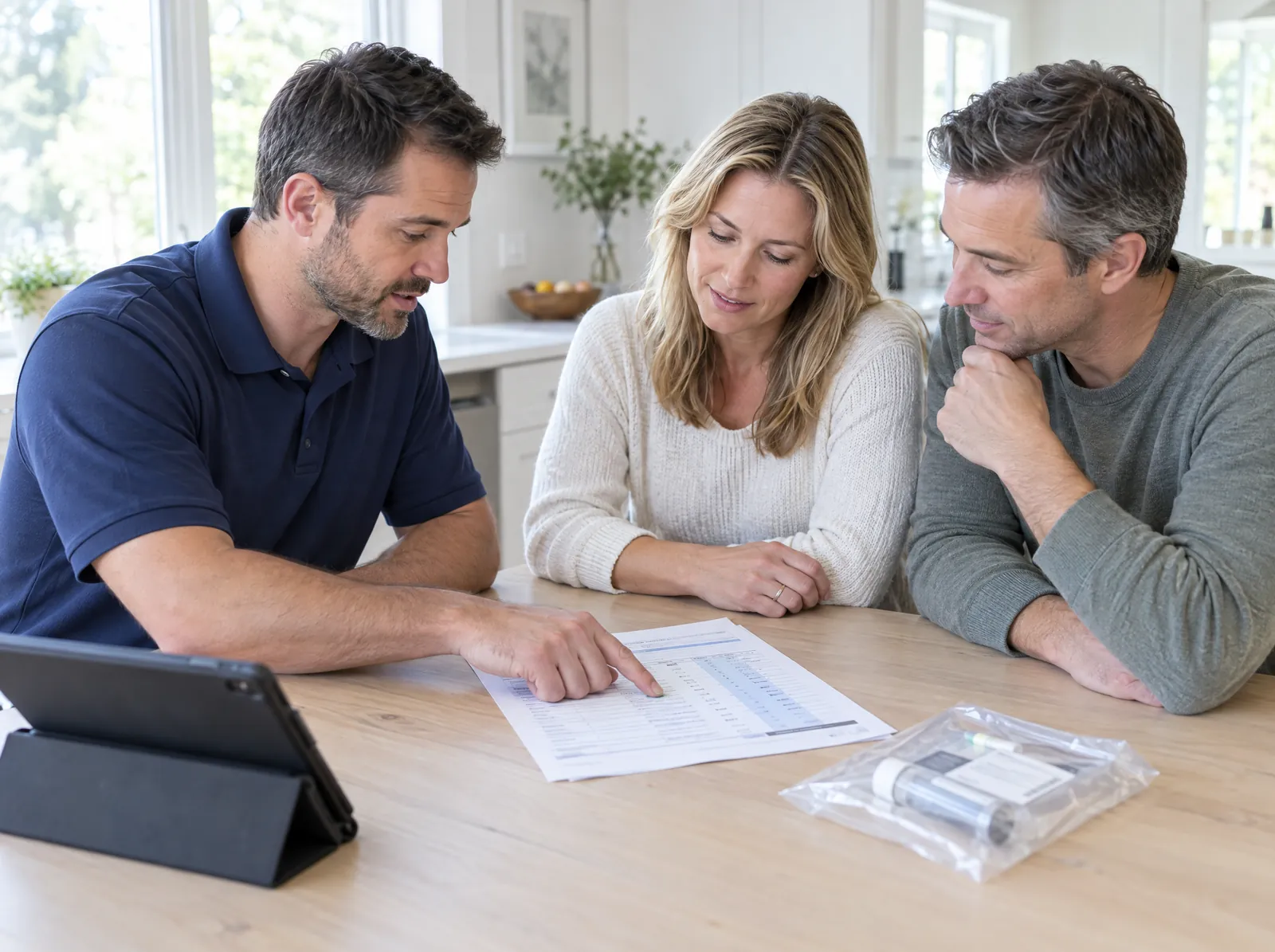
Proof you can hold in your hands
When we finish, you don't get a handshake and a promise. You get the paperwork your family, your doctor, your insurer or your buyer can rely on.
Inspection report
What we found, where it is coming from, with color photos.
Written remediation plan
Scope, timeline and what will and won't be removed, before work starts.
Clearance lab report
Air, surface and mycotoxin results after the work is done.
A report for your doctor
With your permission, we share results directly with your care team.
Protecting a seasonal Florida home, explained
Before you close up for the season
Most closed-up-home mold starts with something small that nobody was there to catch. This checklist covers the causes we see most often:
- Leave the AC running. Set it so it still runs enough to dehumidify. If your system has a humidity setting or a dehumidify mode, use it.
- Put a humidity monitor in the house, ideally one you can check from your phone, and aim to stay below 60 percent, as the EPA recommends.
- Have the AC serviced before you go, including the condensate line, which clogs more easily when nobody is watching the pan.
- Turn off the main water supply, or at least the ice maker and washing machine lines, so a failed hose can’t run for weeks.
- Leave interior doors, closet doors and some cabinet doors open so conditioned air reaches them.
- Don’t leave damp items behind. Towels, beach gear and laundry in a hamper are all mold food.
- Arrange for someone to check the house, especially after a storm or a power outage.
For more detail on settings, see our answers on what humidity to keep your Florida home at and whether hurricane shutters can cause mold.
Where to look when you come back
Walk the house before you unpack, and trust your nose. A musty smell with no visible growth usually means mold is somewhere you haven’t looked yet. Check:
- The AC closet: the floor, the wall behind the air handler and the drain pan
- Closets on exterior walls, including clothes, shoes, bags and anything leather
- Under kitchen and bathroom sinks, and behind the toilet
- Upholstered furniture and mattresses, especially on the side facing a wall
- Window sills and sliding door tracks, where storm rain gets in
- The ceiling, if there was a storm or the roof is older
If what you find goes beyond a few small spots, or you’re not sure where it’s coming from, leave it alone and get it assessed. Cleaning dry growth spreads it, and the source is usually bigger than what shows.
When a storm hits while you’re away
Storms often arrive while seasonal owners are away. Hurricane Ian made landfall in late September 2022, and Helene and Milton came through in September and October 2024, all before many owners had returned for the season. Some homes that took on water or lost power sat for weeks before anyone opened them. If your home was affected, our hurricane and flood mold remediation page explains what a storm job involves.
Running the project from out of state
You don’t have to fly down to get started. Your home-watch service, property manager or a trusted neighbor can let us in. We send photos of what we find, a plan and a written price before any work begins, and updates as it moves along. Decisions about your belongings wait for you, with photos to help you make them.
Testing and clearance are handled independently. Florida licenses mold assessors and remediators separately, and Florida Statute 468.8419 keeps the two roles apart on the same home for 12 months, except for certified Division I contractors. An independent licensed mold assessor inspects and samples the home, writes the scope, and performs clearance testing. We do the remediation to that protocol. When you’re far from home, that matters: the company testing your home has no reason to find more mold than is there, and the company removing it can’t grade its own work.
Common questions
Have a question that isn't here? Call a specialist
Should I turn the AC off when I leave my Florida home for the summer?
Generally, no. The AC is what pulls moisture out of the house, and a Florida home with the AC off can climb to high humidity quickly. Our answer page on leaving your AC on covers settings in more detail.
What humidity should the house stay at while I'm gone?
The EPA recommends keeping indoor humidity below 60 percent, ideally between 30 and 50 percent. A remote humidity monitor lets you or your home-watch service see whether the house is staying there.
Can hurricane shutters cause mold?
Shutters don't cause mold, but a shuttered house gets less light and air movement, and if the AC isn't keeping humidity down, growth can follow. Our answer page on hurricane shutters and mold explains how to close up safely.
What does a home-watch service do, and does it help with mold?
Home-watch services check on empty homes on a schedule, looking for leaks, AC problems, power outages and storm damage. Regular visits can catch a problem early, before it has months to grow.
I just got back and found mold. What should I do first?
Don't scrub or disturb it. Take photos, open the AC closet to look for water, and check under sinks. If the AC smells musty when it starts, turn it off. Then call for an assessment.
Can you do the work while I'm still up north?
Yes. We can work with your home-watch service, property manager or a neighbor for access, send photos and updates as the job moves along, and share the assessor's reports by email.
Will insurance cover mold I find when I get back?
It depends on your policy and the cause. Many policies limit mold coverage. Read the mold or fungi section of your policy and keep every photo and report.
We're done when the lab says so.
Every remediation ends with clearance testing, and our work is backed by a complete-removal guarantee. We don't close a job on a failed result.
Talk to a specialistComing back to a musty house? Let's talk
Tell us where the home is and when you'll be there, or who has the keys. A Southwest Florida specialist will call you back.
Not sure yet? Try the free AI Mold Risk Check