
Is mold common after a hurricane in Florida?
Short answer
Yes. Mold is one of the most common problems after a hurricane, because storms leave homes wet and often without power to run the air conditioning. Mold can start growing within 24 to 48 hours. After Hurricanes Katrina and Rita, a CDC investigation found visible mold in about 46 percent of randomly selected New Orleans area homes it inspected.
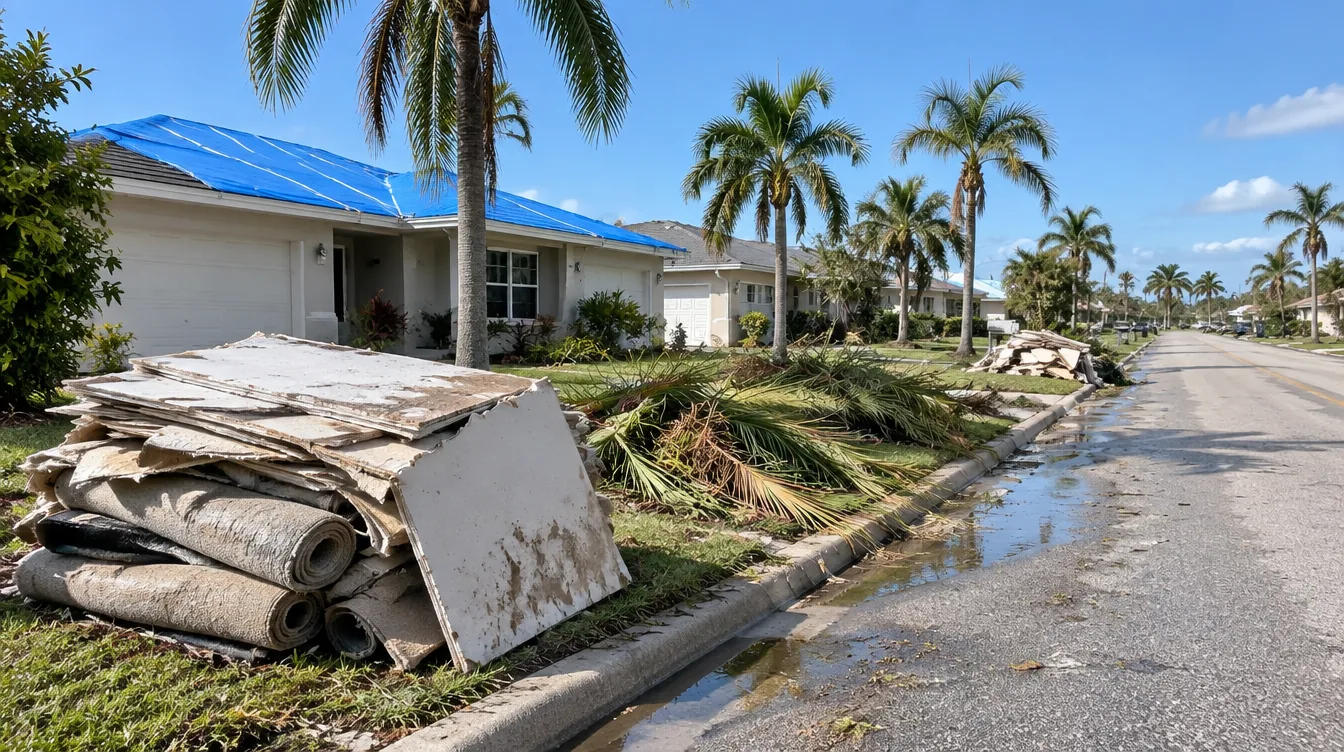
Why hurricanes and mold go together in Southwest Florida
Mold needs moisture, warmth and something to feed on. A hurricane delivers the moisture several ways at once: storm surge, flooding from rain, and wind-driven rain forced through roofs, windows and cracks in stucco. Then the power goes out, so the air conditioning that normally pulls humidity out of a Florida house stops. The heat stays.
Timing makes it worse. Atlantic hurricane season runs from June 1 to November 30, which overlaps the hottest, wettest months here. And after a big storm, every roofer, drying company and remediator in the region is booked, so wet homes wait. Waiting is what turns water damage into a mold job.
What the research shows
The clearest numbers come from the Gulf Coast. In October 2005, after Hurricanes Katrina and Rita, a CDC investigation inspected 112 randomly selected homes in the New Orleans area. Visible mold was growing in 51 of them, about 46 percent, and 19 homes had heavy growth.
In Florida, researchers at the FAMU-FSU College of Engineering’s RIDER center are studying how flood depth and home characteristics relate to mold after hurricanes. Their guidance after Hurricane Milton repeats the same point the EPA makes: mold can begin growing within 24 to 48 hours of water exposure, and Florida’s climate helps it along.
It isn’t only flooded homes
Homes that never took on flood water still grow mold after storms. The common Southwest Florida patterns we see:
- Roof damage under a blue tarp that leaked slowly for weeks into the attic and ceilings.
- Wind-driven rain that soaked a block wall around a window or slider and dried on the outside only.
- A house that was dry but went days without power in August, with humidity climbing indoors.
- Seasonal homes whose owners returned weeks or months after the storm to a house that had been closed up the whole time.
- Homes near canals and bays in places like Cape Coral, Fort Myers Beach, Sanibel and Pine Island, where storm surge reached homes during Ian.
Where it hides in a Florida home
In concrete block homes with tile floors, storm mold is often out of sight. Check the bottom of drywall and behind baseboards, inside lower cabinets, in closets on exterior walls, in the AC closet and around the air handler, and on the back of furniture pushed against walls. A musty smell with nothing visible usually means it’s inside a wall or the AC system.
Mold that grows after a flood can also leave mycotoxins behind in dust and materials, even after the growth is dead. Our page on mycotoxins after hurricane water damage explains why that matters for families with health concerns.
Storms Southwest Florida remembers
- Hurricane Charley, 2004, made landfall near Punta Gorda and Port Charlotte.
- Hurricane Irma, 2017, brought wind and flooding across the region.
- Hurricane Ian, September 2022, came ashore on Cayo Costa, with catastrophic surge in Fort Myers Beach, Sanibel, Pine Island and Naples.
- Hurricane Helene, September 2024, pushed surge along the Gulf coast.
- Hurricane Milton, October 2024, made landfall near Siesta Key, only two weeks after Helene.
Back-to-back storms are hard on houses. A home that was still drying from one storm can take water again before anyone has confirmed the walls are dry, and mold that started after the first event keeps growing through the second.
Insurance and FEMA
Records help. An NFIP flood policy excludes mold caused by failing to inspect and maintain the property after flood water recedes, so dated photos and proof that you started drying quickly matter. FEMA may help with disaster-caused mold in some cases, which we explain in does FEMA pay for mold remediation. Homeowners policies vary widely on mold, so read the mold or fungi section of yours.
What to do now
Speed matters more than anything. Start with our guides on drying out your house after a hurricane and what to throw away after a flood. If the water was more than a small area, or the house sat wet for more than two days, our hurricane and flood mold remediation team can help, with testing and clearance handled by an independent licensed assessor.
We remove mold and mycotoxins from buildings. We don’t diagnose or treat medical conditions. If anyone in the home has symptoms, please work with a doctor. With your permission, we’re glad to share test results and our plan with them.
We're done when the lab says so.
Every remediation ends with clearance testing, and our work is backed by a complete-removal guarantee. We don't close a job on a failed result.
Talk to a specialistWorried about mold after the storm?
Tell us what the water touched and when. A Southwest Florida specialist will call you back.
Not sure yet? Try the free AI Mold Risk Check