
How long after a flood does mold grow?
Short answer
Mold can start growing within 24 to 48 hours of flooding. The EPA says materials dried within that window usually won't grow mold, and the CDC gives the same timeframe. In Southwest Florida, heat, humid air and days without power or air conditioning after a storm work in mold's favor, so treat 48 hours as a deadline. Growth inside walls may not show for weeks.
The 24 to 48 hour window
The EPA puts it simply: if wet or damp materials are dried within 24 to 48 hours of a leak or spill, in most cases mold will not grow. The CDC gives the same advice for floods: clean up and dry the home fully and quickly, within 24 to 48 hours. That’s the whole window. After it closes, you should assume mold has started somewhere, even if you can’t see it.
Mold spores are already present in every home and in the outdoor air. They don’t need to arrive with the flood water. They only need the water to stay long enough to start growing.
Why Southwest Florida moves faster
- Heat and humid air. Southwest Florida’s rainy season runs from mid-May to mid-October, which overlaps most of hurricane season. Wet materials in a warm, humid house have little chance to dry on their own.
- No power, no AC. After Ian, Helene and Milton, many homes went days without electricity. Air conditioning is what normally pulls moisture out of a Florida house, and without it indoor humidity climbs quickly.
- Block walls. Concrete block soaks up water and releases it slowly, so the drywall over it can stay damp long after the room looks dry.
- Waiting for help. After a regional storm, every crew is booked at once. The delay, more than the water itself, is what turns a flood into a mold job.
A realistic timeline
| When | What’s happening | What to do |
|---|---|---|
| First hours | Materials are soaking up water. Mold hasn’t started yet. | Make sure it’s safe, shut off power to wet areas, photograph everything, start removing water. |
| Day 1 to 2 | The EPA and CDC drying window. Growth can begin at the end of it. | Get wet carpet, pad and soaked belongings out. Run dehumidifiers once you have power. Call your insurer. |
| Day 3 onward | Assume growth has started on anything still wet, often out of sight first. | Flood-soaked drywall and insulation generally have to come out. Get moisture readings, not just a visual check. |
| Weeks later | Hidden growth inside walls, behind cabinets or in the AC shows up as a musty smell, stains or spotting. | Have the home assessed before walls are closed up or the AC runs for long. |
For the full prevention checklist, see our national page on how to prevent mold after a flood, and for the Florida drying steps, how to dry out your house after a hurricane.
Flood water is not a normal leak
Storm surge and flood water carry soil, sewage and bacteria. Porous materials they soak into, like drywall, insulation, carpet and pad, generally can’t be dried and kept, no matter how fast you act. Drying fast still matters, because it protects the framing, block and slab, and it limits how far growth spreads before those materials come out.
Where late mold hides
If your home flooded weeks or months ago and seemed fine, check the places water lingers: the bottom of walls behind baseboards, inside base cabinets, under vinyl or laminate flooring, closets on exterior walls and the AC closet. The EPA advises not running an HVAC system you suspect is contaminated with mold, since it can spread it through the house.
What about homes on stilts?
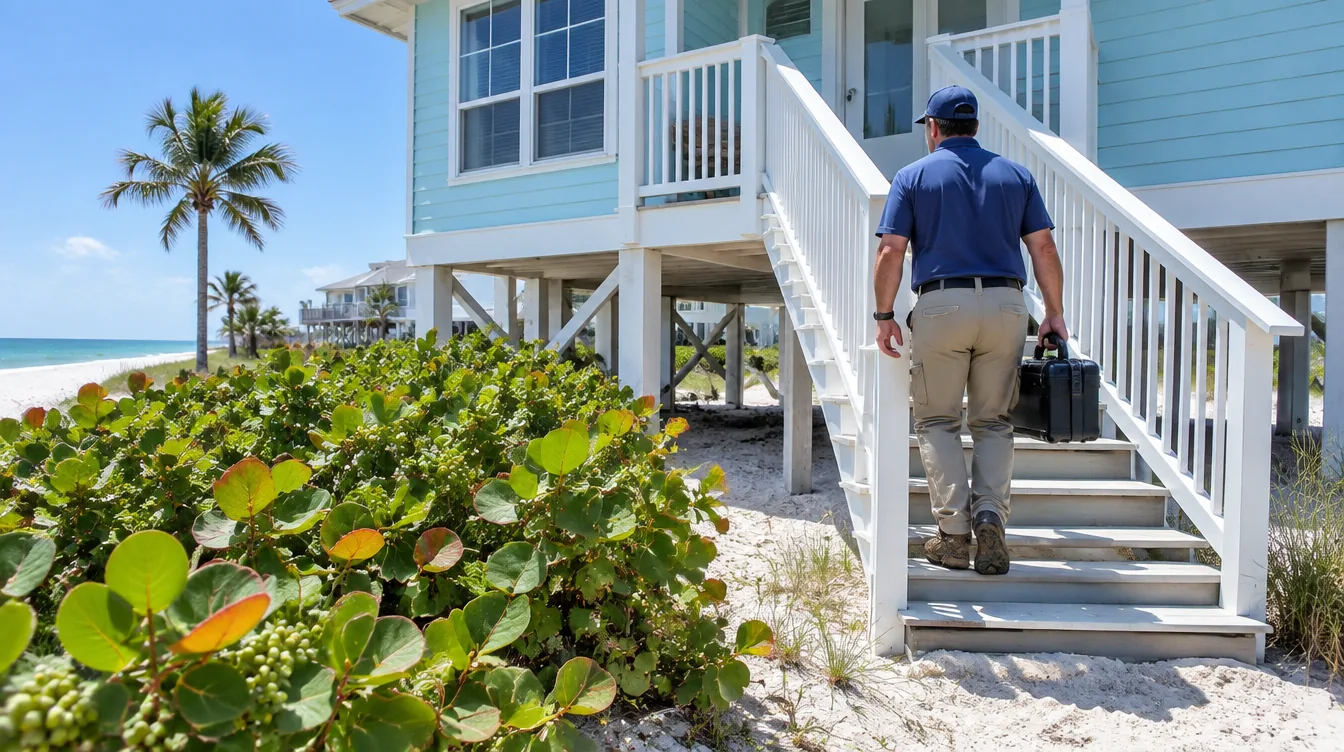
Many newer homes on Fort Myers Beach, Sanibel and other barrier islands are built on elevated foundations, with only parking, storage and entry areas at ground level. Those lower enclosures often flood while the living space stays dry. The same timeline applies to anything stored down there, and moisture can still reach the living space through stairwells, elevator shafts and ducts that run through the flooded level. Check those areas even if the upstairs rooms look untouched.
Timing and your insurance
Timing also matters on paper. The NFIP flood policy excludes mold damage caused by failing to inspect and maintain the property after the flood recedes, so dated photos and records showing you acted quickly are worth keeping.
On our hurricane and flood mold remediation projects, an independent licensed mold assessor inspects and samples the home, writes the scope and performs clearance testing. We do the drying, removal and cleaning to that protocol, including cleaning for mycotoxins, the toxic compounds some molds leave behind.
We remove mold and mycotoxins from buildings. We don’t diagnose or treat medical conditions. If you have symptoms, please work with a doctor. With your permission, we’re glad to share test results and our plan with them.
We're done when the lab says so.
Every remediation ends with clearance testing, and our work is backed by a complete-removal guarantee. We don't close a job on a failed result.
Talk to a specialistWater in the house? Don't wait on it
Tell us what got wet and when. A Southwest Florida specialist will call you back and talk through the next steps.
Not sure yet? Try the free AI Mold Risk Check