
What should I throw away after a flood in Florida?
Short answer
Throw away anything porous that flood water soaked and that can't be cleaned and dried completely within 24 to 48 hours. The CDC lists mattresses, carpet and pad, rugs, upholstered furniture, pillows, stuffed animals, baby toys, cosmetics, books and paper products. FEMA advises removing drywall and insulation that flood water touched. Photograph everything before it goes to the curb.
Before anything goes to the curb
Your insurer and FEMA will want to see what you lost. The National Flood Insurance Program’s guidance on documenting damage and FEMA both say to do this first:
- Take photos and video of every room, the waterline on the walls and each damaged item, with wide shots and close-ups.
- Photograph the make, model and serial number of appliances and electronics.
- Keep small samples of damaged carpet, drywall and insulation for your claim.
- Save receipts for anything you buy for cleanup.
Then get wet things out of the house. Every day they stay inside adds moisture to the air and gives mold more to grow on.
What to throw away and what can be cleaned
The CDC and the EPA use the same basic test: if something soaks up water and can’t be cleaned and dried completely within 24 to 48 hours, it should go. Here is how that usually plays out:
| Item | Usually | Why |
|---|---|---|
| Drywall and insulation flood water touched | Remove | FEMA and the CDC advise removing them; they hold contaminated water and grow mold on the back side |
| Carpet and pad, rugs | Discard | On the CDC list; pad acts like a sponge |
| Mattresses, box springs, pillows | Discard | On the CDC list; can’t be dried to the core |
| Upholstered furniture | Discard | On the CDC list; foam and fabric trap water |
| Stuffed animals and baby toys that absorb water | Discard | On the CDC list |
| Books, papers, cardboard | Discard, unless precious | On the CDC list; a restoration specialist may save irreplaceable items |
| Clothing and fabrics | Often salvageable | The EPA notes some can be saved by laundering |
| Glass, metal, ceramic, hard plastic | Usually keep | Non-porous; clean and disinfect |
| Solid wood furniture | Case by case | May be cleaned and dried if it isn’t swollen or growing mold |
Florida storm surge is salt water mixed with sewage, soil and whatever it picked up on the way in. Treat anything it soaked as contaminated, not just wet.
Food and kitchen items
The FDA says not to eat any food that may have come into contact with flood water. Discard food in containers that aren’t waterproof, anything in cardboard packaging, home-canned food and damaged cans. Undamaged, commercially made food in all-metal cans or retort pouches can be kept if you remove the labels, wash, rinse and sanitize the containers as the FDA describes.
When a Florida house sat wet for weeks
After Hurricane Ian, and again after Helene and Milton in 2024, many seasonal owners came back weeks after the storm. By then, porous things that sat in a closed, humid house were well past the 24 to 48 hour window. In that situation, lean toward discarding soft furnishings, bedding and paper goods even if they look dry, and check hard furniture for growth on the back and underside.
Mold growing on belongings can also leave mycotoxins behind. Our national pages on mycotoxins on belongings and whether to throw away a mattress after mold exposure go into more detail, which matters most for families with mold-sensitive members.
Photos, papers and heirlooms
Irreplaceable things deserve a different approach. FEMA publishes advice for salvaging damaged family treasures such as photographs, documents and keepsakes. Move them somewhere cool and dry, handle them gently, and contact a conservator or restoration specialist for anything valuable.
Protect yourself while you clear things out
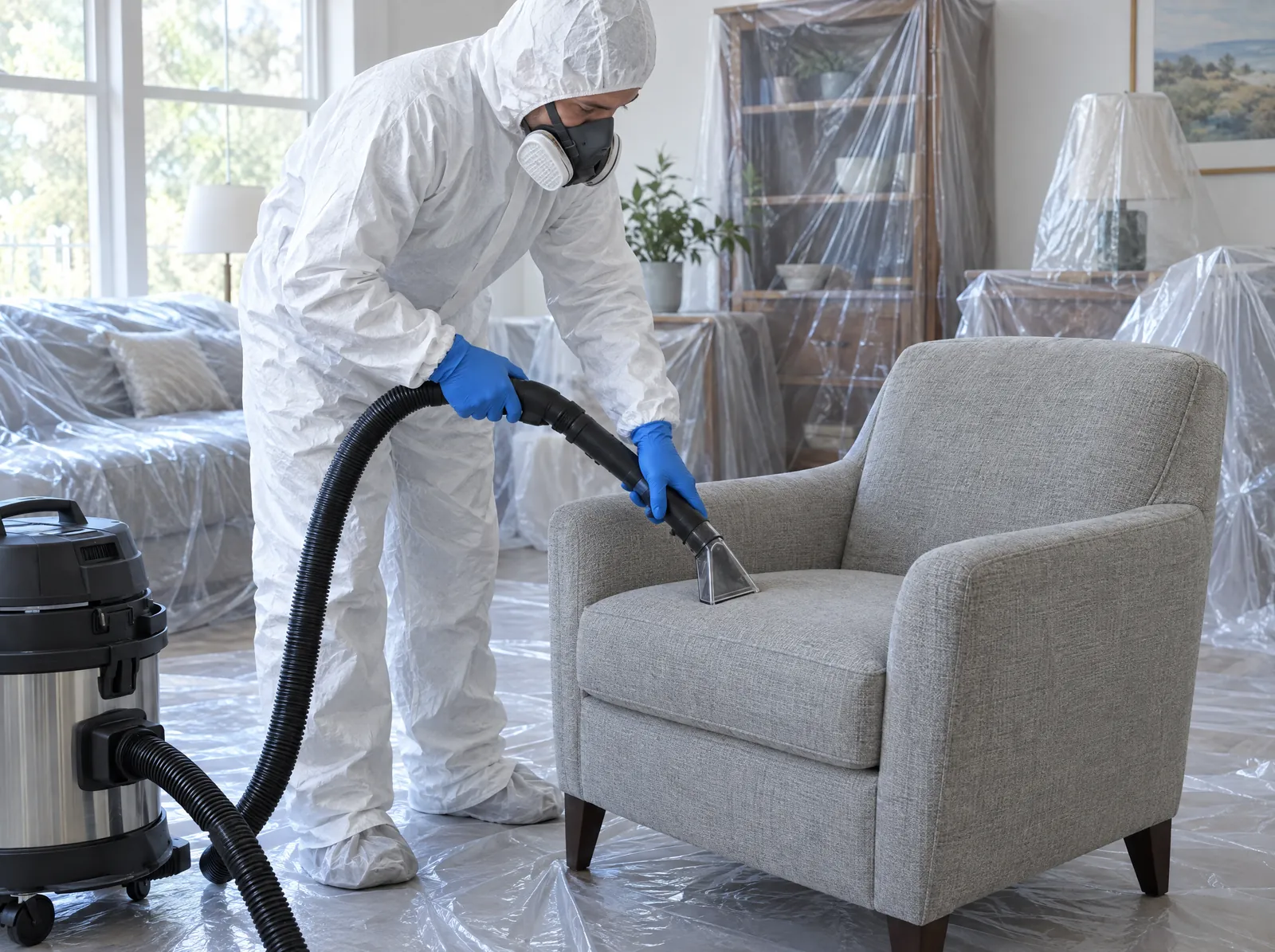
The CDC recommends goggles, an N95 respirator and protective gloves when cleaning up after a flood, and FEMA adds long sleeves, long pants and waterproof boots. Never run generators or pressure washers inside the house or garage, or near open windows and doors. Follow your county’s instructions for sorting storm debris at the curb.
When to bring in help
If flood water soaked walls, cabinets or the AC system, the cleanup goes beyond sorting belongings. Our hurricane and flood mold remediation team removes what can’t be saved, dries the structure and cleans for mold and mycotoxins, with testing and clearance handled by an independent licensed assessor. We’ll help you decide what to keep, room by room.
We remove mold and mycotoxins from buildings. We don’t diagnose or treat medical conditions. If anyone in the home has symptoms, please work with a doctor. With your permission, we’re glad to share test results and our plan with them.
We're done when the lab says so.
Every remediation ends with clearance testing, and our work is backed by a complete-removal guarantee. We don't close a job on a failed result.
Talk to a specialistNot sure what to keep?
Tell us what the water touched and how long it sat. A Southwest Florida specialist will call you back.
Not sure yet? Try the free AI Mold Risk Check