
Is radon testing and mold testing the same?
Short answer
No. Radon testing and mold testing measure different things with different methods. A radon test measures a radioactive gas that seeps up from the soil, using a detector left in the lowest lived-in level for days or longer. Mold testing looks for fungal growth through an inspection, moisture readings, and air, dust or surface samples sent to a lab. Many Indiana buyers need both.
Two different problems under the same floor
Radon is a naturally occurring radioactive gas that forms as uranium in soil and rock breaks down. You can’t see it or smell it. It moves up through the ground and into a house through slab cracks, sump pits, floor drains, and gaps around pipes. Mold is something else entirely: a living organism that grows wherever building materials stay damp long enough. Radon is about the ground under the house. Mold is about water inside it.
The confusion comes from geography. Both tend to matter most in the same rooms: basements, crawlspaces and the lowest floor. A buyer hears “the basement should be tested” and assumes one test covers it. It doesn’t. A radon detector can’t tell you anything about mold, and no mold sample measures radon.
How radon testing works
The EPA recommends testing homes for radon, with the test placed in the lowest level of the house that is lived in or could be. Short-term tests stay in place for 2 to 90 days, and long-term tests for more than 90 days. Home kits are mailed to a lab when the exposure period ends. Professional testers often use continuous monitors that log readings hour by hour, which is common during real estate deals. During a short-term test, the EPA calls for keeping windows and outside doors closed as much as possible, so the reading reflects normal conditions.
Results come back as a number in picocuries per liter (pCi/L). The EPA recommends fixing a home at 4 pCi/L or higher and suggests considering a fix between 2 and 4. The usual fix is a mitigation system that draws air from beneath the slab and vents it above the roofline. Both the EPA and the Indiana Department of Health publish homeowner guidance, and a radon professional can walk you through your number.
How mold testing works
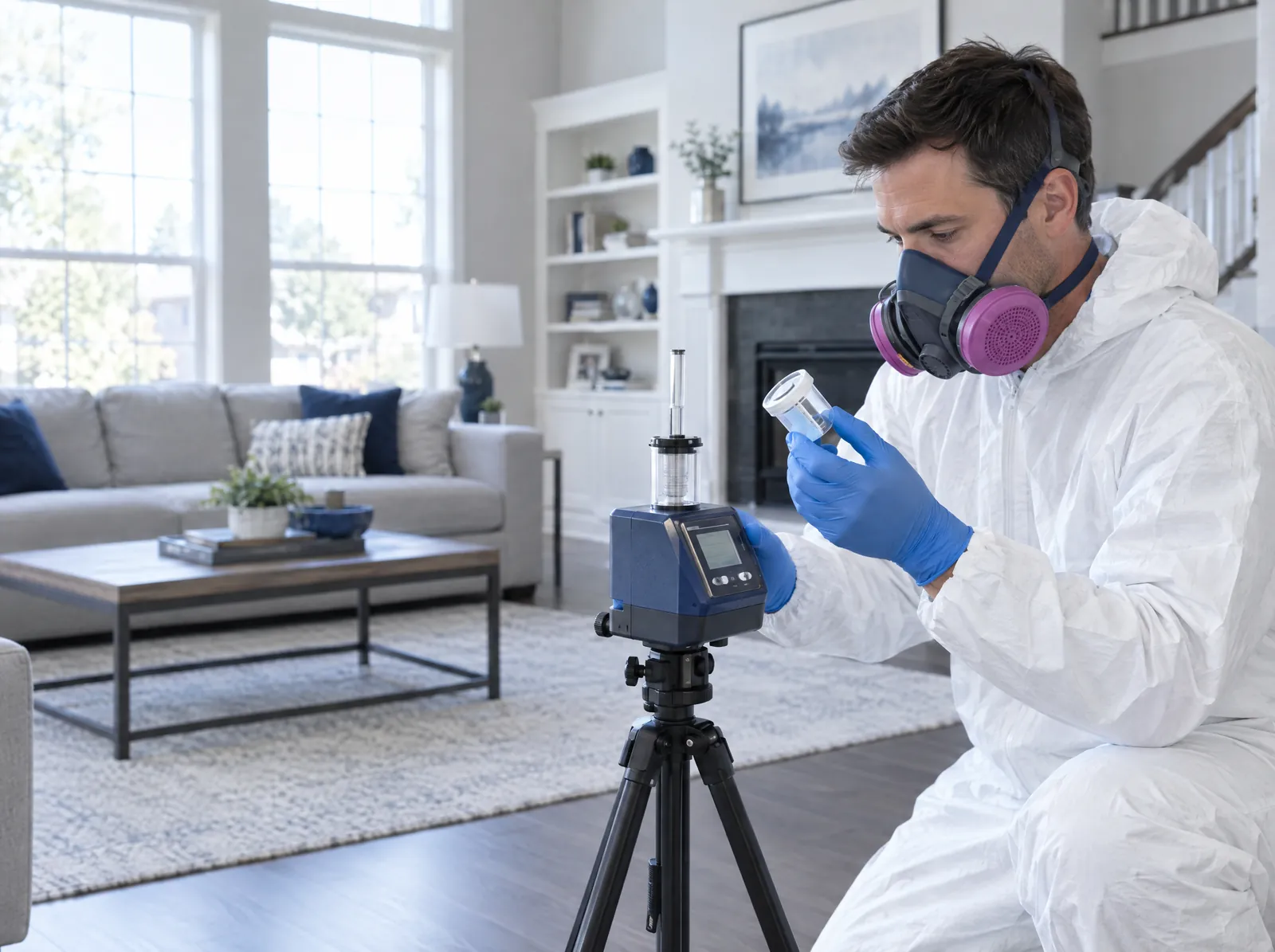
Mold testing starts with looking, not sampling. An inspector checks for stains and past leaks, measures moisture in walls and floors, and looks where Indiana homes tend to hide growth. Then samples go to a lab: air samples indoors and outdoors for comparison, settled-dust samples that show what has built up over months, and surface samples where growth is visible. Our results come back in 24 to 48 hours. Our page on mold testing in Indiana explains which sample answers which question.
There’s also no single federal action number for mold the way there is for radon. A mold report is read in context: indoor results against outdoor, which types are present, and where the moisture readings were high.
Radon and mold side by side
| Radon | Mold | |
|---|---|---|
| What it is | A radioactive gas from soil and rock | A fungus that grows on damp materials |
| Where it comes from | The ground beneath the house | Water: leaks, seepage, humidity, floods |
| How it’s measured | A detector left in place for days or months | Inspection, moisture readings and lab samples |
| How results are read | Against the EPA’s 4 pCi/L action level | Against outdoor samples and moisture findings |
| Typical fix | A sub-slab mitigation system | Fix the water, remove the mold, verify with clearance testing |
Where the two meet in an Indiana house
Radon doesn’t cause mold, and mold doesn’t cause radon. The projects that fix them can affect each other, though. A mitigation system usually needs a sealed sump lid and sealed slab cracks, which also keeps humid pit air out of the basement. A crawlspace liner or interior waterproofing can change how a radon system draws air, so it makes sense to plan them together. We cover that overlap for crawlspaces in whether encapsulation is worth it in Indiana.
For buyers, both tests usually land in the same inspection window, and both take time: radon needs its exposure period and mold needs lab time. Book them together as soon as your offer is accepted. For help scheduling around your deadline, see how to fit a mold test into an Indiana inspection period. We test for mold and mycotoxins. For radon, use a radon professional or a home test kit that follows EPA guidance.
We're done when the lab says so.
Every remediation ends with clearance testing, and our work is backed by a complete-removal guarantee. We don't close a job on a failed result.
Talk to a specialistNeed the mold side covered?
We handle mold and mycotoxin testing, with lab results in 24 to 48 hours. Tell us about the house, and a specialist from our Avon office will call you back.
- (833) 772-6653
- info@americanmoldexperts.com
- Open 7 days, 8am to 8pm