
Is crawlspace encapsulation worth it in Indiana?
Short answer
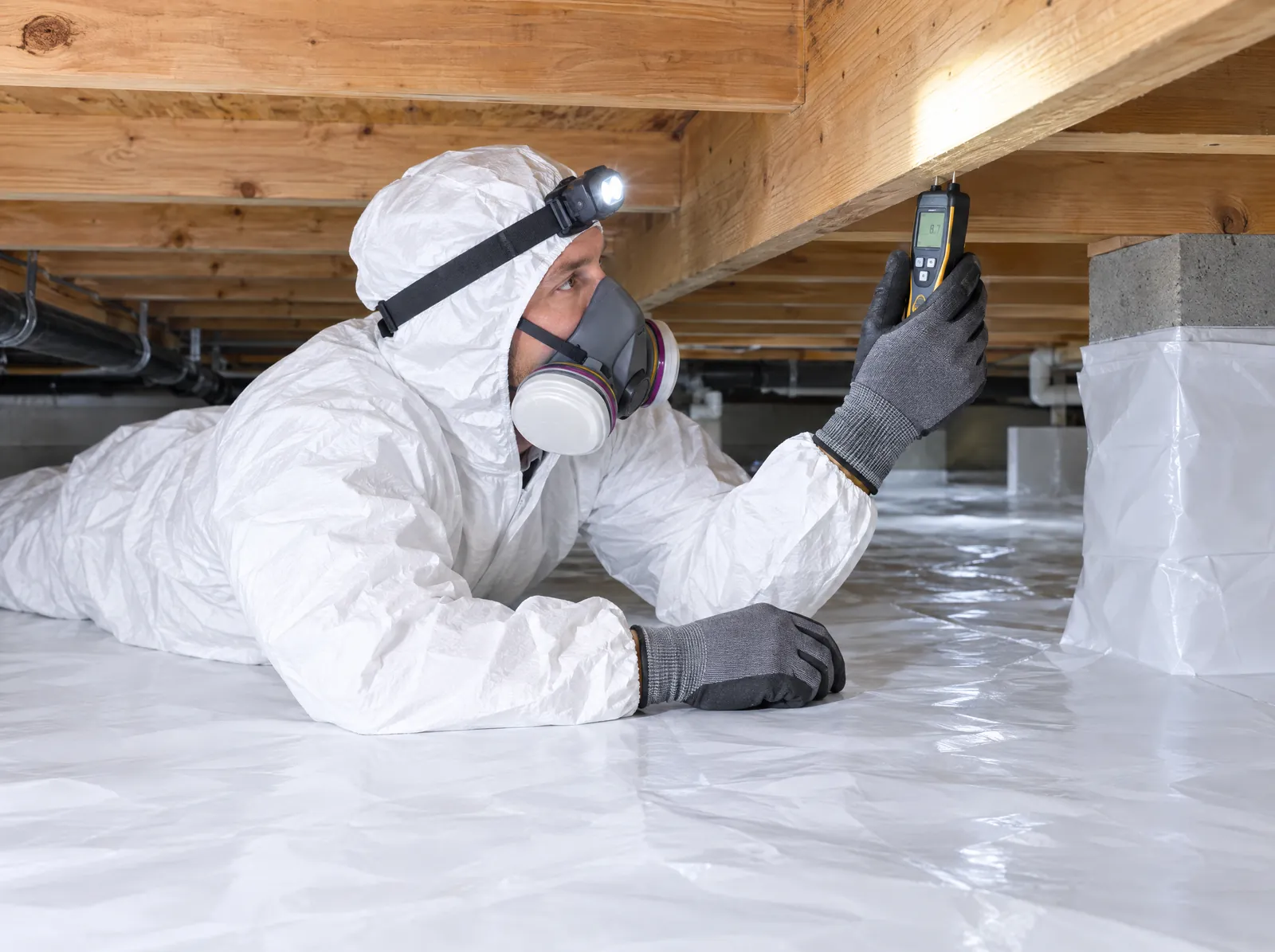
Often, yes, for Indiana homes with damp, vented crawlspaces, as long as existing mold is cleaned up and water problems are fixed first. Encapsulation lines the floor and walls, seals the vents and usually adds a dehumidifier, which keeps humid summer air from soaking the framing. It's less worth it when the crawlspace is already dry, or when water pools inside and the source hasn't been fixed.
Why vented crawlspaces struggle in Indiana
Many Indiana homes were built with vented crawlspaces on the theory that outside air would dry them out. In winter that can work. In summer it often does the opposite. Warm, humid July air flows through the vents into a space where the soil, block walls and ductwork are cooler, and the moisture condenses on joists, subfloor and insulation. The wood soaks it up, and after a few summers you can have mold across the framing without a single leak.
Bare or partly covered soil adds more moisture from below. A torn or thin plastic sheet that’s been there since the house was built slows it down but rarely stops it.
What encapsulation actually includes
- A heavy, puncture-resistant liner over the floor, usually run up the walls and sealed at seams and piers.
- Sealed or closed foundation vents and rim joist gaps.
- A dehumidifier sized for the space, or conditioned air supplied from the HVAC system, to hold humidity in range.
- Often a drain or sump if water collects on the floor.
Building codes allow closed crawlspaces when specific moisture-control conditions are met, so the design should come from someone who knows local requirements.
When it’s worth it, and when it isn’t yet
| Your crawlspace | Encapsulation? |
|---|---|
| Musty smell, high humidity, damp framing, no standing water | Often a good investment, after any mold is cleaned |
| Active mold on joists and subfloor | Not yet. Remediate and verify first, then seal |
| Water pools after rain or the sump fails | Fix drainage first. A liner over flowing water doesn’t solve it |
| Dry, with a sound vapor barrier and normal readings | Probably not needed. Monitor humidity instead |
| Ductwork or the furnace sits in the crawlspace | Stronger case, since that air feeds the house |
The row that matters most for us is the second one. Sealing a liner over moldy framing locks the problem in with you. Mold and the mycotoxins it leaves on the wood don’t disappear because the space got drier. Clean first, test, and then seal. If there’s a sump in the crawlspace, see whether sump pump failure causes mold, because a failed pump under a sealed liner can go unnoticed.
The ongoing costs people forget
Encapsulation prices vary widely with crawlspace size, height, access and how much repair comes first, so get more than one written quote. Beyond the upfront cost, plan for the dehumidifier’s electricity, filter and maintenance, and eventual replacement. Check the liner every year or two for tears, especially after anyone has worked in the space. Keep a humidity monitor in the crawlspace so you know the system is holding the range the EPA recommends: below 60 percent, ideally 30 to 50.
If your home needs radon mitigation, plan it together with the liner, since some radon systems draw air from beneath it. Radon and mold are separate problems with separate tests, as we explain in is radon testing the same as mold testing.
Our order of operations
We don’t sell encapsulation as a mold treatment, because it isn’t one. When we find mold in an Indiana crawlspace, we test, contain, remove ruined insulation, HEPA-clean and enzyme-treat the framing, and confirm with clearance testing. Then we help you decide whether encapsulation, a better vapor barrier or simpler drainage fixes fit the house. Our crawl space mold removal page explains the cleanup in more detail.
We're done when the lab says so.
Every remediation ends with clearance testing, and our work is backed by a complete-removal guarantee. We don't close a job on a failed result.
Talk to a specialistNot sure what your crawlspace needs?
Testing shows whether there's mold to clean before anything gets sealed. Tell us about the house, and a specialist from our Avon office will call you back.
- (833) 772-6653
- info@americanmoldexperts.com
- Open 7 days, 8am to 8pm