
Can mycotoxins spread through HVAC?
Short answer
Yes. Mycotoxins can spread through an HVAC system on the dust, spores and mold fragments that a forced-air system pulls in through its returns and pushes back out through the supply vents. If mold is growing inside the equipment, or in a space the ducts draw air from, the system can carry toxin-bearing particles to every room it serves. A filter catches some of them, not all.
The short version
Mycotoxins don’t travel through the air as a gas. They ride on particles. A forced-air system is built to move a house’s air through the same set of ducts over and over, so anything small enough to stay suspended gets a ride. When the system turns on, particles that settled in the ducts or around the equipment can be stirred up again.
That can happen in two ways. The system can be a source, when mold grows on a wet coil, a drain pan or a duct liner. Or it can be a carrier, when returns pull in dust from a moldy basement, crawlspace or room. Our full guide to mycotoxins in HVAC ducts and air systems goes through each component, what public guidance says about duct cleaning and how systems are tested. This page keeps to the quick answer.
Signs the system may be part of the problem
- A musty smell that shows up or gets stronger when the system starts
- Dark dust streaking around supply registers, or dust returning quickly after cleaning
- Visible growth or standing water when the air handler’s access panel is opened
- Return ducts that run through a damp crawlspace, basement or attic
- Dust test results that are similar in rooms far away from the known mold
Any one of these is a reason to look closer, not proof. A system can look clean and still carry fine dust, and a dirty-looking duct may be mostly harmless household dust.
Timing can be a clue too. A coil and drain pan are wet for hours a day in cooling season, so growth there tends to show itself in summer. The first heating cycle in fall can stir up dust that settled in the ducts over the warm months. Noting when a smell or dust change happens helps an inspector know where to look first.
What to do now
| Do | Hold off on |
|---|---|
| Change the filter and make sure it fits without gaps | Duct cleaning before the mold source is found and fixed |
| Use the best filter your system is rated for, per the manufacturer | Spraying or fogging products into the ducts |
| Have the coil, drain pan and condensate line checked | Running a fan-only setting to air out a moldy space |
| Test dust from the system and from the rooms | Assuming a clean-looking register means clean ducts |
Filters help, and what HEPA filters can capture explains their limits. But a filter only treats air that passes through it. Dust already inside the ducts, on the blower and in porous liners stays until it’s physically removed.
How it gets fixed
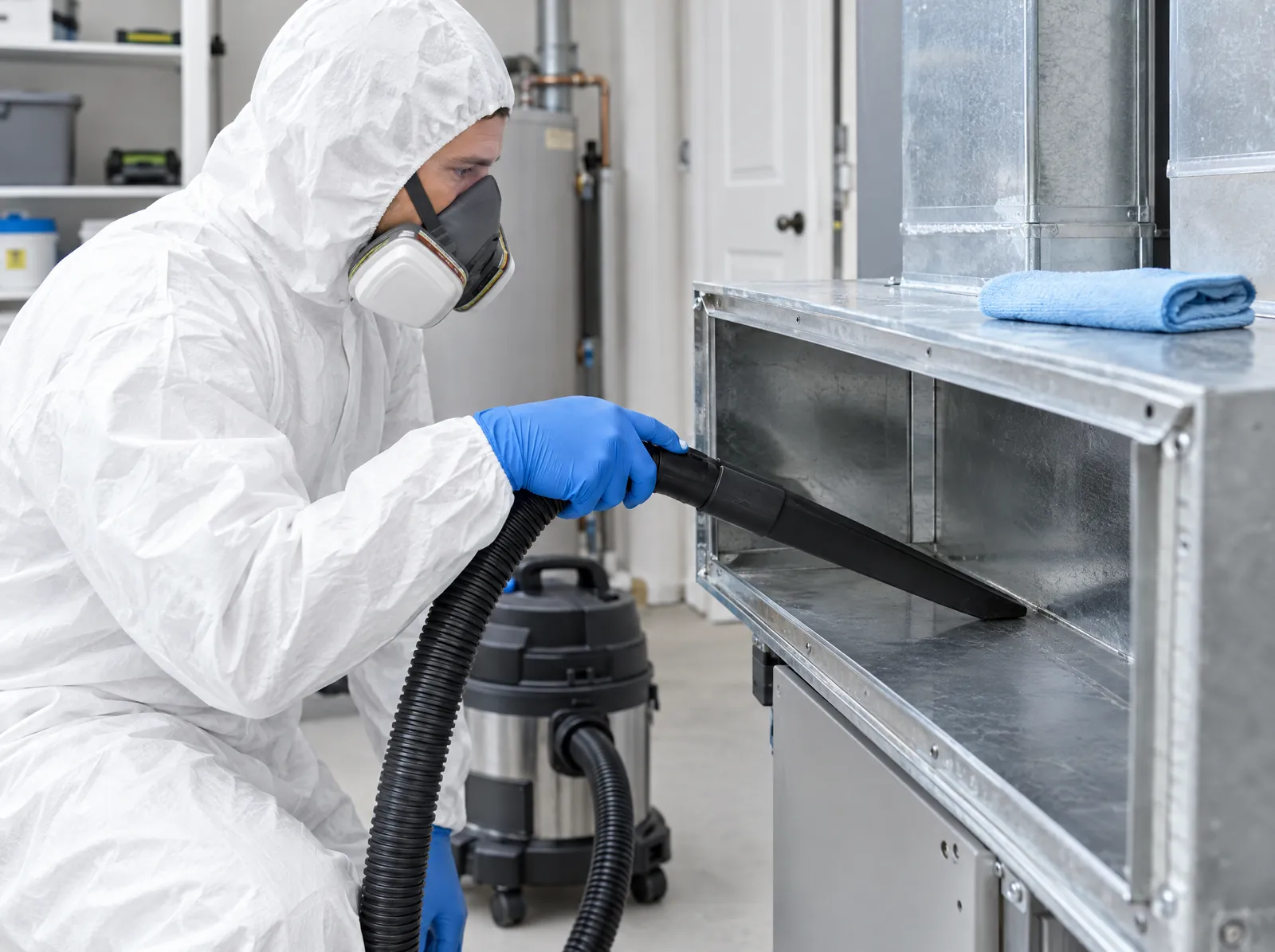
The order matters. Find and fix the moisture, remove the growth, then clean the system under negative air so loosened dust is captured instead of blown into the house. Porous duct liner or flex duct that’s contaminated is usually replaced rather than cleaned. Rooms get cleaned after, or at the same time as, the system so one doesn’t recontaminate the other. Our HVAC mold remediation page describes that project, and dust testing afterward shows whether it worked.
We clean mold and mycotoxins out of buildings and their mechanical systems. We don’t diagnose or treat medical conditions. If you notice symptoms that seem to change when your heating or cooling runs, please talk with a doctor. With your permission, we’ll share our test results with them.
We're done when the lab says so.
Every remediation ends with clearance testing, and our work is backed by a complete-removal guarantee. We don't close a job on a failed result.
Talk to a specialistThink your system is involved?
Tell us what you've noticed around your vents and equipment, and a specialist will explain how the system can be tested alongside the rest of the house.
- (833) 772-6653
- info@americanmoldexperts.com
- Open 7 days, 8am to 8pm