
How long does mold take to grow after a leak?
Short answer
Mold can start growing within 24 to 48 hours on materials that stay wet, which is why the EPA advises drying water-damaged materials within that window. Growth you can see often takes longer, and growth inside walls can go unnoticed for weeks. How fast depends on the material, the temperature and how long it stays wet. Warm, humid Indiana summers speed it up.
What the 24 to 48 hour window means
The EPA’s guidance is to dry water-damaged materials and areas within 24 to 48 hours to prevent mold growth. That doesn’t mean a fuzzy patch appears on day three. It means mold spores, which are already present in every house, can begin to germinate and grow on a wet material in that time. Visible colonies usually take longer, often days to a couple of weeks, and by the time you can see them, growth is well established. The window is about prevention. Once it closes, you’re no longer drying a leak. You may be dealing with mold.
What makes it faster or slower
| Factor | Faster growth | Slower growth |
|---|---|---|
| Material | Paper-faced drywall, cardboard, carpet pad, ceiling tile, wood | Concrete, tile, metal, glass |
| Temperature | A warm house, especially in summer | Cold, unheated spaces |
| Humidity | Muggy air that slows drying | Dry winter air with good airflow |
| Water source | Dirty water from groundwater, floods or sewers | Clean water from a supply line, dried quickly |
| Where it went | Inside wall cavities, under flooring, into insulation | Open surfaces you can reach and dry |
Indiana summers push most of those factors the wrong way at once: warm temperatures, humid air, and basements where water soaks into finished walls. A leak in July usually becomes a mold problem faster than the same leak in January.
Winter leaks aren’t safe either
The classic Indiana winter leak is a frozen pipe that splits during a cold snap and lets go when it thaws. The house is heated, so the water lands on warm drywall and subfloor, and the 24 to 48 hour clock runs just as it would in spring. Leaks in unheated spaces, such as an attic, a garage wall or a crawlspace, may grow more slowly in the cold, but they also dry slowly and get found late. When the weather warms, growth picks up where it left off.
The leaks that do the most damage are slow
A burst pipe is dramatic, but it gets noticed and dried. The leaks behind most of the mold we find are quiet: a dripping supply line under a sink, a toilet wax ring seeping into the subfloor, a dishwasher leaking into the cabinet base, flashing around a chimney or window that lets in a little water with every storm. These keep materials wet for weeks or months, well past any drying window, and they’re usually behind a surface. A musty smell, a soft spot in the floor, or paint bubbling low on a wall are often the first signs. Our page on testing for mold behind walls explains how it’s found without opening every wall.
What to do right now
- Stop the water. Shut the supply valve or the main, and call a plumber or roofer.
- Get air moving and moisture down. Fans, a dehumidifier and, in summer, the air conditioner.
- Pull what won’t dry. Wet carpet pad, soaked cardboard and ceiling tile rarely dry in time. See whether drywall has to come out for the walls.
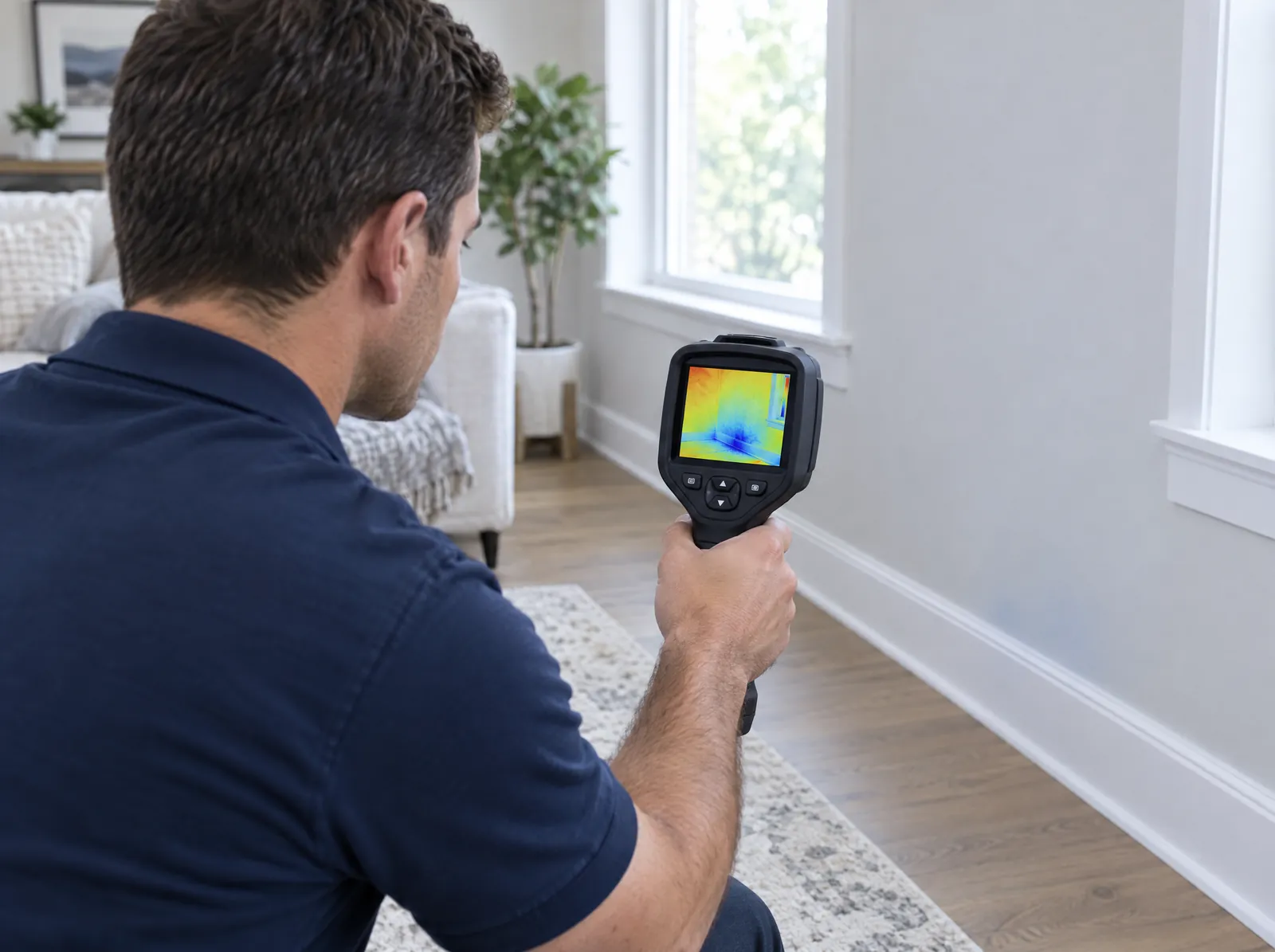
- Check behind the surface. A moisture meter tells you if a wall or floor is still wet after the surface feels dry.
- Photograph everything before cleanup, in case you file an insurance claim.
If more than a day or two has passed, or if the leak was in a basement, see whether sump pump failure causes mold for the below-grade version of this problem. When growth has already started, containment and removal come before any rebuilding.
We remove mold and mycotoxins from buildings. We don’t diagnose or treat medical conditions. If you have symptoms, please work with a doctor.
We're done when the lab says so.
Every remediation ends with clearance testing, and our work is backed by a complete-removal guarantee. We don't close a job on a failed result.
Talk to a specialistHad a leak and not sure it dried?
Moisture readings and a thermal camera show what's still wet behind the surface. Tell us what happened, and a specialist from our Avon office will call you back.
- (833) 772-6653
- info@americanmoldexperts.com
- Open 7 days, 8am to 8pm