
Is white mold dangerous?
Short answer
White mold isn't more or less dangerous than other colors. "White mold" isn't one species: many common molds look white, especially when young, and color doesn't tell you what kind it is. Treat white growth indoors like any other mold: it means something is damp. Clean small areas on hard surfaces, fix the moisture, and have larger or recurring growth assessed rather than trying to identify it by eye.
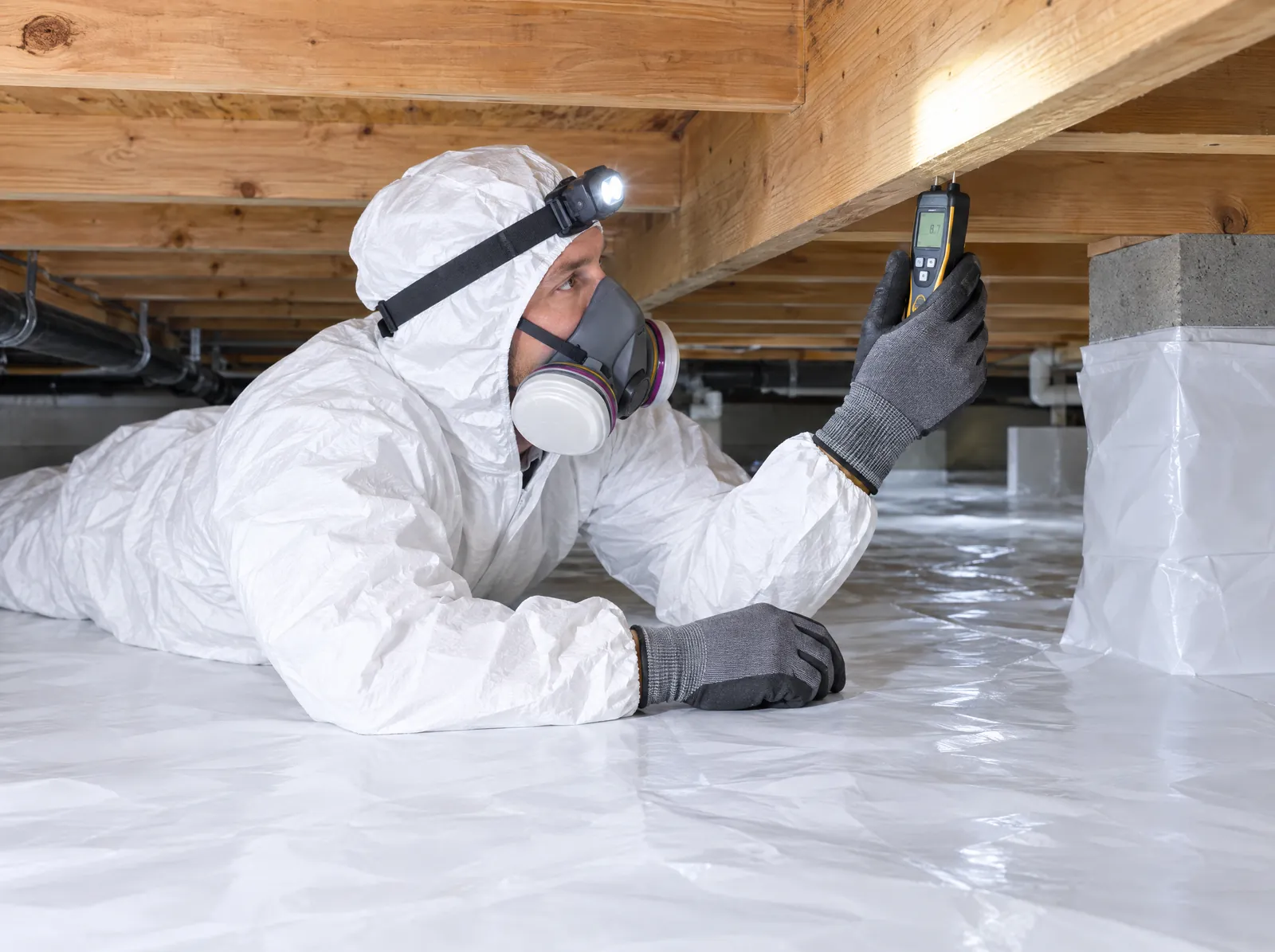
White is a color, not a type of mold
Mold color depends on the species, its age, what it is growing on and how much light and moisture it gets. Many molds that eventually turn green, gray or black start out white. Others stay pale their whole life. So “white mold” can describe a dozen different organisms, and it tells you nothing reliable about which one you have.
The CDC’s general advice is that you don’t need to know the species to decide what to do: indoor mold growth should be cleaned up and the moisture fixed, whatever it looks like. That is a practical, calm starting point.
Where white growth usually appears
- Floor joists and subfloor in crawlspaces and unfinished basements, often as fuzzy patches
- Attic sheathing, especially on the north side of the roof
- Furniture, leather, shoes and luggage stored in a damp basement
- Soil in houseplant pots, which usually says more about overwatering than about the house
- Wood left on a damp concrete floor
In each case the white growth is pointing at humidity or a moisture source. In crawlspaces and attics it is common, and it is often more of a building maintenance issue than an emergency.
Is it mold at all?
A lot of what people call white mold isn’t. On basement walls and floors, white crusty deposits are often efflorescence, mineral salts carried out of the concrete by water. It dissolves with a drop of water and crumbles to powder. Mold is fuzzy or cottony and smears instead. Our answer on whether mold can grow on concrete has a side-by-side check. White bloom on old furniture finishes and dust on joists can also fool people. If you can’t tell, a surface sample sent to a lab is the quickest way to find out.
What to do about it
| Situation | Reasonable next step |
|---|---|
| Small patch on a hard surface | Clean with detergent and water while wearing an N95, gloves and goggles, then dry it |
| Growth on stored belongings | Move them somewhere dry, clean what can be cleaned, and lower the humidity where they were |
| Patches across crawlspace joists or attic sheathing | Have the space assessed; the ventilation or moisture problem matters more than the growth |
| Growth that returns after cleaning | Look for the moisture source before cleaning again |
| Musty smell with little visible growth | Consider testing to find hidden growth |
For crawlspaces in particular, the long-term answer usually involves a vapor barrier, drainage or humidity control. Our knowledge page on crawlspace mold covers the options.
Keeping it from coming back
White growth on joists, sheathing or stored belongings almost always comes down to air that is too humid for too long. A humidity monitor in the basement or crawlspace is an easy first step. The EPA recommends keeping indoor humidity below 60 percent, ideally between 30 and 50 percent. Dehumidifiers, a proper vapor barrier on crawlspace soil, bath fans vented outdoors instead of into the attic, and a little space between stored items and exterior walls all help. Once the air is drier, cleaned areas generally stay clean, and new growth becomes a useful early warning that something has changed.
We remove mold and mycotoxins from buildings. We don’t diagnose or treat medical conditions. If you or anyone in your home has symptoms, please talk with a doctor. With your permission, we’re glad to share test results with them.
We're done when the lab says so.
Every remediation ends with clearance testing, and our work is backed by a complete-removal guarantee. We don't close a job on a failed result.
Talk to a specialistFound white growth and not sure what it is?
Send us a description of where it is and what it looks like. A specialist will help you decide whether it needs a simple cleanup, a sample or a closer look.
- (833) 772-6653
- info@americanmoldexperts.com
- Open 7 days, 8am to 8pm