
Does fogging remove mycotoxins?
Short answer
No, not on its own. Fogging fills a room with a fine mist of disinfectant or treatment, which can land on exposed surfaces and kill some living mold. It doesn't pick up the settled dust, spores and fragments that carry most mycotoxins, and it can't reach inside walls, ducts or packed contents. At best it's a step after physical cleaning, confirmed by testing.
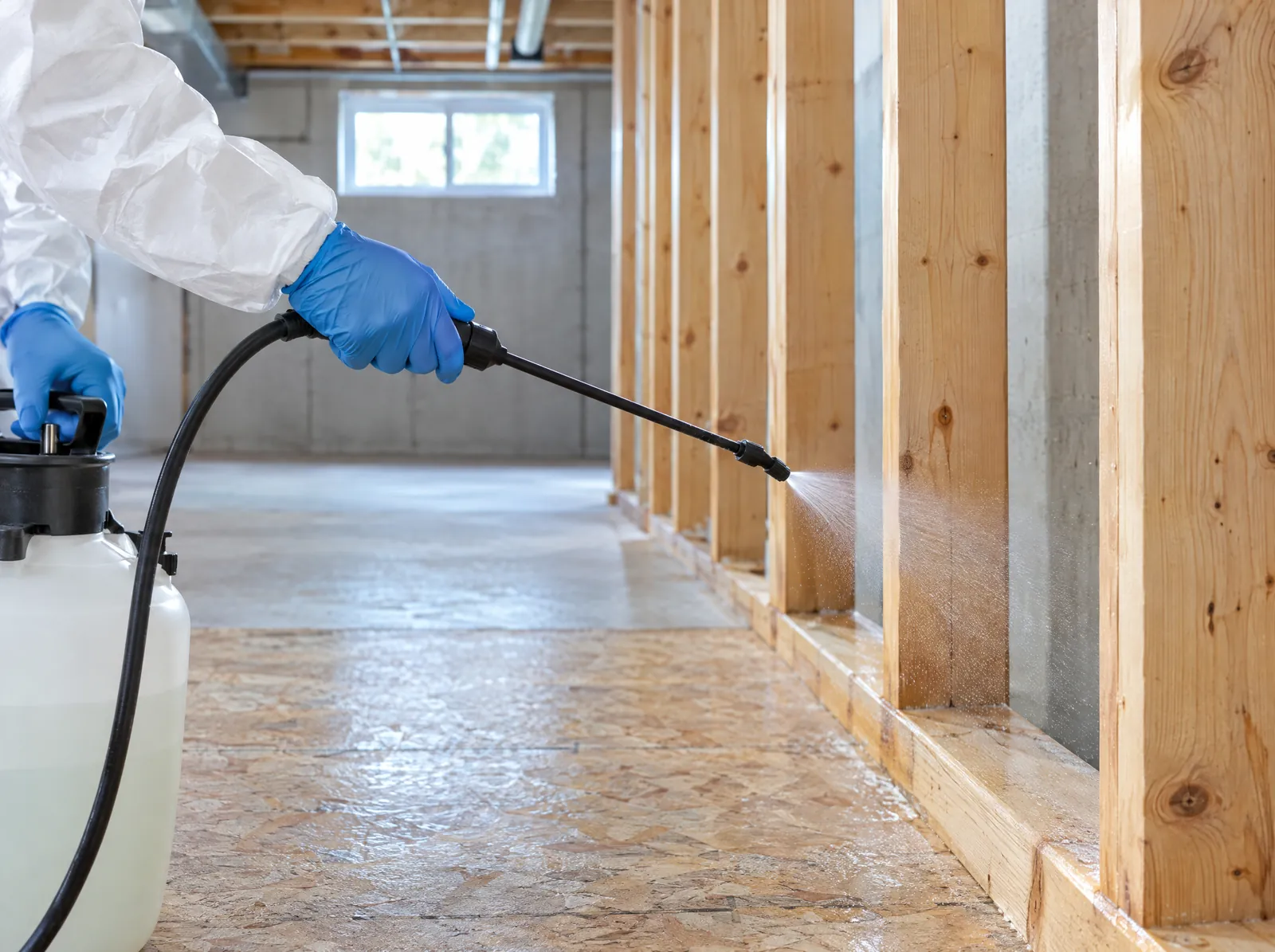
What fogging actually is
A fogger turns a liquid into tiny droplets and fills a room with them. Some machines make a fine cold mist, some heat the liquid into a denser fog, and some make droplets so small they’re sold as a dry fog. What’s in the tank varies: disinfectants, registered antimicrobials, fragrance products and, in some remediation work, treatments designed to act on mold residue.
The appeal is easy to see. A room gets treated in an afternoon, there’s no demolition, and the house often smells cleaner afterward. That smell is part of the problem, because it feels like proof when it isn’t.
Why a mist can’t replace cleaning
Mycotoxins aren’t alive, so a product that kills mold doesn’t make them disappear. In most affected homes the toxins sit on particles: settled dust, dead spores and tiny mold fragments. Fogging adds liquid to those particles. It doesn’t collect them. When the droplets dry, the dust is still on the floor, the shelves, the carpet and the top of the door frame, as our page on mycotoxins in dust explains.
- It only reaches what’s exposed. Wall cavities, the underside of furniture, the inside of ducts and the contents of closets get little or none of the mist.
- It doesn’t touch the source. If mold is still growing behind drywall or under a subfloor, it keeps producing new material after the fog settles.
- Contact time is short. A treatment designed to break down a compound usually needs the right concentration on the surface for long enough. A passing mist on a dusty surface may not deliver that.
- It can add moisture. Heavy fogging in a poorly ventilated space puts water back into the materials you’re trying to keep dry.
Where fogging can fit
Fogging isn’t useless. Used late in a project, after the moisture source is fixed, damaged porous materials are removed and every surface has been HEPA vacuumed and wiped, a misted treatment can reach corners and textures a cloth misses. Some of the plant-based enzyme products we use from US Enzyme can be applied that way. We still treat the mist as a finishing step. The cleaning does the heavy lifting.
| Stage of a project | Can fogging help? |
|---|---|
| Before the moisture source is fixed | No. Growth will return. |
| Before contaminated materials are removed | No. The mist can’t reach the source. |
| Before dust is HEPA vacuumed and wiped | Very little. The toxin-carrying dust stays. |
| After source removal and detailed cleaning | Possibly, as a finishing treatment |
| Deciding whether the job worked | No. Only testing shows that. |
Questions to ask a company that proposes fogging
- What product is going in the fogger, and is it labeled for this use?
- What happens to the moisture source and any growth inside walls?
- How will settled dust and the HVAC system be cleaned?
- Do the occupants and pets need to leave, and for how long, according to the label?
- How will you test the result, and will I get the lab report?
If the answer to most of these is the fog itself, it’s worth a second opinion. Treatments that sound similar, like ozone, have their own limits, covered on our page about whether ozone removes mycotoxins. For a list of products that often do more harm than good on mold, see what not to spray on mold. Real mycotoxin remediation is measured by dust testing before and after, not by what the machine sprayed.
We remove mold and mycotoxins from buildings. We don’t diagnose or treat medical conditions. Fogging products can irritate the lungs and skin, so follow label directions, and if anyone in the home has symptoms, please talk with a doctor. With your permission, we’ll share our findings with them.
We're done when the lab says so.
Every remediation ends with clearance testing, and our work is backed by a complete-removal guarantee. We don't close a job on a failed result.
Talk to a specialistWas fogging the whole plan?
If a house was fogged and still doesn't feel right, testing can show what's left in the dust. Tell us what was done and we'll talk through the next step.
- (833) 772-6653
- info@americanmoldexperts.com
- Open 7 days, 8am to 8pm