
Should kids sleep in a room with mold?
Short answer
That's a question for your child's pediatrician, and many parents simply move their child to another room while they find out more. The home side can help the doctor answer it: where the mold is and how much, what's causing it, whether the room shares air with other affected areas, and what testing that room on its own shows. Fixing the moisture source comes first.
Who makes the call
Parents usually find mold in a child’s room at bedtime: a dark patch behind the headboard, spots on the window sill, a musty closet. The instinct to move the child out right away is a reasonable one, and plenty of families do exactly that while they figure out what’s going on. Whether a child should keep sleeping there, and whether anything about their health needs attention, is for their pediatrician to weigh in on. We can’t make that decision, and a mold company shouldn’t try.
What we can do is describe the room clearly enough that the doctor, and you, have something concrete to work from.
What the doctor may want to know about the room
| Question | Why it matters | How it’s answered |
|---|---|---|
| How much mold, and where? | A few spots of condensation growth on a window frame is different from growth inside a wall | A visual inspection, moisture meter and sometimes a thermal camera |
| What’s causing it? | Condensation, a humidifier, a roof or plumbing leak and a cold exterior wall each lead to different fixes | Tracing the moisture to its source |
| Does the room share air with an affected area? | A supply vent fed by a contaminated system can carry dust into a clean-looking room | Checking the HVAC system and ducts |
| What’s in the room’s dust? | Growth that has been there a while leaves dust in bedding, carpet and toys | Dust and air samples from that room, reported on their own |
Room-specific results are more useful here than a whole-house average, because a single bedroom can be quite different from the rest of the home.
Where a child can sleep in the meantime
If you move your child, choose a room that’s away from the affected area and doesn’t share a wall, ceiling or closet with it. Bring bedding and a few favorite things that have been laundered first, rather than carrying items straight from the moldy room. Keep the affected room’s door closed, close its supply vent if it has one, and don’t scrub or spray the growth, since disturbing it spreads particles.
Small patches of surface growth on a hard window sill are common in cold weather, and our answer on whether mold on window sills is dangerous explains when that’s a simple condensation fix. Growth on drywall, in a closet or anywhere it keeps coming back usually points to a bigger moisture problem.
Getting the room ready again
Before a child moves back in, the room should be in the condition you’d want to show the pediatrician: source fixed, affected materials removed, the room HEPA-cleaned, and a clearance test that confirms it. Our guide to mold in children’s rooms and schools covers where mold tends to hide in kids’ rooms and how to handle toys and bedding.
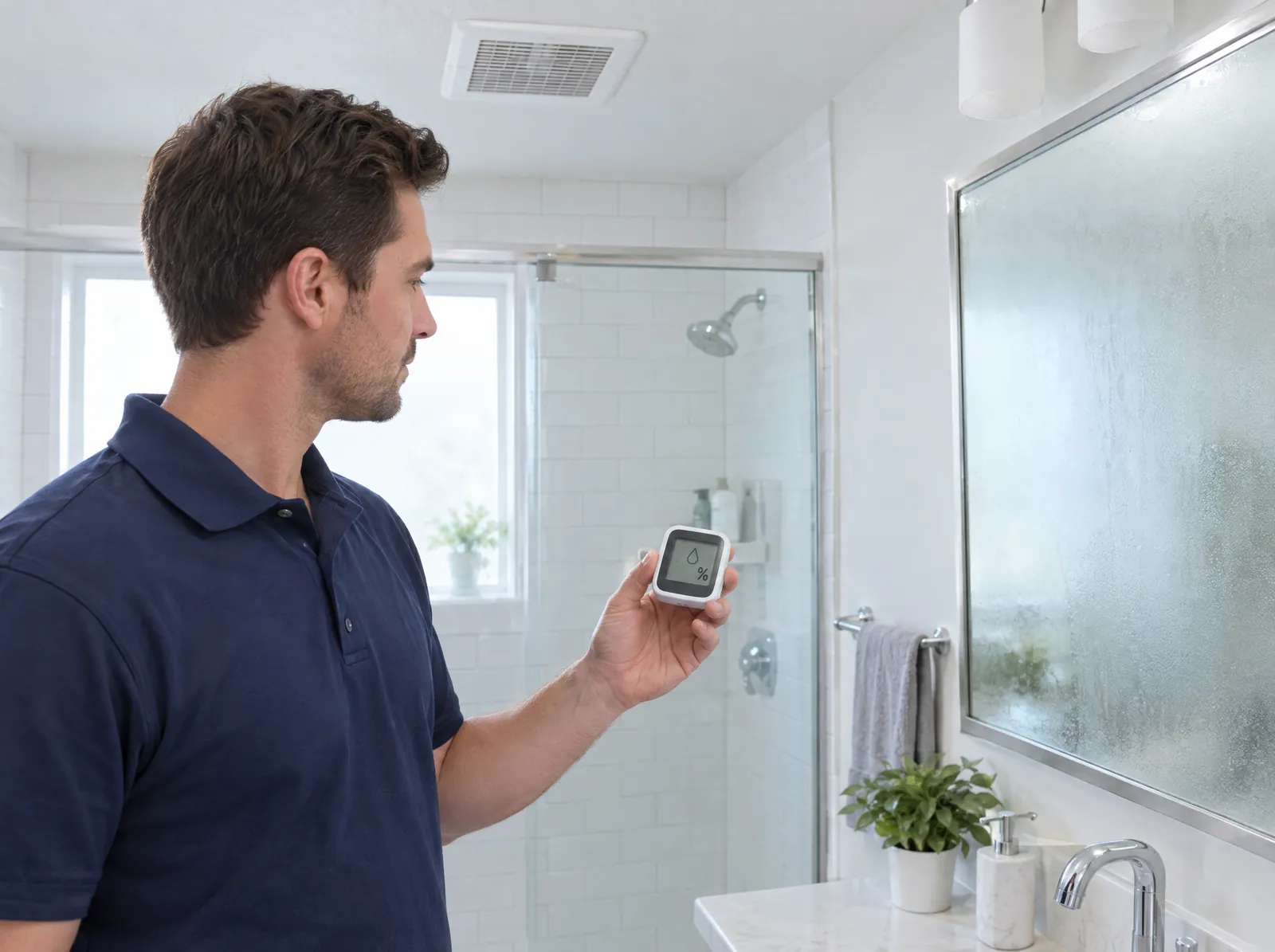
Once your child is back, a hygrometer on the dresser helps you notice rising humidity before it becomes another patch on the wall. Keep the bed and dresser a few inches off any outside wall, and look behind them now and then, especially in the first cold snap of the winter.
We remove mold and mycotoxins from buildings. We don’t diagnose or treat medical conditions, and nothing on this page is medical advice. Please bring any questions about your child’s health, including where they should sleep, to their pediatrician or your family’s doctor. With your permission, we’re glad to share test results and our plan with them.
We're done when the lab says so.
Every remediation ends with clearance testing, and our work is backed by a complete-removal guarantee. We don't close a job on a failed result.
Talk to a specialistGet the room checked
Tell us where you found it and how long it's been there. A specialist will call you back to talk about inspecting and testing the room.
- (833) 772-6653
- info@americanmoldexperts.com
- Open 7 days, 8am to 8pm