
Do I need to leave my house if I have mold illness?
Short answer
Not always. Whether to stay somewhere else while your home is tested and treated is a decision for you and your doctor. Many people stay in rooms that test clean while the problem area is sealed off; others stay with family or in a short-term rental until clearance passes. Home facts help that conversation: where the source is, whether the bedroom is clean and whether the work can be contained.
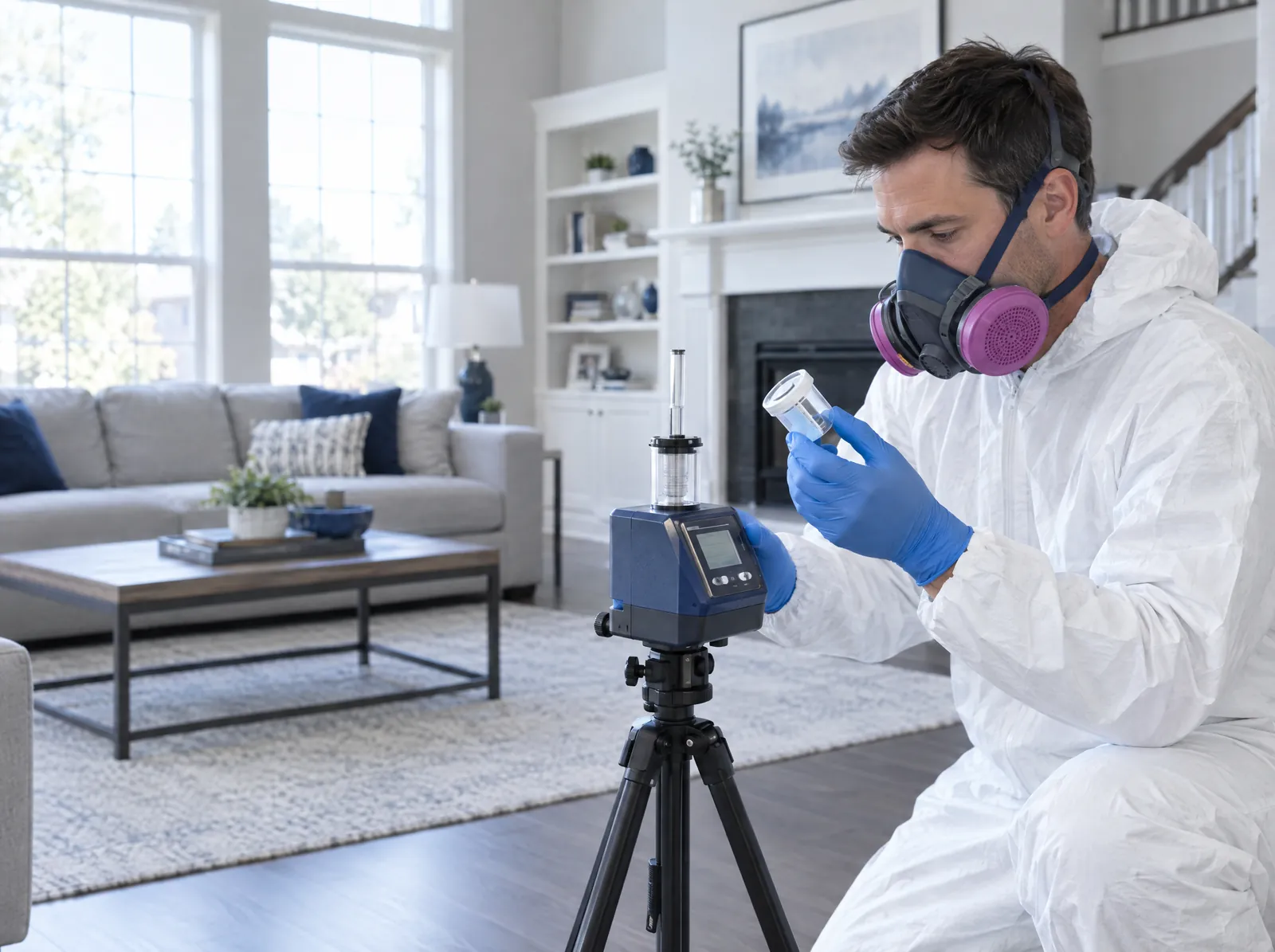
Staying elsewhere for now, and whose call it is
When you’re unwell and the house might be part of the reason, the urge to leave right away is understandable. The question on this page is a temporary one: should you stay somewhere else while the home is tested and the problem is fixed, or can you stay in the parts of the house that aren’t affected? That’s a medical question as much as a building one, because it depends on your health, your symptoms and your doctor’s read of both. We don’t make that call, and you should be cautious of any contractor who does.
It helps to split the time into two stretches. The first is now, before anything has been tested. The second is while remediation is underway. What’s known about the home today shapes the first. The work plan shapes the second, and a good plan answers it in writing before the first wall is opened. Neither stretch is the same as deciding to give up on the house. If that’s where your thinking has gone, the question becomes should I move out because of mold, and our decision guide covers that permanent choice.
Home information that helps the decision
What a doctor usually needs is information about the building that they can’t collect themselves. That’s the part we can help with, and it tends to make the conversation far more useful.
| Question | How it’s answered | Why a doctor may care |
|---|---|---|
| How much of the house is affected? | Dust testing, air sampling and a room-by-room inspection | One closed-off room is a different situation from contamination spread through the whole house |
| Where is the source? | A moisture inspection of the basement, attic, plumbing walls and roof lines | A source in a room you rarely use may be easier to isolate |
| Does the affected area share air with the rest of the home? | An HVAC check of the coil, drain pan, returns and ducts | A contaminated system reaches every room it serves |
| Is the bedroom clean? | Sampling that room on its own | It’s where most people spend the most continuous hours |
| Can the work be contained? | A written containment plan | It shows whether rooms you’d live in can be kept separate from the work |
Bring the results and the written plan to your appointment. Our page on mold testing for people with mold illness explains which tests doctors ask for most often.
The temporary options families usually weigh
- Staying, with the problem area sealed off. Possible when contamination is limited and the rooms you use test clean.
- Moving into unaffected rooms. Some people sleep in a cleared part of the house while work goes on elsewhere, behind containment.
- Staying elsewhere during the work only. Common when the HVAC system is involved, when removal will create the most dust, or when containment can’t fully separate the living space.
- Staying elsewhere until clearance passes. Some people with mold illness leave from the start of testing until the house is verified clean, on their doctor’s advice.
For the day-to-day side of living at home during the work, such as noise, sealed rooms and crew schedules, see our answer to “Can I stay in my house during mold remediation?” For what keeps dust inside the work zone, how mold containment works explains the barriers and negative air.
If you leave, even for a while
A temporary stay somewhere else goes better with a little planning. Take clothes and essentials that have been laundered or wiped first, so you don’t carry the same dust with you. Keep a list of what you took. Before you return, ask for clearance results on the rooms you’ll be living in, and share them with your doctor so the decision to come back is made the same way the decision to leave was.
While you’re away, keep the house closed up and the source area undisturbed unless the work has started. Check that the HVAC system isn’t pulling air from the affected area into the rest of the house. If you can, have someone check the house after heavy rain so a new leak doesn’t go unnoticed while you’re gone.
We remove mold and mycotoxins from buildings. We don’t diagnose or treat medical conditions, and nothing on this page is medical advice. Please decide whether to stay in or leave your home, and when to return, together with your doctor. With your permission, we’re glad to share test results and our plan with them.
We're done when the lab says so.
Every remediation ends with clearance testing, and our work is backed by a complete-removal guarantee. We don't close a job on a failed result.
Talk to a specialistGet the facts your doctor will ask about
Tell us what's going on in the house and what your doctor has asked. A specialist will call you back to talk about testing and a plan for the rooms you'll use.
- (833) 772-6653
- info@americanmoldexperts.com
- Open 7 days, 8am to 8pm