
Are older Indianapolis homes more prone to mold?
Short answer
Often, yes, but age alone doesn't cause mold. Older Indianapolis homes are more likely to have stone or brick foundations that let moisture through, little or no vapor barrier, missing bath fans, aging plumbing and decades of past leaks. Many also have plaster walls, which hold up to moisture better than drywall. Newer, tighter homes have their own weak spots. Condition matters more than the year built.
What was different about how they were built
Indianapolis has a lot of older housing, from Victorian and early 1900s homes in neighborhoods like the Old Northside, Herron-Morton Place, Irvington, Fountain Square and Meridian-Kessler to the postwar ranches and Cape Cods that filled in much of the county after World War II. These houses were built before modern moisture control was standard. That shows up in a few predictable ways:
- Foundations. Stone and brick foundations with lime mortar let groundwater through far more readily than a modern poured wall with a damp-proof coating. Many were built as cellars, never meant to be living space.
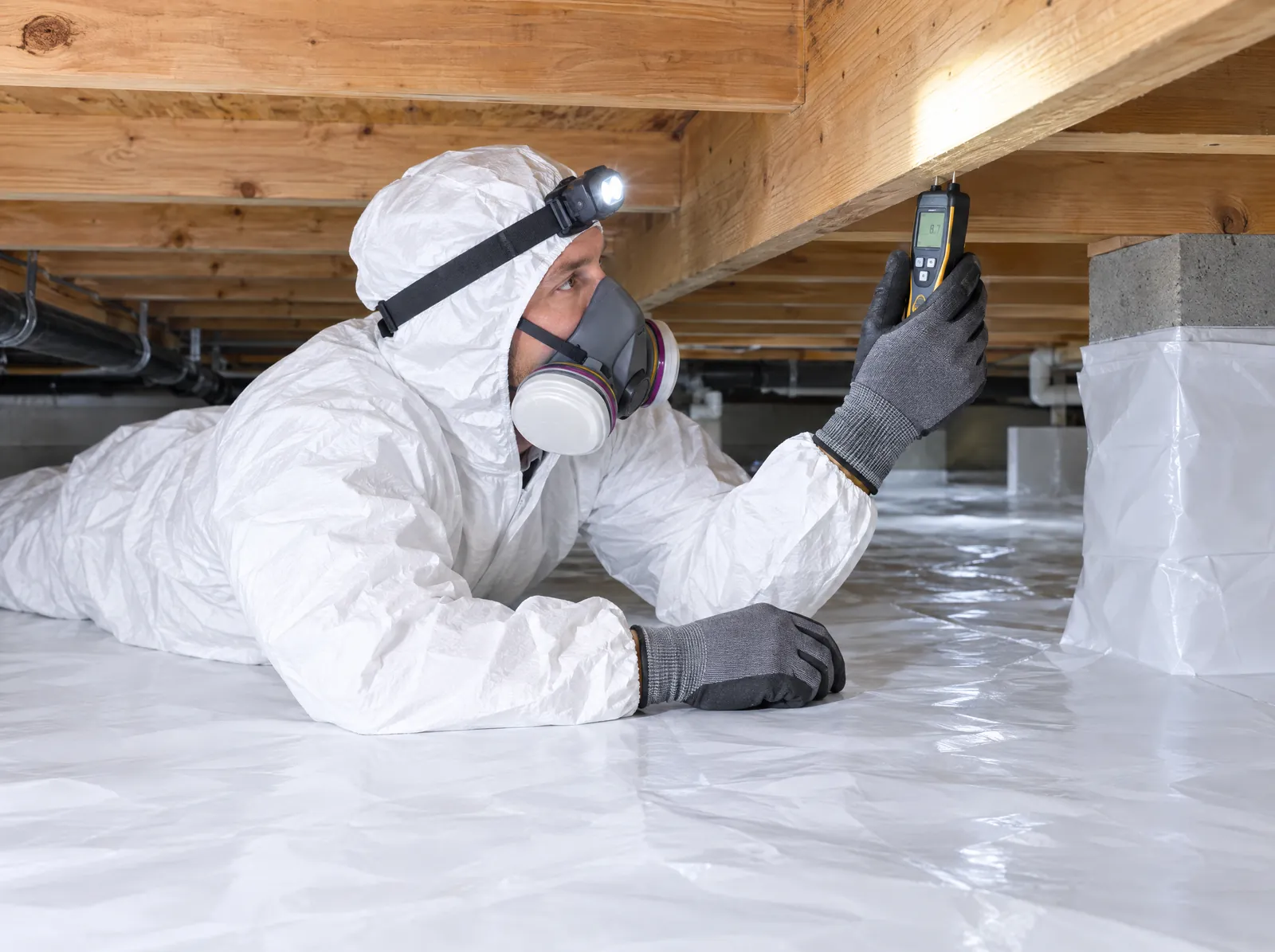
- No vapor barriers. Crawlspaces under older homes often have bare dirt or a thin sheet of plastic added decades later.
- Little mechanical ventilation. Many older bathrooms had a window instead of an exhaust fan. When fans were added, they sometimes vent into the attic.
- Aging plumbing. Galvanized supply lines, cast iron drains and clay sewer laterals corrode, crack or let roots in over time, and slow leaks and drain backups follow.
What older houses often get right
Age isn’t all bad news. Plaster on wood or metal lath has no paper facing, so it gives mold far less to feed on than paper-faced drywall. Old houses were also leaky, and the constant exchange of indoor and outdoor air carried moisture out. Solid old-growth framing tends to tolerate wetting and drying better than some modern engineered materials. An older home that has been kept up, with working gutters, a dry basement and sensible ventilation, can be less prone to mold than a newer one that hasn’t.
Renovations are where problems often start
In our experience, many mold problems in older Indianapolis homes trace back to updates rather than original construction. Finishing an old stone basement with drywall and carpet puts food right against a wall that was always damp. Blowing insulation into old walls or air sealing a drafty house without adding ventilation traps moisture that used to escape. Replacing plaster with drywall behind a slow leak creates a spot where mold thrives. Quick cosmetic updates before a sale, like fresh paint and new flooring, can also cover signs of past water. If you’re buying, look closely at a basement that was recently finished.
Newer homes aren’t immune
Homes built in the last few decades across Marion, Hamilton and Hendricks counties are tighter and better insulated, which saves energy but means moisture from cooking, showers and people stays inside unless the ventilation removes it. Finished basements against cool foundation walls are common, and so is oriented strand board sheathing, which can be slow to dry once it’s wet. So the question for any house isn’t really its age. It’s whether water is getting in, and whether the house can get rid of it. For the bigger picture, see how common mold is in Indianapolis homes.
Where to look in an older house
- Basement walls, especially where stone or brick meets new framing or drywall.
- Crawlspace soil, joists and sill plates. Our crawlspace mold in Indiana page covers what we find there.
- The attic around bath fan ducts and at the eaves.
- Under old tubs and around original cast iron drains.
- Plaster ceilings below bathrooms, where cracks and stains point to a leak above.
We work in older homes all over Indianapolis from our office in Avon. We prefer cleaning and treating original materials over tearing them out when the testing supports it, because in a house with original plaster and woodwork, what comes out doesn’t come back the same.
We remove mold and mycotoxins from buildings. We don’t diagnose or treat medical conditions. If you have symptoms, please work with a doctor.
We're done when the lab says so.
Every remediation ends with clearance testing, and our work is backed by a complete-removal guarantee. We don't close a job on a failed result.
Talk to a specialistOwn or buying an older Indianapolis home?
An inspection finds where an older house is taking on water. Tell us about the home, and a specialist from our Avon office will call you back.
- (833) 772-6653
- info@americanmoldexperts.com
- Open 7 days, 8am to 8pm