
Southwest Florida guide
Mycotoxins after hurricane water damage
The storm is over and the walls are dry. What mold left behind in the dust may not be.
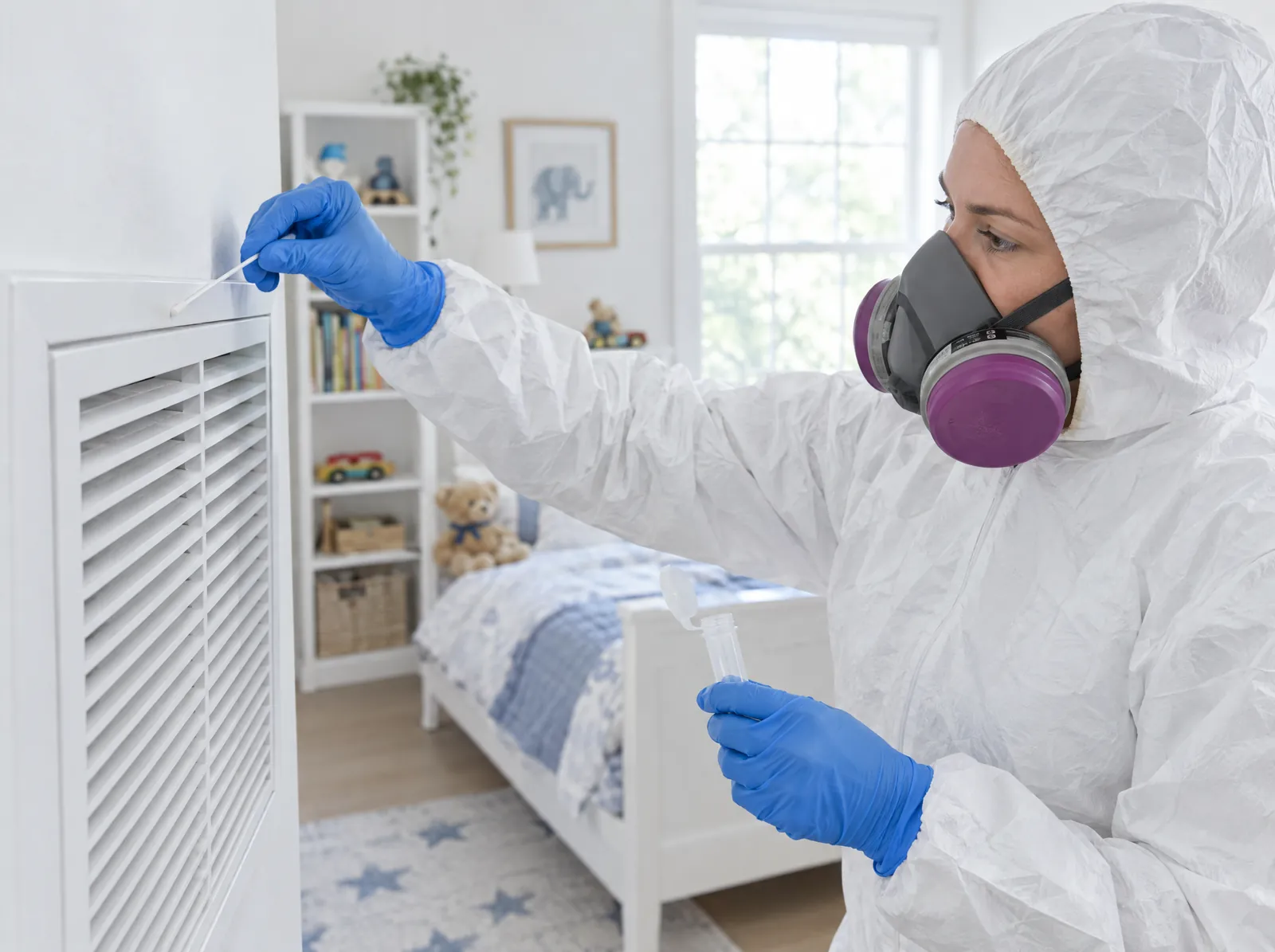
Are mycotoxins a concern after a hurricane?
Mycotoxins after a hurricane are a real concern when a home stayed wet long enough for mold to grow. Some molds that thrive on soaked drywall, wood and fabric produce mycotoxins, toxic compounds that can remain in dust, building materials and belongings after the mold itself is removed or dead. In Southwest Florida, where homes often sat wet and without power after Ian, Helene and Milton, cleaning for mycotoxins is part of a complete storm recovery.
Why storm-flooded Florida homes are a mycotoxin risk
Flood water soaks the cellulose in drywall paper, baseboards and cabinets, and Florida heat speeds up growth. When the power is out for days and crews are booked for weeks, mold has time to establish. The drywall gets cut out eventually, but the dust created during that demolition, and the spores and fragments already spread through the house, can carry mycotoxins onto surfaces, into the AC system and onto everything you kept.
Sound familiar?
- The flood cut and rebuild are done, but the house still doesn't feel right.
- Demolition happened without containment and dust went everywhere.
- Your AC ran while the house was wet.
- A family member's doctor asked whether the home was tested for mycotoxins.
We do it differently.
| Typical storm cleanup | Mycotoxin-aware recovery | |
|---|---|---|
| Target | Visible mold | Mold, spores, fragments and mycotoxins in dust |
| Demolition | Open cuts, no barriers | Containment and negative air |
| Cleaning | Bleach or biocide spray | HEPA vacuuming, detailed wiping and enzyme treatment |
| AC system | Filter change | Air handler and ducts inspected and cleaned if contaminated |
| Testing | Visual check or air test only | Independent assessment, with mycotoxin sampling where appropriate |

Why families trust us with their homes
-
Family-owned since 2008
A multigenerational family business. Not a franchise, not a private-equity rollup.
-
Trained and certified
Our team holds IICRC, CMR, CRMI and CCMI credentials in mold remediation and inspection.
-
Called on as experts
Attorneys bring us into legal cases involving mold and mycotoxins.
-
Documentation at every step
Photos, moisture logs and lab reports you can hand to your insurer or FEMA.
- IICRC Certified Firm
- CMR
- CRMI
- CCMI
- BBB A+ Accredited
- NAMRI
- IAQA
- NORMI
- AMMA
- PMII
The AME Clearance Method
Clearing mycotoxins from a storm-damaged home
The same order we follow on Southwest Florida projects, with testing and clearance handled by an independent licensed assessor.
Talk to a specialist-
Dry and stop the source
Nothing else holds until materials test dry and water has stopped coming in from the roof, windows or ground.
-
Independent assessment
A licensed Florida mold assessor inspects and samples. Where appropriate, that includes dust sampling for mycotoxins, and a written scope.
-
Contain the work areas
Sealed barriers and negative air keep contaminated dust out of rooms that are already clean.
-
Remove what can't be cleaned
Flood-soaked drywall, insulation, carpet and pad are removed and bagged inside containment.
-
Clean for particles and toxins
HEPA vacuuming and wiping of framing, block, slab and contents, then plant-based enzyme treatment designed to break down mycotoxins.
-
Address the AC
If the air handler or ducts were exposed, they're cleaned before the system runs through a clean house again.
-
Independent clearance
The assessor retests. The job isn't closed on a failed result.
Where mycotoxins settle after a storm
- Settled dust on floors, shelves and ledges
- Wall cavities and the base of block walls
- The air handler, coil and ductwork
- Upholstered furniture and mattresses
- Rugs, curtains and clothing
- Books, papers and cardboard
- Closets and cabinets near flooded walls
- Attic insulation if roof water got in
- Garage storage
- Vehicles parked in a flooded garage

Proof you can hold in your hands
When we finish, you don't get a handshake and a promise. You get the paperwork your family, your doctor, your insurer or your buyer can rely on.
Inspection report
What we found, where it is coming from, with color photos.
Written remediation plan
Scope, timeline and what will and won't be removed, before work starts.
Clearance lab report
Air, surface and mycotoxin results after the work is done.
A report for your doctor
With your permission, we share results directly with your care team.
Mycotoxins after Florida storms, explained
Killing mold isn’t removing it
Most storm cleanup is aimed at visible mold: cut out the wet drywall, spray what’s left, run fans, rebuild. That approach deals with growth you can see. It doesn’t deal with what that growth may have produced. Some molds make mycotoxins, and those compounds stay behind in dust and materials whether the mold is alive or dead. Our mycotoxins guide covers the science. This page is about what it means for a Southwest Florida home after a hurricane.
What made Ian, Helene and Milton different
Hurricane Ian in September 2022 brought catastrophic surge to Fort Myers Beach, Sanibel, Pine Island and Naples. Two years later, Helene sent surge along the Gulf coast and Milton made landfall near Siesta Key. Each storm left large numbers of homes wet at the same time, with power out and every restoration crew in the region booked.
Time is the key variable. The EPA advises drying water-damaged materials within 24 to 48 hours to prevent mold growth. When a whole region floods at once, some homes inevitably stay wet far longer than that, and some get opened up without containment because nothing else is available. That’s the combination that can spread contaminated dust through a house: extended growth, followed by demolition in the open.
The Florida homes most likely to need a closer look
- Homes that sat wet for days or weeks before drying started, including seasonal homes whose owners were out of state.
- Homes where the AC ran while walls were wet or the air handler took on water.
- Homes gutted without containment, where demolition dust reached bedrooms and closets.
- Homes repaired quickly without clearance testing before new drywall went up.
- Homes with a family member who is sensitive to mold or whose doctor has raised the question.
Testing for mycotoxins in Florida
Standard air samples count mold spores. Mycotoxin testing usually looks at settled dust, collected from surfaces where it has built up over time, and analyzed in a lab for a panel of specific toxins. The two answer different questions, and after a flood it’s often worth asking both.
In Florida, mold assessment and remediation are licensed separately. Under Florida Statute 468.8419, the company that assesses a structure generally can’t remediate it within 12 months, and the reverse, except certified Division I contractors. On our Southwest Florida projects, an independent licensed mold assessor inspects and samples the home, writes the scope, and performs clearance testing. We do the remediation to that protocol. Our page on mycotoxin testing in Southwest Florida explains how sampling works with that independent assessor.
How mycotoxins are removed
There is no spray that makes mycotoxins disappear. Bleach, fogging and ozone are common after storms, and none of them is a reliable answer, as our national answers on bleach and fogging explain. What works is physical: remove porous materials that can’t be cleaned, HEPA vacuum and wipe everything else, clean or replace contaminated AC components, and then treat surfaces with enzyme products designed to break down mycotoxins. We use products from US Enzyme for that step.
Belongings deserve their own plan. Soaked mattresses and upholstery usually go. Hard items clean well. Things that were only exposed to dust, such as clothing, books and furniture in rooms away from the water, can often be cleaned rather than thrown away. Our page on mycotoxins on belongings goes through the options.
Every project ends with independent clearance, and it’s backed by a complete-removal guarantee. We don’t close a job on a failed result.
We remove mold and mycotoxins from buildings. We don’t diagnose or treat medical conditions. If anyone in your home has symptoms, please work with a doctor. With your permission, we’re glad to share test results and our plan with them.
Common questions
Have a question that isn't here? Call a specialist
Do mycotoxins go away after the mold is removed?
Not on their own. Mycotoxins are chemical compounds, not living organisms, so killing or removing the mold doesn't remove what it already produced. They have to be physically cleaned out of dust and off surfaces, or broken down.
Does bleach kill mycotoxins after a flood?
Bleach can kill surface mold, but it isn't a reliable way to deal with mycotoxins, and it adds water to materials you're trying to dry. Removal of contaminated materials, HEPA cleaning and enzyme treatment are the better approach.
How are mycotoxins tested in a Florida home?
Usually by sampling settled dust and sending it to a lab for a mycotoxin panel, alongside standard mold sampling. In Florida, that testing and the final clearance are handled by a licensed assessor independent of the remediation company.
Can I keep belongings from a flooded home?
Hard, non-porous items can usually be cleaned. Porous items soaked by flood water, like mattresses, upholstered furniture and carpet, are usually discarded. Items that were only exposed to dust can often be HEPA cleaned. It depends on the item and the exposure.
Should I run my AC after hurricane water damage?
The EPA advises not running an HVAC system you know or suspect is contaminated with mold, because it can spread mold through the building. Have it checked first if water reached the air handler or ducts or if mold grew nearby.
Is it safe to live in the house during cleanup?
That depends on how much of the house is affected, whether work areas can be contained, and the health of the people living there. For anyone with health concerns, talk to your doctor before deciding.
We're done when the lab says so.
Every remediation ends with clearance testing, and our work is backed by a complete-removal guarantee. We don't close a job on a failed result.
Talk to a specialistWorried about what the storm left behind?
Tell us what happened to your home and what's been done so far. A Southwest Florida specialist will call you back.
Not sure yet? Try the free AI Mold Risk Check