
Southwest Florida guide
Florida rainy season mold: a Southwest Florida guide
Five months of afternoon storms and heavy air. Here's how to keep the wet season out of your house.
Why is Florida rainy season mold such a problem?
Florida rainy season mold is common because the wet season stacks every condition mold needs. The National Weather Service defines Southwest Florida's rainy season as May 15 to October 15, when sea-breeze thunderstorms arrive most afternoons. Outdoor humidity stays high, wind-driven rain tests roofs, windows and stucco, and air conditioners run hard and drain constantly. Any weak point in a home shows up as moisture, and in Florida heat, moisture becomes mold quickly.
What the wet season does to a Florida house
Dry season is forgiving. A small leak dries out between showers and the AC barely works to hold humidity. From mid-May on, that changes. Storms come most days, the air stays saturated, and the house is under steady pressure from outside. It also overlaps with hurricane season, and with the months many seasonal residents are away and homes sit closed.
Sound familiar?
- A musty smell appears every summer and fades in the winter.
- A window or slider leaks only during hard, sideways rain.
- The AC drain line backs up mid-summer.
- You spend summers up north and worry about the house.
We do it differently.
| Dry season | Rainy season | |
|---|---|---|
| Outdoor air | Drier and cooler | Hot and humid most days |
| Rain | Occasional fronts | Afternoon thunderstorms, often wind-driven |
| AC workload | Light | Heavy, with constant condensate |
| Small leaks | Dry out between rains | Stay wet and feed growth |
| Occupancy | Seasonal residents home | Many homes closed up |

Why families trust us with their homes
-
Family-owned since 2008
A multigenerational family business. Not a franchise, not a private-equity rollup.
-
Trained and certified
Our team holds IICRC, CMR, CRMI and CCMI credentials in mold remediation and inspection.
-
Called on as experts
Attorneys bring us into legal cases involving mold and mycotoxins.
-
Documentation at every step
Photos, moisture logs and lab reports you can hand to your insurer or FEMA.
- IICRC Certified Firm
- CMR
- CRMI
- CCMI
- BBB A+ Accredited
- NAMRI
- IAQA
- NORMI
- AMMA
- PMII
The AME Clearance Method
A rainy season checklist for Southwest Florida homes
Best done in April or early May, before the first big storms, and repeated after any major rain event.
Talk to a specialist-
Clear the AC condensate line
Flush the line and check the pan. The EPA advises keeping drip pans clean and drain lines flowing, and summer is when they're most likely to clog.
-
Check the envelope
Look for stucco cracks, failed caulk around windows and sliders, and gaps where pipes and wires enter. Seal them before storms find them.
-
Look at the roof and gutters
Loose or damaged roofing, clogged gutters and downspouts that dump water against the wall all push water toward block walls.
-
Set humidity targets
Place a hygrometer inside and aim to keep humidity below 60 percent. Use a self-draining dehumidifier where readings run high.
-
Plan for being away
If you leave for the summer, keep the AC running at a sensible setting, and have someone check the house after big storms.
-
Act on leaks the same day
The EPA advises drying water-damaged materials within 24 to 48 hours. In a Florida summer, that clock is short.
Rainy season trouble spots to watch
- Sliding glass door tracks and weep holes
- Window sills on the storm-facing side
- Ceilings under flat or low-slope roof sections
- The AC closet floor and drain pan
- Lanai-to-house thresholds
- Exterior walls behind furniture
- Closets on outside walls
- Garage walls and stored boxes
- Bathroom ceilings and exhaust fans
- Attic around roof penetrations

Proof you can hold in your hands
When we finish, you don't get a handshake and a promise. You get the paperwork your family, your doctor, your insurer or your buyer can rely on.
Inspection report
What we found, where it is coming from, with color photos.
Written remediation plan
Scope, timeline and what will and won't be removed, before work starts.
Clearance lab report
Air, surface and mycotoxin results after the work is done.
A report for your doctor
With your permission, we share results directly with your care team.
Rainy season mold in Southwest Florida, explained
What drives the wet season
According to the National Weather Service in Tampa Bay, Southwest Florida’s rainy season runs from May 15 to October 15. As the tropics shift north in late spring, the warm Gulf and Atlantic and the daily sea breezes set up a pattern of afternoon thunderstorms that lasts into the fall. For a house, that means months of near-daily soaking, saturated air, and very little chance for anything to dry out between storms.
The Atlantic hurricane season, June 1 to November 30, overlaps most of it. Tropical storms don’t have to make landfall nearby to dump days of rain on Lee, Collier and Charlotte counties.
Three ways the rainy season gets inside
Wind-driven rain
Summer storms often come with gusty wind that pushes rain sideways. Water that would run off a wall in a gentle shower gets forced into hairline stucco cracks, window frames and slider tracks. Many rainy-season leaks only happen during those storms, which is why they’re easy to miss. If a stain appears after one particular kind of storm, note which side of the house faced the wind.
Humid air
Even a watertight house takes in humid air every time a door opens and through small gaps and leaky ducts. In the wet season, the AC is the main thing holding indoor humidity down. Our guide to humidity and mold in Florida homes explains how system sizing, drainage and settings affect that.
The AC system itself
An air conditioner running hard in July produces a lot of condensate. That water has to leave through the pan and drain line. Algae and debris build up in those lines in warm weather, and a backup can soak the AC closet floor and the drywall around it. Because the air handler moves air through the whole house, a wet air handler is the last place you want mold. See our page on AC and duct mold in Southwest Florida if you’ve already had an overflow.
Closed-up homes in the wet season
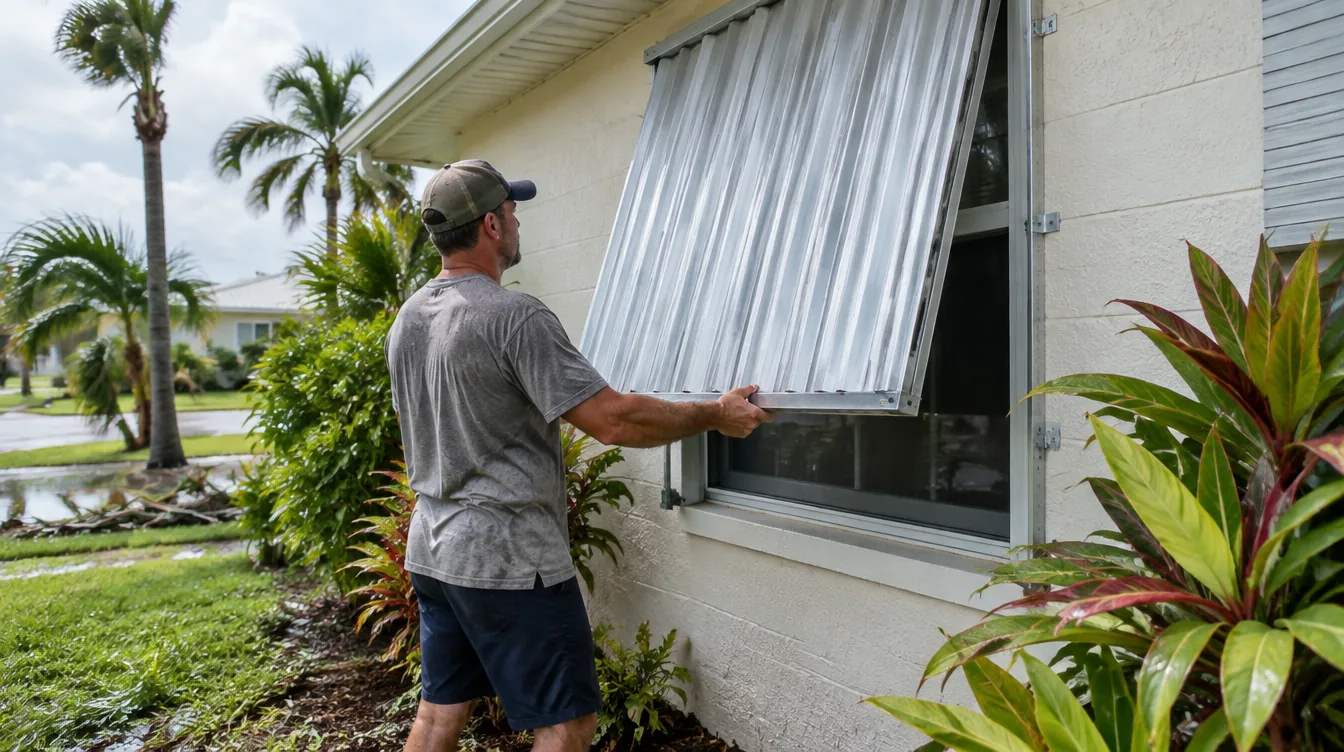
Many Southwest Florida homeowners spend the summer elsewhere, so the rainiest months are often the months nobody is home. A small roof leak in June can go unnoticed until November. An AC switched off to save power lets indoor humidity climb to outdoor levels. Hurricane shutters left up for months block light and airflow.
If that’s your situation, keep the AC running, consider a dehumidifier that drains on its own, and arrange for someone to walk the house after major storms. Our seasonal home mold page has more on setting up a home for the summer.
When the season leaves mold behind
If you find growth after the summer, don’t just wipe it and wait for next year. A patch that returns every rainy season means water is still getting in. Florida keeps mold testing and removal separate under Florida Statute 468.8419, and on our Southwest Florida projects an independent licensed mold assessor inspects and samples the home, writes the scope, and performs clearance testing. We do the remediation to that protocol, and we look for the rainy-season water path as part of the job. Not sure where to start? Try our free AI Mold Risk Check.
We remove mold and mycotoxins from buildings. We don’t diagnose or treat medical conditions. If anyone in your home has symptoms, please work with a doctor. With your permission, we’re glad to share test results and our plan with them.
Common questions
Have a question that isn't here? Call a specialist
When is rainy season in Southwest Florida?
The National Weather Service in Tampa Bay defines Southwest Florida's rainy season as May 15 to October 15. It overlaps with the Atlantic hurricane season, which runs from June 1 to November 30.
What time of year is worst for mold in Florida?
In Southwest Florida, the rainy season is usually the hardest stretch, because humidity, rain and heat are all at their peak at once. Homes that are closed up over the summer are especially exposed.
Why does my house smell musty only in summer?
A summer-only musty smell usually means moisture is building up somewhere during the wet season, from humidity, a small leak or the AC, and drying out in the winter. The growth is often still there in the dry months, just less active.
Should I run a dehumidifier during rainy season?
If a hygrometer shows humidity above 60 percent in any room with the AC running, a dehumidifier in that room helps. Closets, back bedrooms and closed-up homes benefit most.
Will my AC keep up with rainy season humidity?
A correctly sized, well-maintained system usually will. If the house feels cold but clammy, or the drain line keeps backing up, have the system checked before you rely on it.
What should I do after a heavy storm?
Walk the house within a day. Check ceilings, window sills, slider tracks, the AC closet and any spot that leaked before. Dry anything wet right away and call a professional if water got into walls.
We're done when the lab says so.
Every remediation ends with clearance testing, and our work is backed by a complete-removal guarantee. We don't close a job on a failed result.
Talk to a specialistSummer musty smell back again?
Tell us where you notice it and when. A Southwest Florida specialist will call you back.
Not sure yet? Try the free AI Mold Risk Check