
Florida mold assessment, explained
Mold inspection and testing in Southwest Florida
In Florida, the inspector and the remover are kept separate. Here's how that works and what a good inspection covers.
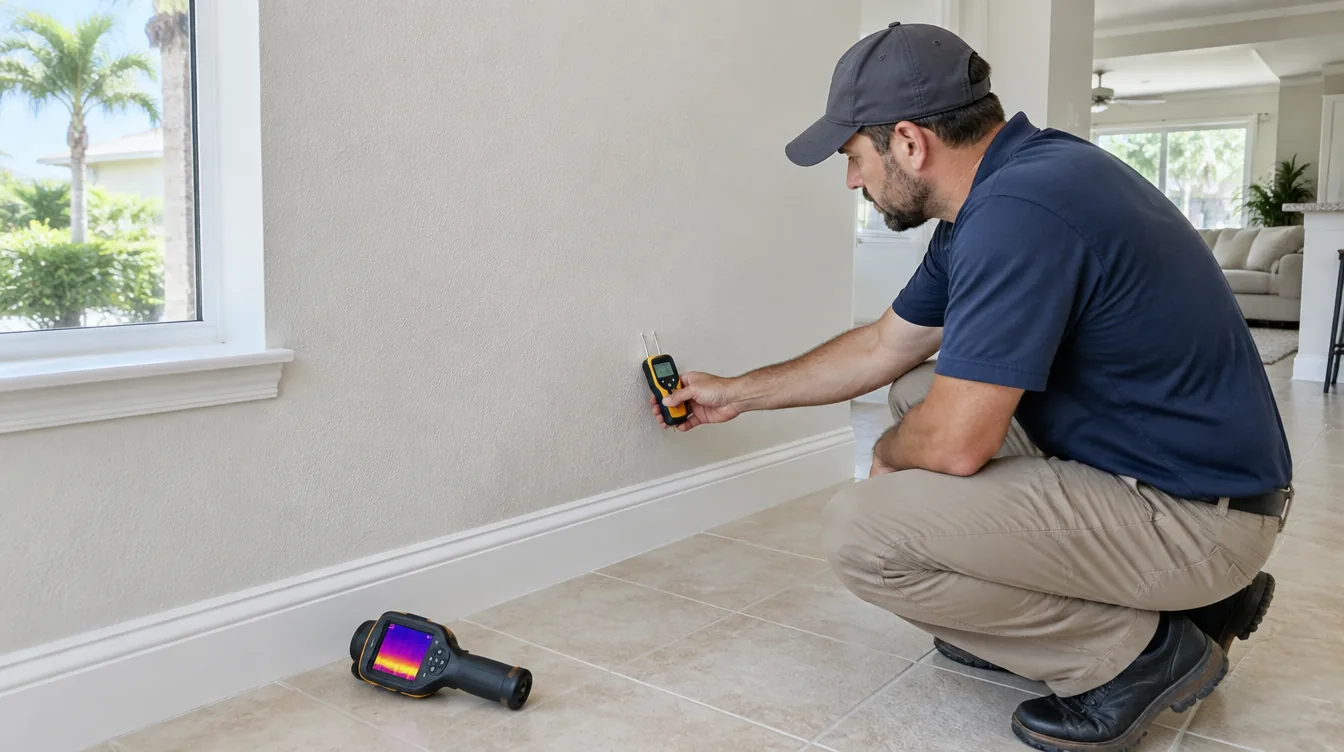
How does a mold inspection work in Southwest Florida?
A mold inspection in Southwest Florida is carried out by a licensed mold assessor. The assessor looks for water damage and growth, takes moisture readings, collects air, surface or dust samples for a lab, and writes a report with a remediation protocol if one is needed. Florida law keeps that assessor independent of the company that removes the mold, and the same independent assessor usually performs clearance testing afterward.
Why an independent inspection matters
A mold inspection is only useful if you can trust it. When the company that finds the mold is also the company that gets paid to remove it, there's an obvious pull toward finding more. Florida addressed that directly: under s. 468.8419, an assessor can't remediate a structure it assessed within 12 months, and a remediator can't assess one it remediated. That separation protects you, as long as you know to ask for it.
Sound familiar?
- You smell mold but can't see it anywhere.
- A free inspection turned into a large removal quote on the spot.
- You have a report full of spore counts and no idea what they mean.
- You're buying a home and need an answer before the inspection period ends.
We do it differently.
| A combined test-and-remove visit | Independent Florida assessment | |
|---|---|---|
| Who inspects | The company selling the removal | A licensed assessor with no part in the removal |
| Sampling | One air sample, or none | Indoor and outdoor air, surfaces or dust as needed |
| Moisture | A quick look | Readings on drywall, block and around the AC |
| Report | A quote | Findings, lab results and a written protocol |
| Clearance | The remover grades its own work | The independent assessor retests |

Why families trust us with their homes
-
Family-owned since 2008
A multigenerational family business. Not a franchise, not a private-equity rollup.
-
Trained and certified
Our team holds IICRC, CMR, CRMI and CCMI credentials in mold remediation and inspection.
-
Called on as experts
Attorneys bring us into legal cases involving mold and mycotoxins.
-
Documentation at every step
Photos, moisture logs and lab reports you can hand to your insurer or FEMA.
- IICRC Certified Firm
- CMR
- CRMI
- CCMI
- BBB A+ Accredited
- NAMRI
- IAQA
- NORMI
- AMMA
- PMII
The AME Clearance Method
What a Florida mold inspection covers
Assessors each have their own process, but a thorough inspection of a Southwest Florida home should include these steps. Here's what to expect, and where we come in.
Talk to a specialist-
History and walk-through
The assessor asks about leaks, storms, past repairs, how the AC is run and who in the home is affected, then walks every room.
-
Moisture mapping
Moisture meters and often a thermal camera check drywall, baseboards, block walls, ceilings under the roof and the AC closet.
-
Air sampling
Indoor air samples are compared against an outdoor sample, which matters in Florida, where outdoor mold levels are rarely low.
-
Surface and dust samples
Tape or swab samples identify visible growth. Settled-dust tests such as ERMI or HERTSMI-2, and mycotoxin panels, show what has built up over time.
-
Lab analysis and report
An accredited lab analyzes the samples. The report lays out findings, results and, where needed, a remediation protocol.
-
Remediation to the protocol
If removal is needed, we do the remediation to the assessor's protocol. We coordinate with the assessor and share our documentation.
-
Independent clearance
The assessor returns after remediation to inspect and sample again. The job isn't finished until clearance passes.
What a good assessment report should include
- The assessor's name and Florida license number
- A description of each area inspected
- Moisture readings and where they were taken
- Photos of damage and visible growth
- Indoor and outdoor air sample results
- Surface or dust results where collected
- The lab's name and the original lab report
- A written remediation protocol, if removal is needed
- Clear criteria for what clearance must show
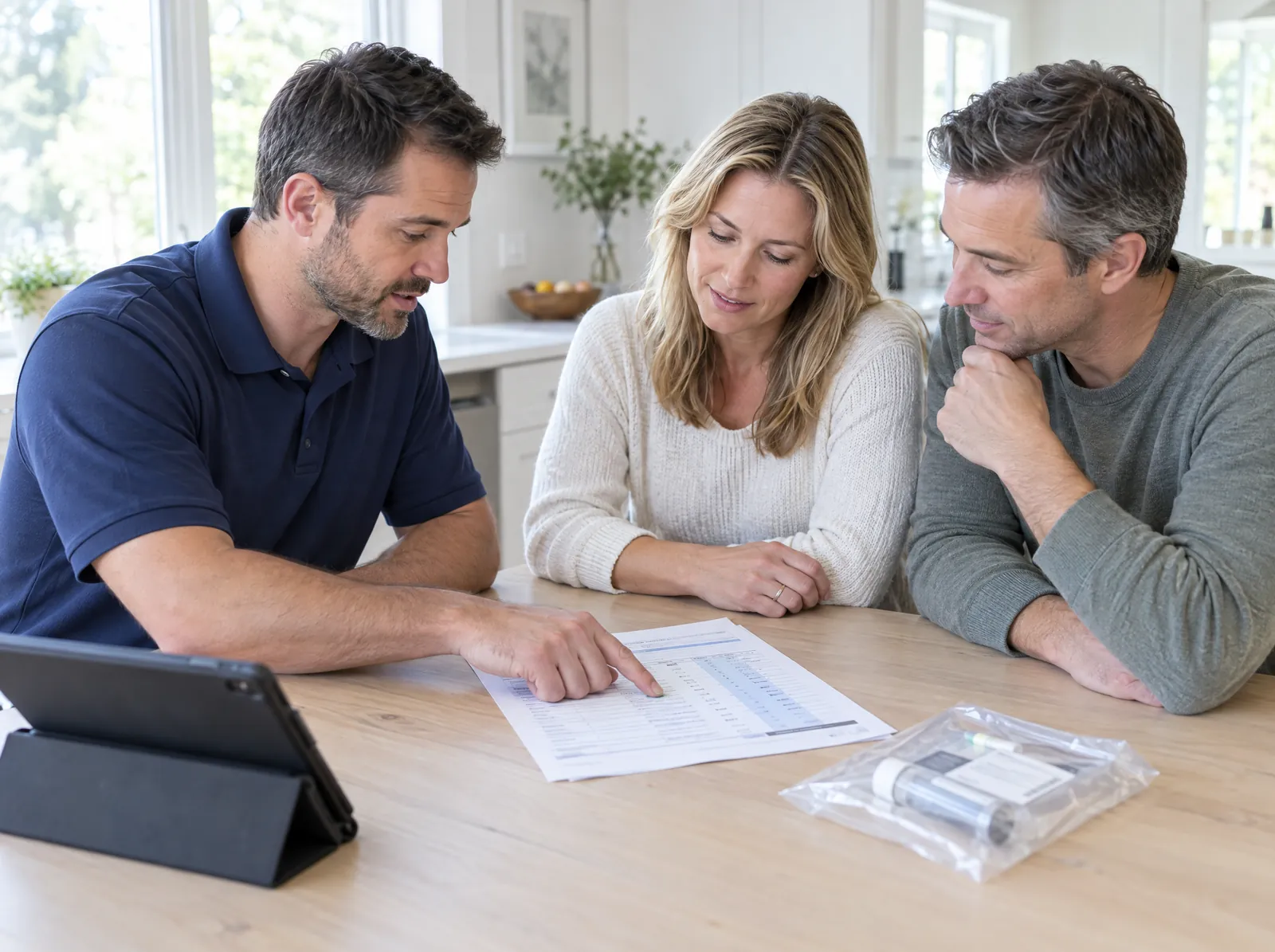
Proof you can hold in your hands
When we finish, you don't get a handshake and a promise. You get the paperwork your family, your doctor, your insurer or your buyer can rely on.
Inspection report
What we found, where it is coming from, with color photos.
Written remediation plan
Scope, timeline and what will and won't be removed, before work starts.
Clearance lab report
Air, surface and mycotoxin results after the work is done.
A report for your doctor
With your permission, we share results directly with your care team.
Mold testing in Southwest Florida, explained
What Florida law says about mold inspections
Florida regulates mold work by license. Chapter 468, Part XVI of the Florida Statutes sets up separate licenses for mold assessors, who inspect and test, and mold remediators, who remove. Section 468.8419 then keeps the two roles apart on the same building. An assessor may not remediate a structure it assessed within the last 12 months, and a remediator may not assess a structure it remediated within 12 months. That includes clearance testing. Certified Division I contractors are the exception.
In plain terms: the person who tells you how much mold you have, and the person who tells you it’s gone, should not be the person you’re paying to remove it. Our guide to Florida mold licensing covers the details.
How we work with independent assessors
We’re the remediation side of the job. On our Southwest Florida projects, an independent licensed mold assessor inspects and samples the home, writes the scope, and performs clearance testing. We do the remediation to that protocol. If you already have an assessor’s report, we work from it. If you don’t, we’ll talk through what an assessment should cover so you know what to ask for.
We think the separation is a strength, not a hurdle. The company testing your home has no reason to find more mold than is there, and the company removing it can’t grade its own work. It also means the clearance result is one you, your insurer or a future buyer can rely on.
Reading the results in a Florida climate
Air sampling counts mold spores in a measured volume of air. On its own, an indoor count doesn’t mean much, because outdoor air on the Gulf Coast carries plenty of spores most of the year. What matters is the comparison. Indoor counts well above the outdoor sample, or indoor mold types that don’t appear outside, point to growth inside the house. Types linked to long-term water damage, such as Stachybotrys or Chaetomium, get extra attention even at low counts.
Air samples are a snapshot. Settled-dust tests like ERMI and HERTSMI-2 look at what has built up in the home over months, which helps when a family is sick and the air results look normal. Mycotoxin panels go a step further and measure the toxic compounds some molds leave in dust. Our mycotoxin testing page explains when that’s worth adding.
Where assessors look in Southwest Florida homes
- The AC closet: the air handler, drain pan, return plenum and surrounding drywall.
- Exterior block walls, especially on the side that takes the weather, and around windows and sliding doors.
- Under sinks, behind the dishwasher and refrigerator, and around water heaters.
- Ceilings under flat roofs, roof penetrations and older roof sections.
- Closets, bathrooms and any room with poor air movement.
- The bottom of walls in any home that took on storm water.
When to get an inspection
Get the home assessed after any water event that wasn’t dried within a day or two, when you notice a musty smell with no obvious source, before buying a home, after opening a seasonal home that sat closed, and whenever a doctor has suggested the home might be affecting someone’s health. If you’re buying, build the assessment into your inspection period. Our page on mold inspections when buying a Florida home covers timing.
We remove mold and mycotoxins from buildings. We don’t diagnose or treat medical conditions. If you have symptoms, please work with a doctor. With your permission, we’re glad to share test results and our plan with them.
Common questions
Have a question that isn't here? Call a specialist
How much does a mold inspection cost in Florida?
It depends on the size of the home, how many samples are needed and whether dust or mycotoxin panels are included. Ask the assessor for a written price that lists the number and type of samples, so you can compare quotes fairly.
Can the same company test and remove mold in Florida?
Generally not on the same structure. Florida Statute 468.8419 bars an assessor from remediating a structure it assessed within 12 months, and a remediator from assessing one it remediated, with an exception for certified Division I contractors.
Do I need a mold test if I can already see mold?
You may not need a test to confirm mold is there, but an assessment still tells you how far it has spread, what's hidden, and what the remediation should cover. It also sets the baseline that clearance testing is measured against.
Why do Florida mold tests include an outdoor sample?
Outdoor mold levels in Southwest Florida are often high. An indoor number means little on its own. Comparing indoor and outdoor samples taken the same day shows whether mold is growing inside the home.
How do I check a Florida mold assessor's license?
Florida's Department of Business and Professional Regulation licenses mold assessors and remediators. You can look up a license on the DBPR website. Ask for the license number before the inspection.
Are home mold test kits worth it?
Settle-plate kits from the hardware store almost always grow something, because mold spores are everywhere. They can't tell you whether levels are normal or where the source is. A professional assessment compares indoor and outdoor air and looks for the moisture.
What is your role in a Florida mold inspection?
Our role is the remediation. On our Southwest Florida projects, an independent licensed assessor inspects and samples the home, writes the scope and performs clearance testing. We coordinate with the assessor and do the removal to that protocol.
We're done when the lab says so.
Every remediation ends with clearance testing, and our work is backed by a complete-removal guarantee. We don't close a job on a failed result.
Talk to a specialistFound mold, or think you have it?
Tell us what you're seeing and whether you have an assessment yet. A Southwest Florida specialist will call you back and explain next steps.
Not sure yet? Try the free AI Mold Risk Check