
When is mold season in Indiana?
Short answer
Outdoors, Indiana's mold season usually runs from late spring through fall, with spore counts often highest from midsummer until the first hard freeze. Indoor mold follows moisture instead of the calendar: basements and crawlspaces grow most during humid summers, while winter brings sweating windows and attic frost. So there's no safe season to ignore a musty smell, and testing works any time of year.
Outdoor mold: late spring through the first freeze
Mold spores are always in outdoor air, but the amount changes a lot over the year. In Indiana, counts typically start rising as the weather warms in late spring, stay high through the humid summer, and often peak in late summer and early fall. Common outdoor molds such as Cladosporium and Alternaria thrive on plants, leaves and soil in warm, damp weather.
Fall doesn’t end it right away. Falling leaves and decaying plant matter feed mold on the ground, and in farm country, harvest stirs dust and plant debris into the air. Counts usually drop sharply once a hard freeze arrives and stay low while the ground is frozen or snow-covered. A warm, wet spell in winter can bring a brief bump.
Weather within a season matters too. Counts often jump after rain followed by warm days, and on dry, windy afternoons when spores are released and carried.
Indoor mold keeps its own calendar
Mold growing inside a house doesn’t care what month it is. It cares about moisture. In Indiana homes that produces a fairly predictable pattern:
| Season | What’s happening outdoors | What we see indoors |
|---|---|---|
| Spring | Rain, snowmelt and rising groundwater | Basement seepage, sump pump failures, wet crawlspaces |
| Summer | High heat and dew points | Condensation on basement walls, ducts and crawlspace framing; musty smells |
| Fall | Outdoor spore counts often at their highest | Summer growth becomes noticeable once the house closes up |
| Winter | Cold, closed-up houses | Window condensation, attic frost, growth in closets on exterior walls |
Summer is the busiest stretch for new indoor growth, mostly below grade. Humidity is the driver, and our page on how humid an Indiana home should be covers the numbers to aim for.
Winter isn’t mold-free
People often assume cold weather shuts mold down. Outdoors, it mostly does. Indoors, houses stay warm, and cooking, showers and breathing add moisture that has nowhere to go once windows are shut. Warm, damp air finds the coldest surfaces: window glass, exterior wall corners behind furniture, and the underside of the roof deck when it leaks into the attic. Ice dams add another path for water. We explain the details in can mold grow in cold weather.
What the season means for testing
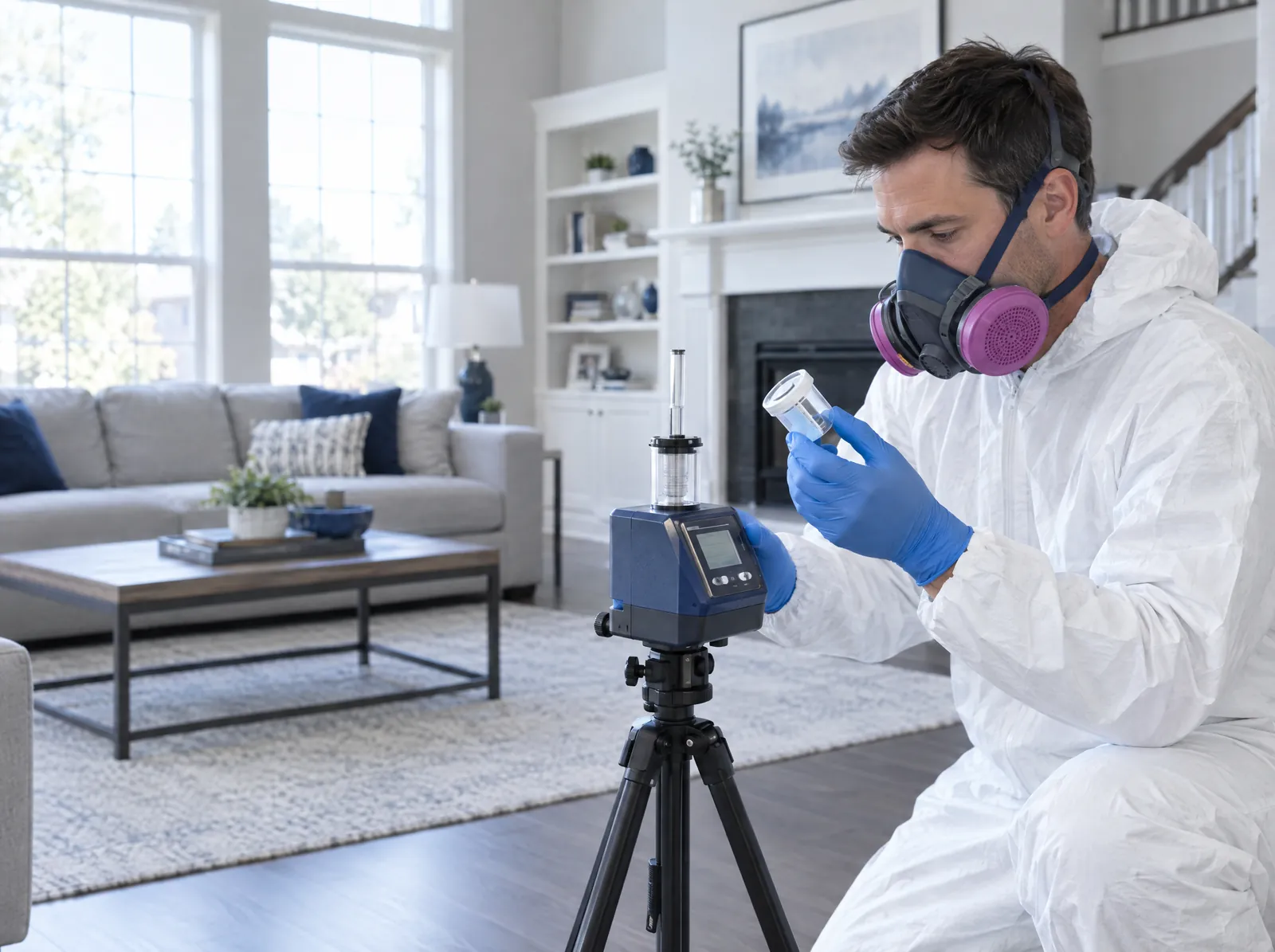
You don’t need to wait for a particular month to test. You do need someone who reads results with the season in mind. A mold air test compares indoor samples with an outdoor sample taken the same day. In September, outdoor counts may be high, and an indoor number that looks alarming on its own may be normal next to it. In January, outdoor counts are low, so a modest indoor count can point to a real source.
The mix of mold types matters as much as the count. Indoor samples dominated by types that are rare outdoors suggest growth inside the house, whatever the season. Our guide to what mold spore counts mean goes deeper, and our air quality testing in Indiana page explains how we sample in Indiana homes.
If symptoms seem to follow the seasons, it can be hard to tell whether outdoor mold or something inside the house is the trigger. That question belongs with your doctor. Testing the house gives both of you one fewer unknown.
We remove mold and mycotoxins from buildings. We don’t diagnose or treat medical conditions. If you have symptoms, please work with a doctor. With your permission, we’re glad to share test results and our plan with them.
We're done when the lab says so.
Every remediation ends with clearance testing, and our work is backed by a complete-removal guarantee. We don't close a job on a failed result.
Talk to a specialistWondering if it's the season or the house?
An indoor and outdoor air comparison answers that. Tell us what you're noticing, and a specialist from our Avon office will call you back.
- (833) 772-6653
- info@americanmoldexperts.com
- Open 7 days, 8am to 8pm