
How do Indiana floods affect mold?
Short answer
Floods make mold far more likely and harder to clean up. Water from Indiana rivers, creeks and overwhelmed storm sewers soaks drywall, insulation and flooring, and mold can begin growing within 24 to 48 hours if materials aren't dried. Because floodwater is usually contaminated, soaked porous materials generally need to come out, not just dry. The house then needs drying, cleaning and testing before anyone rebuilds.
Three ways Indiana homes flood
Not every flood looks the same, and the type affects both the mold risk and the cleanup.
- River flooding. Slow-rising water along the White River, the Wabash, the Ohio and their tributaries after days of heavy rain or snowmelt. It can stand in a house for days, which is the worst case for mold.
- Flash flooding. Intense summer thunderstorms overwhelm smaller creeks, such as Fall Creek or Eagle Creek in the Indianapolis area, and urban storm drains. Water rises and falls fast but carries mud and debris.
- Basement flooding. Groundwater through the foundation, a failed sump pump, or a sewer backup during a storm. No river involved, and often the most common flood in a given year. See whether sump pump failure causes mold for that scenario.
Why floodwater is different from a clean leak
Water from a burst supply line starts clean. Floodwater doesn’t. Industry cleanup standards treat water that has come from rivers, surface runoff or sewers as grossly contaminated. It carries soil, bacteria and whatever it picked up along the way, and it deposits that in every porous material it touches.
That changes the cleanup. Drywall, insulation, carpet, pad and upholstered furniture that soaked up floodwater generally can’t be dried and reused safely. Hard, non-porous items can usually be cleaned. Wood framing is usually cleaned, dried and kept. The mud and silt left behind also hold moisture and feed mold, so they have to be removed, not just swept to the side.
What happens to mold after the water goes down
Mold can start on wet materials within 24 to 48 hours, and in a warm Indiana summer it moves quickly. The bigger risk is what happens in the weeks after. Wall cavities, subfloors and framing dry far more slowly than surfaces. A house that looks dry can still have wet studs behind new drywall, and mold grows there out of sight.
Belongings are part of it too. Books, clothing and furniture that sat in a damp house for weeks can hold mold and the dust it leaves behind. Our page on mycotoxins on belongings explains what can be cleaned and what usually can’t.
Common mistakes after an Indiana flood
- Rebuilding too soon. Closing walls over framing that hasn’t reached normal moisture levels traps water inside.
- Drying without removing. Fans won’t make flood-soaked drywall or insulation safe.
- Relying on bleach or foggers. They don’t remove contaminated material or dust, and bleach adds water to porous surfaces.
- Skipping protection. Wear gloves, boots and at least an N95 respirator when handling moldy, flood-damaged material, and keep children and anyone with health concerns out of the work area.
- Assuming insurance will cover it. Standard homeowners policies exclude flood, and flood insurance is separate. See does homeowners insurance cover mold in Indiana.
Proving the house is ready to rebuild
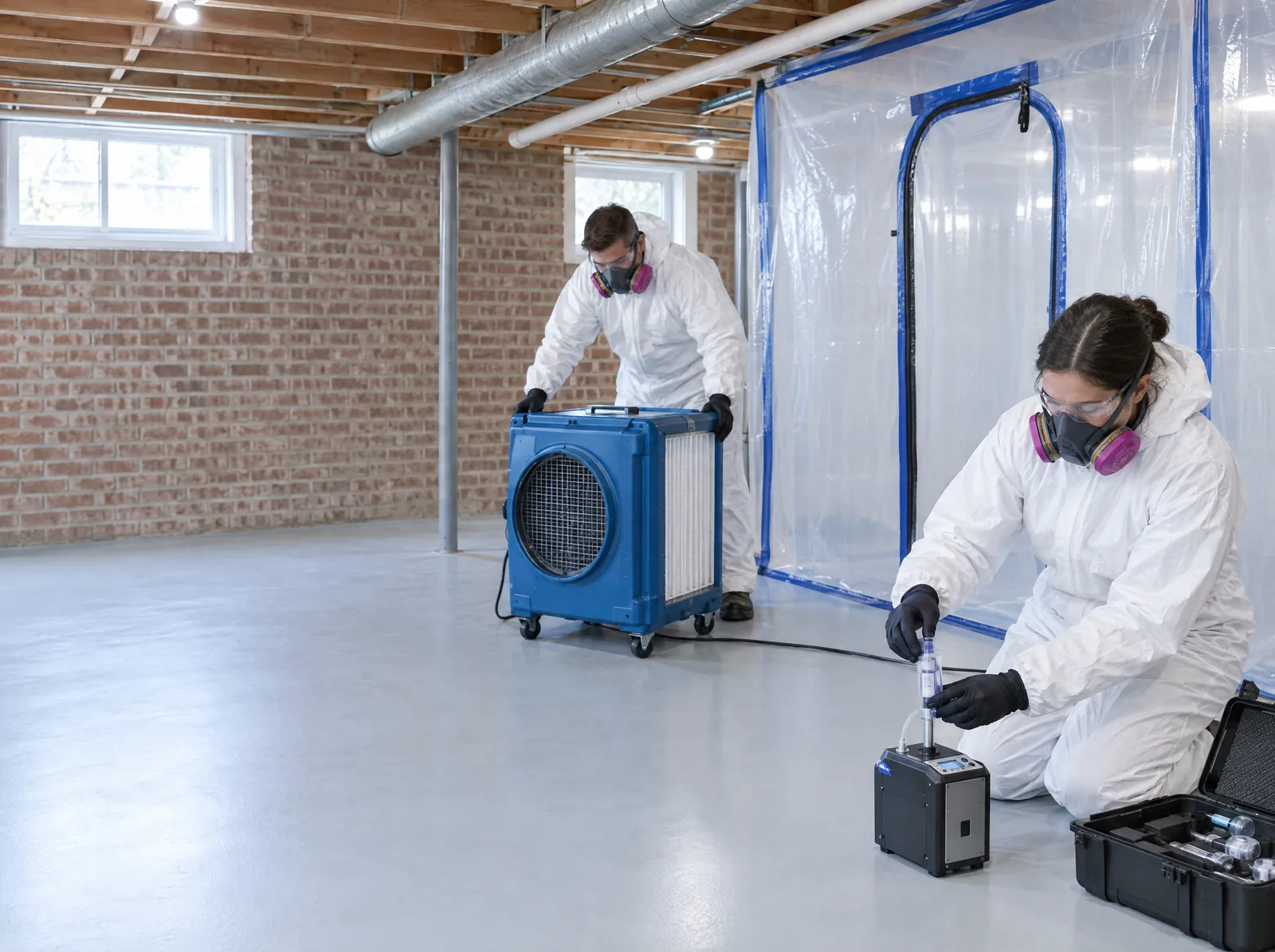
Before walls go back up, two things should be confirmed: the framing and subfloor are dry, and the air and surfaces are clean. Moisture readings answer the first. Clearance testing answers the second, comparing indoor samples with outdoor ones to show the house is back to normal levels. For families with someone sensitive to mold, a mycotoxin panel on settled dust adds another check. Our step-by-step guide on what to do after a basement flood in Indiana covers the early cleanup, and we can take it from there with testing and remediation from our Avon office.
We remove mold and mycotoxins from buildings. We don’t diagnose or treat medical conditions. If you have symptoms, please work with a doctor. With your permission, we’re glad to share test results and our plan with them.
We're done when the lab says so.
Every remediation ends with clearance testing, and our work is backed by a complete-removal guarantee. We don't close a job on a failed result.
Talk to a specialistCleaning up after a flood?
Testing before you rebuild confirms the house is dry and clean. Tell us what happened, and a specialist from our Avon office will call you back.
- (833) 772-6653
- info@americanmoldexperts.com
- Open 7 days, 8am to 8pm