
Mold Testing in Fort Myers, FL
Fort Myers homes live with water. Between the Caloosahatchee River, summer rain almost every afternoon from June through October, Gulf humidity that rarely lets anything dry out completely, and the flooding many neighborhoods took during Hurricane Ian, a Fort Myers house can develop a moisture problem long before anyone sees a spot on a wall.
If you have found staining in a bathroom in Dean Park, a musty smell in a McGregor Boulevard ranch that will not air out, a wet wall in a condo near Whiskey Creek, or a roof or plumbing leak in Gateway or Fort Myers Shores, mold testing is how you stop guessing. It tells you what is actually there, where the moisture is coming from, and what — if anything — needs to be done about it.
American Mold Experts SWFL (AME) provides mold testing and mold inspections across Fort Myers and Lee County. We explain what we find in plain language, we show you the lab paperwork, and we give you a written plan. No scare tactics, and no test sold just to sell a job.
Call AME SWFL: (239) 539-3997
Online: ameswfl.com
Why Fort Myers Homes Need Testing More Often Than Most
Fort Myers is not one kind of house, and the mold risk is not the same from one street to the next:
- Older homes in Dean Park, Edison Park, and along McGregor Boulevard — Some of these homes are close to a century old, with plaster walls, older plumbing, additions built in different decades, and air-conditioning systems that were retrofitted long after the house was built. Slow leaks and condensation can go on for years inside walls.
- 1960s–1980s ranch homes in Whiskey Creek, Tanglewood, and Villas — Slab-on-grade construction, original cast-iron or copper plumbing now at the end of its life, and flat or low-slope roof sections that pond water in heavy rain.
- Canal and riverfront homes — High water tables, seawall and lanai exposure, and storm surge and flooding risk mean wall cavities and flooring can get wet from below, not just from above.
- Newer homes and condos in Gateway, Daniels Parkway corridor, and south Fort Myers — Newer does not mean immune. A pinhole leak in a supply line, a clogged AC condensate drain, or a shower pan that was not sealed right can feed mold inside a wall in a house that is only a few years old.
- Homes that flooded or took roof damage in Ian and later storms — Drying that looked complete on the surface sometimes was not complete inside wall cavities, under flooring, or in insulation.
In all of these, the pattern is the same: mold follows moisture. Testing that does not find the moisture source is only half a test.
What Mold Testing Actually Is — and Is Not
We want you to understand this part clearly, because it is where people get misled most often.
- Labs report results. AME makes the findings. Samples go to an accredited laboratory. The lab reports what was in the sample. AME then interprets those results together with the inspection — where the sample was taken, what the moisture readings showed, and what was visible in the home — and gives you our findings.
- There is no pass or fail. No lab report, and no honest inspector, can stamp a home “passed” or “failed” for mold. Anyone who promises you a pass/fail result is selling you something that does not exist.
- A flashlight only shows where to look. We use lights during every inspection, including in attics, closets, and under sinks — but a flashlight cannot confirm mold. Confirmation comes from the inspection as a whole and, where sampling is warranted, from lab results.
- Testing is not a health test. We test homes, not people. We cannot tell you whether mold is affecting your health, and we will not promise that testing or remediation will change how you feel. If you have health concerns, that conversation belongs with your doctor. Our job is to find and address a mold and moisture problem in the building, and to document it properly.
Our Mold Testing Process in Fort Myers
1. We talk first.
When you call (239) 539-3997, we ask what you have seen, smelled, or had happen — a leak, a flood, a stain, an AC problem, a recent roof repair. That history decides where we look first.
2. A real inspection of the home, not just a sample.
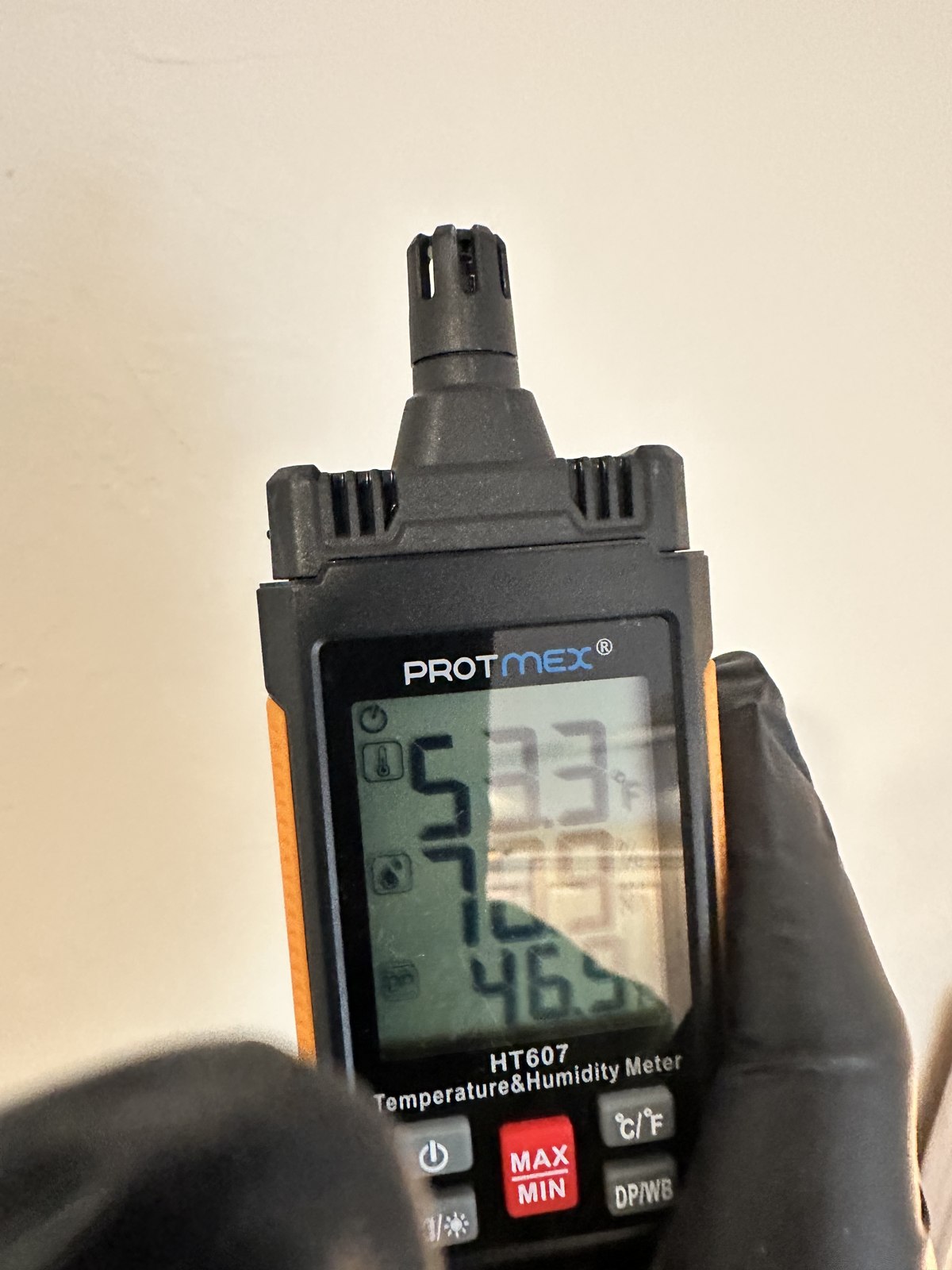
We walk the home room by room, check the areas Fort Myers homes most often hide problems — under sinks, around tubs and showers, at AC air handlers and condensate lines, in attics, garages, laundry rooms, and around windows that take wind-driven rain — and we take moisture readings in walls and flooring where the history or the staining points.
3. Sampling only where it makes sense.
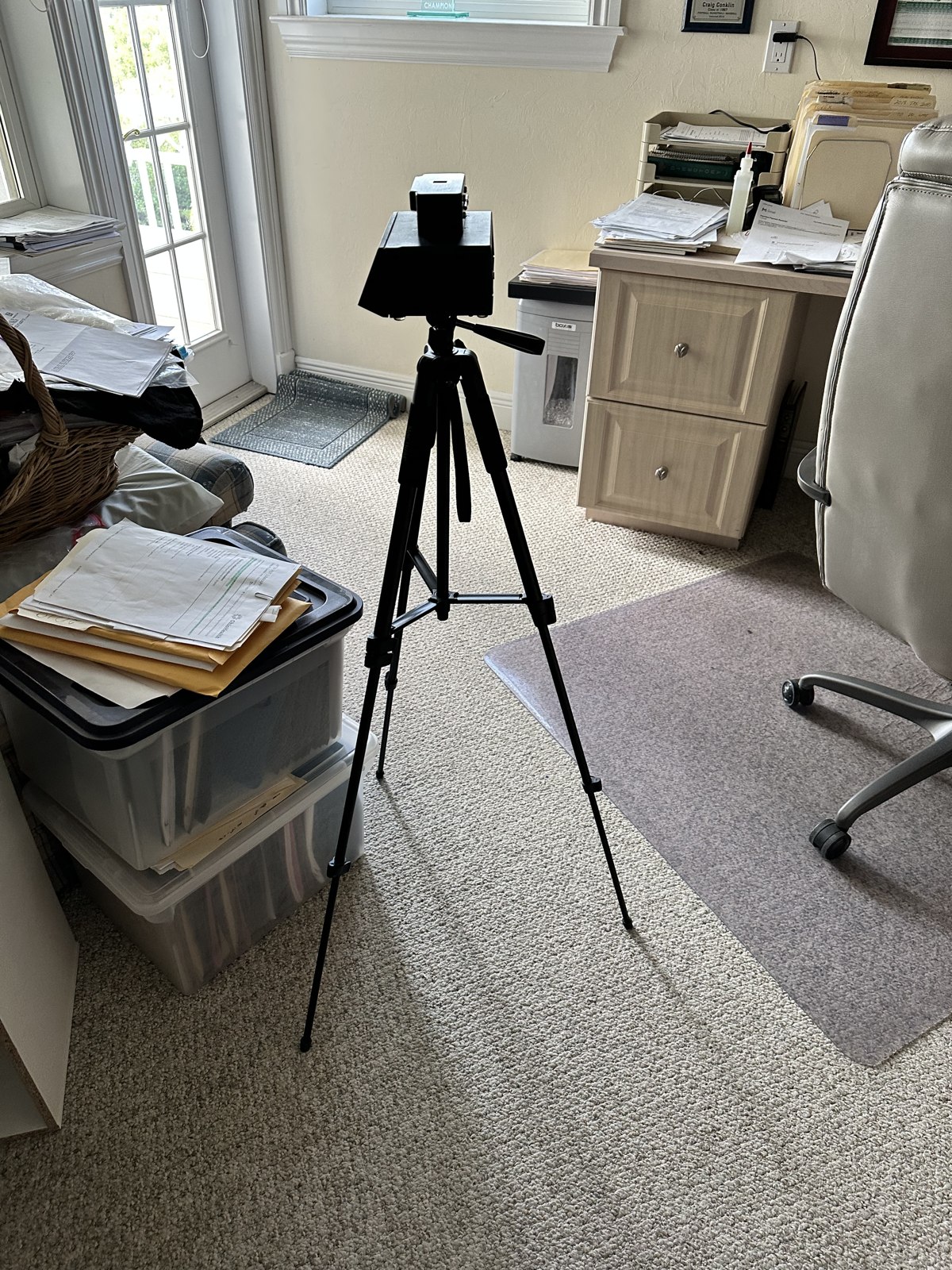
If the inspection shows sampling is warranted, we explain what type (air, surface, cavity, or mycotoxin), where, and why before we take it. Samples are sealed, documented with a chain of custody, and sent to the lab.
4. The lab reports. We explain.
When results come back, we go through them with you line by line: what the lab reported, what the outdoor reference sample showed, and what we found in the home that supports or explains it.
5. A written plan, whether or not it involves us.
You get our findings in writing and a recommended next step. Sometimes that is remediation. Sometimes it is fixing a leak and re-checking. Sometimes it is no work at all. If remediation is recommended, you get the scope in writing before you decide anything — and there is no obligation to have AME do that work.
Testing for Mycotoxins — the Part of the Problem You Cannot See
Visible mold is only part of the story. Some molds produce mycotoxins — toxic compounds that settle into household dust and porous materials and can remain there after the visible growth itself is gone. That is why killing mold is not the same as removing mycotoxins: a wall can look clean and still hold what the growth left behind. When the history of a home points that way, AME can test for mycotoxins as part of the assessment. Samples go to an independent lab; the lab reports the results, and AME explains its findings in plain language. If remediation follows, mycotoxin removal is part of the scope, and post-remediation verification testing is available so the result is documented, not assumed. If the bigger question is whether the home itself is the problem, read is my home making me sick?
Why Fort Myers Families Choose AME for Testing
American Mold Experts SWFL is led by Scott Allen Briggs, President and Owner, and Leigh Ann Briggs, Partner and Owner. Scott is a Florida Licensed Mold Assessor (MRSA) and Florida Licensed Mold Remediator, License MRSR4824. AME has completed 4,500+ jobs, and we call ourselves the Gold Standard in mold removal because of how we handle the whole problem — we contain it, destroy it, and make sure it does not return.
One role per project: AME SWFL holds both Florida licenses — Mold Assessor (MRSA) and Mold Remediator (MRSR4824) — but on any given project we take only one role: we assess and test, or we remediate. The other side is handled by an independent licensee, and remediation is verified by independent clearance testing.
AME also specializes in something most companies do not: contents cleaning. When a home has a mold problem, many companies tell you to throw your belongings away. We work to save them, cleaning contents with our non-toxic plant-based enzymatic treatment, instead of treating your furniture, keepsakes, and household items as disposable.
Every remediation job we do is backed by a warranty in writing.
Clients who have worked with us leave reviews here: AME SWFL on Google — we read every one.
A Note on Humidity in Fort Myers
Testing often starts with a humidity problem. We recommend keeping indoor humidity at 30–50% RH. Above 50% is elevated RH, and 55% is the red line — at that level, in a Fort Myers summer, surfaces in a closed-up home can support mold growth surprisingly fast. This matters especially for snowbird homes and condos that sit closed for weeks: an AC failure or a thermostat set too high while you are away can create a problem before you return. If your home sits empty part of the year, a simple humidity monitor you can check remotely is inexpensive insurance, and we are happy to talk through how to set one up.
Why This Work Is Personal to Scott
AME’s owner, Scott Allen Briggs, does not come to mold testing as an outsider. He has lived through mold toxicity himself, and that experience shapes how this family-owned company works: measure first, sample honestly, and let the lab’s report say what it says. Scott joined AME in 2020 and rose to Lead Remediation Tech within a few months, so the man who owns the company has personally done the work he now oversees. His standing rule for every client conversation is also his signature line: “Common should never be mistaken as safe.”
Frequently Asked Questions — Mold Testing in Fort Myers
How much does mold testing cost in Fort Myers?
It depends on the size of the home and how many samples, if any, are warranted after the inspection. We will tell you the cost before we start, and we will not add samples you do not need just to raise the bill. Call (239) 539-3997 and describe what is going on in your home — we can usually give you a realistic range on that call.
I can see mold already. Do I still need testing?
Sometimes, yes, and sometimes, no. If a small, obvious patch came from a leak you have already fixed, testing may add little. Testing earns its cost when the source is unclear, when the problem may be inside a wall or in the HVAC system, when you are buying or selling the home, when a landlord, insurer, or HOA needs documentation, or when you need to know how far a problem has spread before anyone opens a wall. We will tell you honestly if we think you can skip it.
My Fort Myers home flooded during Hurricane Ian. Should it be tested now?
If the home was dried and repaired by a documented process and you have had no staining, odor, or new leaks since, testing is a peace-of-mind choice rather than an emergency. If you have a musty odor that never fully left, flooring that has started to cup or lift, or walls that were opened and closed quickly during the post-storm rush, testing is a reasonable next step — those are the places incomplete drying shows up later.
Can a home mold test tell me if mold is making me sick?
No. A home test measures what is in the home’s air or on its surfaces; it does not measure your health, and no home test can make that connection. Please take health questions to your doctor. What we can do is find out whether your home has a mold and moisture problem, document it properly, and fix the building problem if one exists.
How long does it take to get results?
The inspection itself usually takes one visit. Lab turnaround depends on the lab and the type of sample; we will give you the expected timeline when samples are taken, and we go through the report with you when it arrives rather than just emailing you a PDF to decode alone.
Do you test rental properties, condos, and homes being bought or sold in Fort Myers?
Yes — single-family homes, condos, townhomes, and rentals across Fort Myers, North Fort Myers, Gateway, and the McGregor and Daniels corridors. For a purchase, testing is best done inside your inspection period, so call as soon as you are under contract and we will do our best to fit the timeline.
What if I find mold or water damage after hours?
For a true emergency — active water intrusion, a burst pipe, flooding — call (239) 539-3997 any time: in Southwest Florida we’re open 24 hours, emergency calls are answered live, and we respond to true emergencies. If water is actively flowing, shut it off at the main valve if you can do so safely, and keep clear of any area where water is near electrical outlets or the panel. Non-emergency calls are welcome any time too — if we miss you, leave a message and we will get back to you.
Is the treatment safe for my air and ducts?
Yes. The enzymatic treatment AME uses is non-toxic and plant-based, made for virtually all materials and surfaces — and it is safe for the air system, including ductwork, coils, and the air handler, which is why contamination inside the HVAC system itself can be treated, not just worked around. It is also safe for homes with people and pets. During the work itself, occupants and pets stay out of the remediation area until AME releases the home.
What does the treatment remove?
The enzymatic treatment works on mold, mycotoxins, spores, VOCs, and bacteria — including gram-negative bacteria — and it is tested and proven. It can be fogged to treat the air itself, applied to surfaces, and used on contents and personal belongings — the things most traditional companies would tell you to throw away. That is the heart of AME’s contents cleaning: fine-particle cleaning with an enzymatic treatment, built for sensitive homes and the people in them.
Doesn’t an air scrubber take care of the mycotoxins?
Not by itself. Air scrubbing and HEPA filtration capture particles from the air while the machines run, and AME uses them — but they do not clean mycotoxins off surfaces, dust, and belongings. Worse, the agitation can strip mycotoxins off the spores and put them back into the air. If fine-particle cleaning with a proven treatment isn’t done, the mycotoxins will most certainly still be left behind. That is why AME’s process pairs containment and HEPA filtration with fine-particle cleaning and enzymatic treatment of surfaces and contents — and then verifies.
Will you check the rest of my home, or just the damaged area?
The whole home. AME looks at a home as a whole rather than as sections of water damage, because the part you can’t see — bacteria, spores, mycotoxins — doesn’t stay in one room. And honestly, the area we were called for is not always the worst one: there may very well be other parts of the home that are worse than the problem we are there for, including areas an insurance claim may not cover. We would rather show you the full picture and let you decide than fix one section and leave a worse one hidden.
Schedule Mold Testing in Fort Myers
If something in your home does not look right, smell right, or dry right, find out what it is before it gets bigger and more expensive. Naples homeowners will find the same process on our mold testing in Naples page.
American Mold Experts SWFL
Call: (239) 539-3997
Web: ameswfl.com
Reviews: Read or leave a Google review
Tell us what's going on
A mold specialist will call you back.
Not sure yet? Try the free AI Mold Risk Check