
Mold Remediation in Fort Myers, FL
A water stain spreading across a ceiling in Whiskey Creek. A musty smell in a Dean Park bungalow that sat closed through the rainy season. A Fort Myers Shores kitchen that took water in 2022 and never quite smelled right again. Mold calls in this city rarely begin with anything dramatic — they begin with a small sign that part of the house is staying wet when it should be dry.
American Mold Experts SWFL (AME) remediates mold in Fort Myers and across Lee County — the historic streets near the river, the ranch neighborhoods along McGregor Boulevard and College Parkway, canal-front homes, and the newer subdivisions out toward Gateway and the Daniels Parkway corridor. The company has completed 4,500+ jobs, and every one of them runs on the same principle: find the water, contain the work, take out what cannot be cleaned, and clean everything that can.
Call AME SWFL: (239) 539-3997
Online: ameswfl.com
A River City, and What the River Did
Fort Myers grew up on the south bank of the Caloosahatchee River, and on September 28, 2022, the river ran backward. Hurricane Ian came ashore near Cayo Costa and pushed Gulf water up the river channel into the city: the federal tide gauge near downtown recorded 7.26 feet above mean higher high water, and the National Hurricane Center’s analysis puts the flooding at 5 to 8 feet above ground level up the river through Fort Myers. Streets in the River District went under. Water stood in first floors from the riverfront out through Iona and Fort Myers Shores.
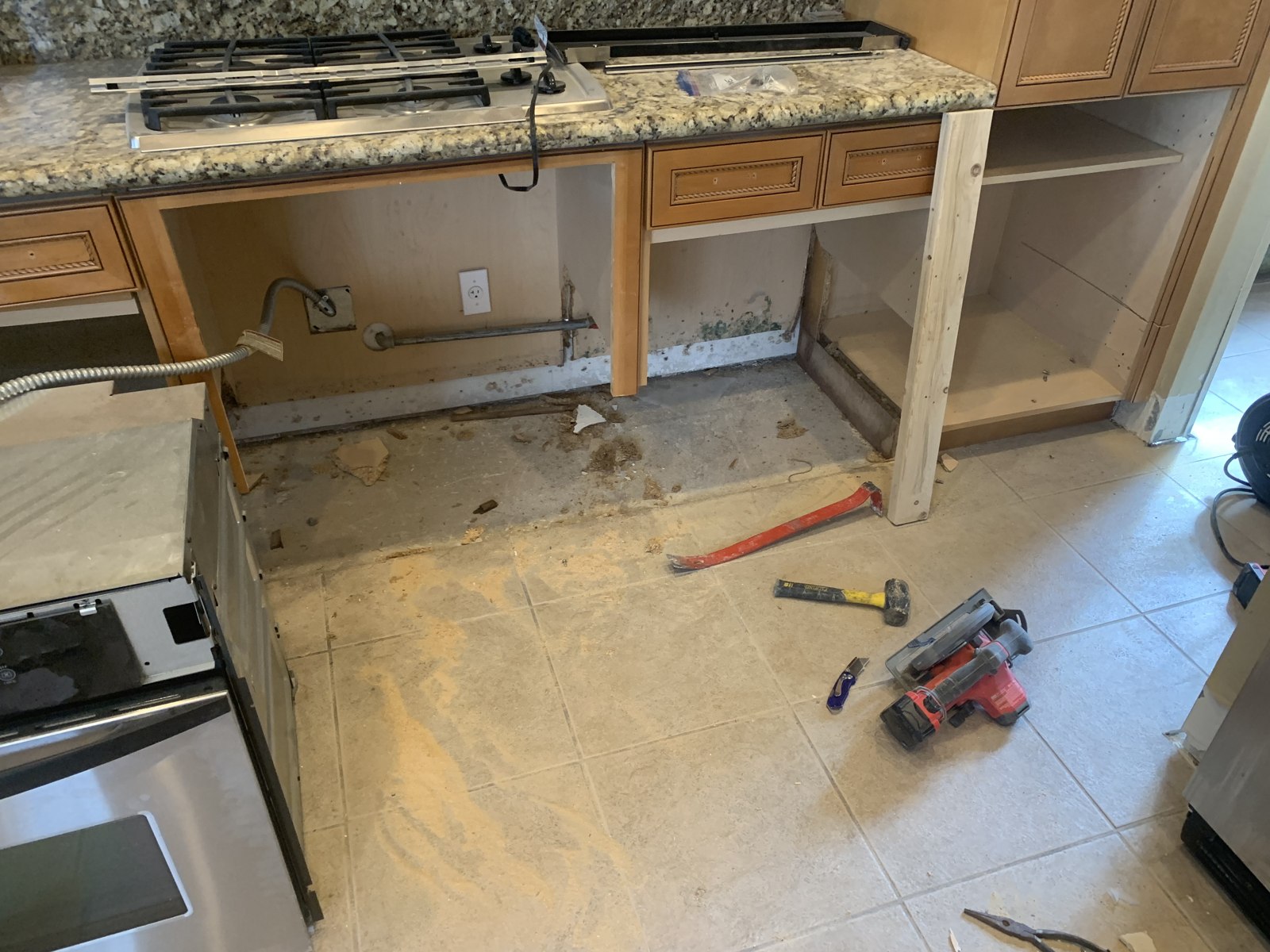
Then came the part that still generates our phone calls. In the weeks after the storm, thousands of Lee County homes were dried in a hurry — fans in, baseboards off, paint up — because everyone needed to live in them again. Wall cavities that never actually dried stayed sealed behind new drywall. Our own crews were working in Lee County that October: tearing out a flooded kitchen in mid-October 2022, and opening a wall days later to find the plumbing behind it damaged and the cavity around it growing. Four years on, we are still finding Ian water — in homes that were “fixed” in 2022 and in homes where a slow stain or a returning odor is the first anyone knew the drying never finished.
Where Mold Hides in Fort Myers, Era by Era
The historic districts. Dean Park, just east of downtown, is on the National Register of Historic Places — roughly 80 homes built between 1916 and the mid-1920s, Craftsman bungalows and revival styles on brick streets. Edison Park, developed from the mid-1920s near the Edison and Ford winter estates, and Seminole Park off McGregor Boulevard hold the same vintage of construction: plaster walls, original wood framing, and plumbing that has been repaired in sections for a century. In these homes the mold problem is usually a slow one — a supply line weeping inside a plaster wall, a shower that has leaked for years, a crawlspace or attic that has never really dried out. The work has to respect the house: our remediation is mostly non-destructive, and material comes out only where it is genuinely compromised.
The ranch decades. The Fort Myers that grew up in the 1960s through the 1980s — Whiskey Creek, Tanglewood, the neighborhoods off Winkler and Cypress Lake — is concrete block, terrazzo or tile, and original bathrooms. The classic failure is the tile shower: the tile and grout can look presentable for decades while water works through the pan and the wall board behind it turns to mush. By the time the baseboard stains or the closet next door smells, the wet area is usually much bigger than the visible one.
Waterfront and canal homes. Houses on the river and the canal grid live with water on three sides and a high water table under the slab. Wind-driven rain in a summer storm, a failed window seal, or surge and street flooding that never entered the living space but soaked the garage and the wall bottoms — waterfront homes give moisture more ways in, and their problems often trace to the lowest two feet of the building.
Everywhere in the city: the air conditioner. In Fort Myers the AC runs most of the year, and it is the most common mold source we find in homes of every age — a clogged condensate line backing up into the air handler, ductwork sweating in a hot attic, a handler closet that has been damp for three summers. When the growth is inside the system, it distributes the problem to every room the system serves.
What Remediation Actually Involves
Real remediation is a sequence of physical jobs, not a spray and a coat of paint:
- Diagnose the water. Every mold problem is a moisture problem first. The source — roof, plumbing, shower, condensate, storm — has to be identified and its repair planned before removal makes sense.
- Isolate the area. The work zone is sealed and held under negative air pressure with HEPA-filtered exhaust, so anything disturbed during the job leaves through a filter instead of drifting into clean rooms or the duct system.
- Remove what cannot be saved. Drywall, insulation, and flooring that mold has colonized come out, bagged inside the containment. Nobody honest “treats and leaves” ruined material.
- Clean what remains — in the right order. Structural surfaces and belongings get fine-particle cleaning: dry HEPA vacuuming first, then the non-toxic plant-based enzymatic treatment applied to surfaces, with fogging carried out during that treatment (and permitted afterward as well).
- Dry it and prove it. The structure is dried to measured target levels, and the finished work is documented and independently verified, so the result is a record, not an opinion.
How an AME Job Runs in Fort Myers
First, a written scope — before anyone swings a hammer. We walk the home, take moisture readings room by room, and reconstruct how the water got in. Where testing would change the plan, samples go to an independent laboratory: the lab reports its results, and AME makes the findings from those results together with what the inspection showed. Mold work has no pass/fail grade, and any company that offers you one is selling something. The scope and the price are put in writing before the job starts.
The leak gets fixed, or the job waits. Remediating ahead of a repair means paying for the same wall twice. If the source is a roof or a pipe, that repair — yours, your roofer’s, or your plumber’s — is scheduled as part of the plan, not left as an afterthought.
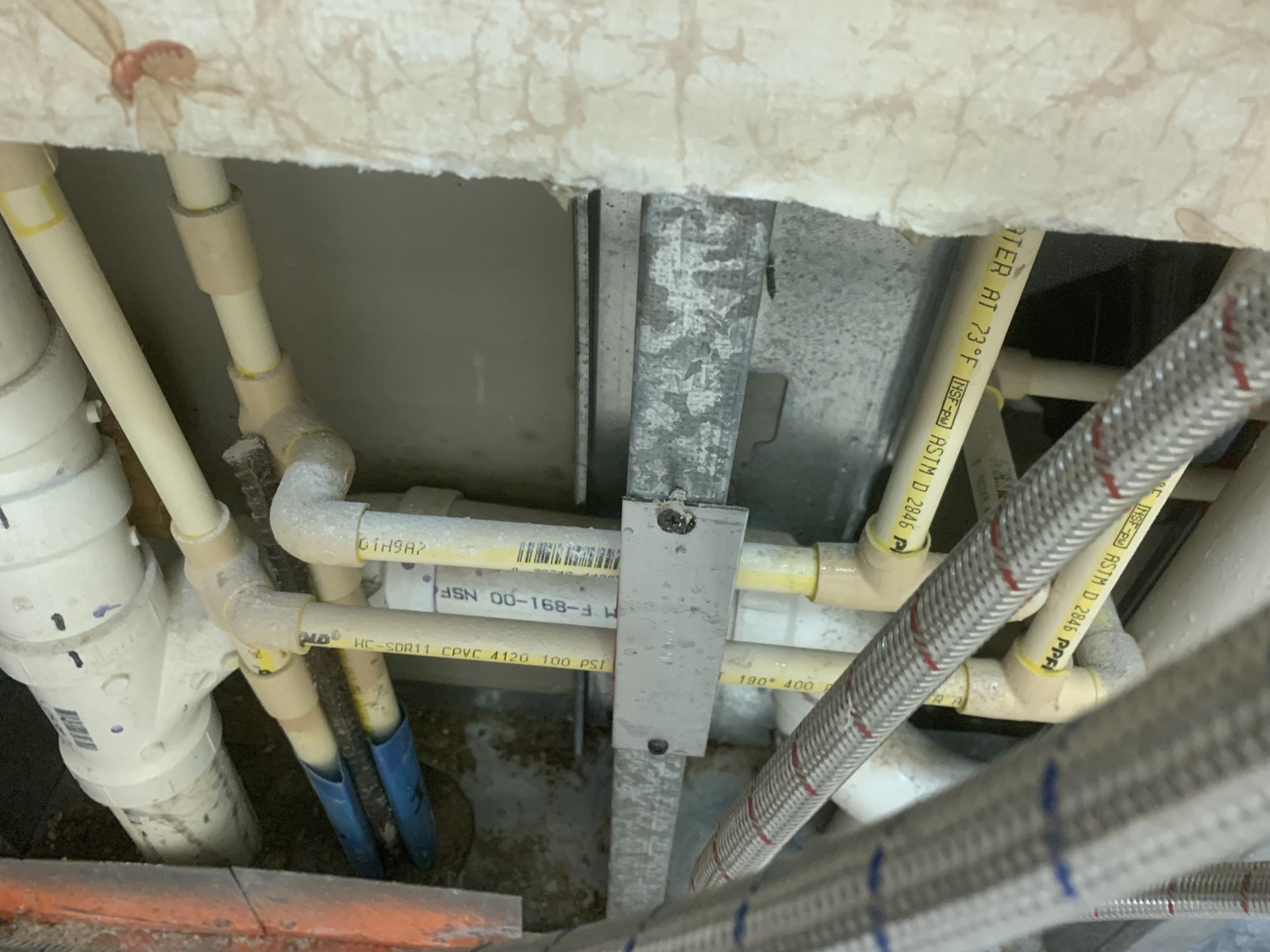
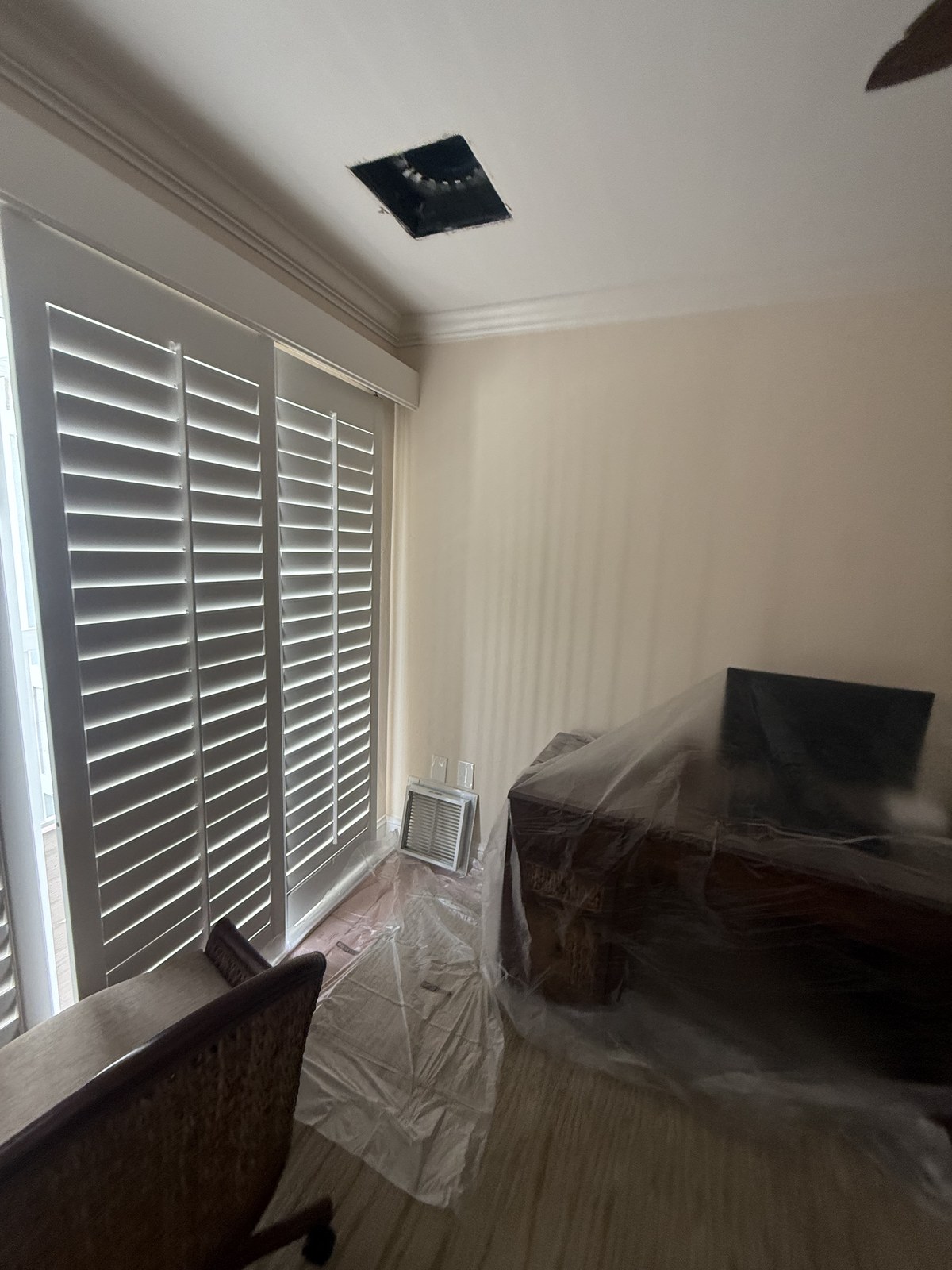
Containment goes up before anything comes down. Plastic barriers seal the work area from the living space, and HEPA-filtered negative air machines keep the pressure pulling inward. In a Dean Park plaster wall or a Whiskey Creek ranch, the goal is the same: the rest of the house stays clean while the dirty part gets opened.
Removal is surgical, not theatrical. Compromised drywall, insulation, baseboards, and flooring are cut out, bagged in the containment, and carried out. Sound material stays. AME’s work is mostly non-destructive by design — tear-out is for material the mold has already ruined, not a default.
Then the cleaning, in the locked order. What stays gets fine-particle cleaning: a dry HEPA vacuum pass first, then the non-toxic plant-based enzymatic treatment applied to surfaces, with fogging done during the treatment; fogging can also follow it. The order matters because settled spores and the residue mold leaves behind have to be lifted off a surface, not pushed around on it.
Your belongings are part of the job, not a write-off. The default in this industry is to declare furniture, clothing, and keepsakes a total loss. AME specializes in contents cleaning — the enzymatic treatment is used on belongings wherever cleaning them is safely possible, and anything that genuinely cannot be saved is identified item by item, with the reason, rather than waved into a dumpster.
Drying, verification, and a warranty with teeth. Once the structure reads dry, verification is arranged on the independent side: because AME performs one role per project in Florida, the assessor who checks remediation work is not the company that performed it. The remediation itself is guaranteed and warranted in writing — a lifetime renewable warranty — and it carries one condition we state plainly up front: sustained indoor relative humidity at 55% or higher voids the warranty on new work. Keep the home between 30–50% RH; above 50% is elevated RH, and 55% is where mold-friendly conditions take over again.
Killed Mold Can Still Leave Mycotoxins Behind
Here is the distinction most remediation quotes skip. Killing the growth is not the same thing as removing what the growth produced. Mycotoxins are toxic compounds that mold leaves in dust and in porous material — drywall paper, insulation, upholstery — and they remain after the colony itself is dead or gone. A room can look clean and still carry what the mold left behind. That is why the AME sequence ends with fine-particle cleaning and enzymatic treatment of surfaces and contents rather than a visual once-over: the job is removing the residue, not just the color. Where mycotoxins are the concern, testing can document conditions before work begins and verify them afterward — samples to an independent lab, the lab reporting results, AME explaining its findings in plain language. If the question you are really asking is whether the house itself is making your household unwell, start with is my home making me sick?
Who You Are Hiring
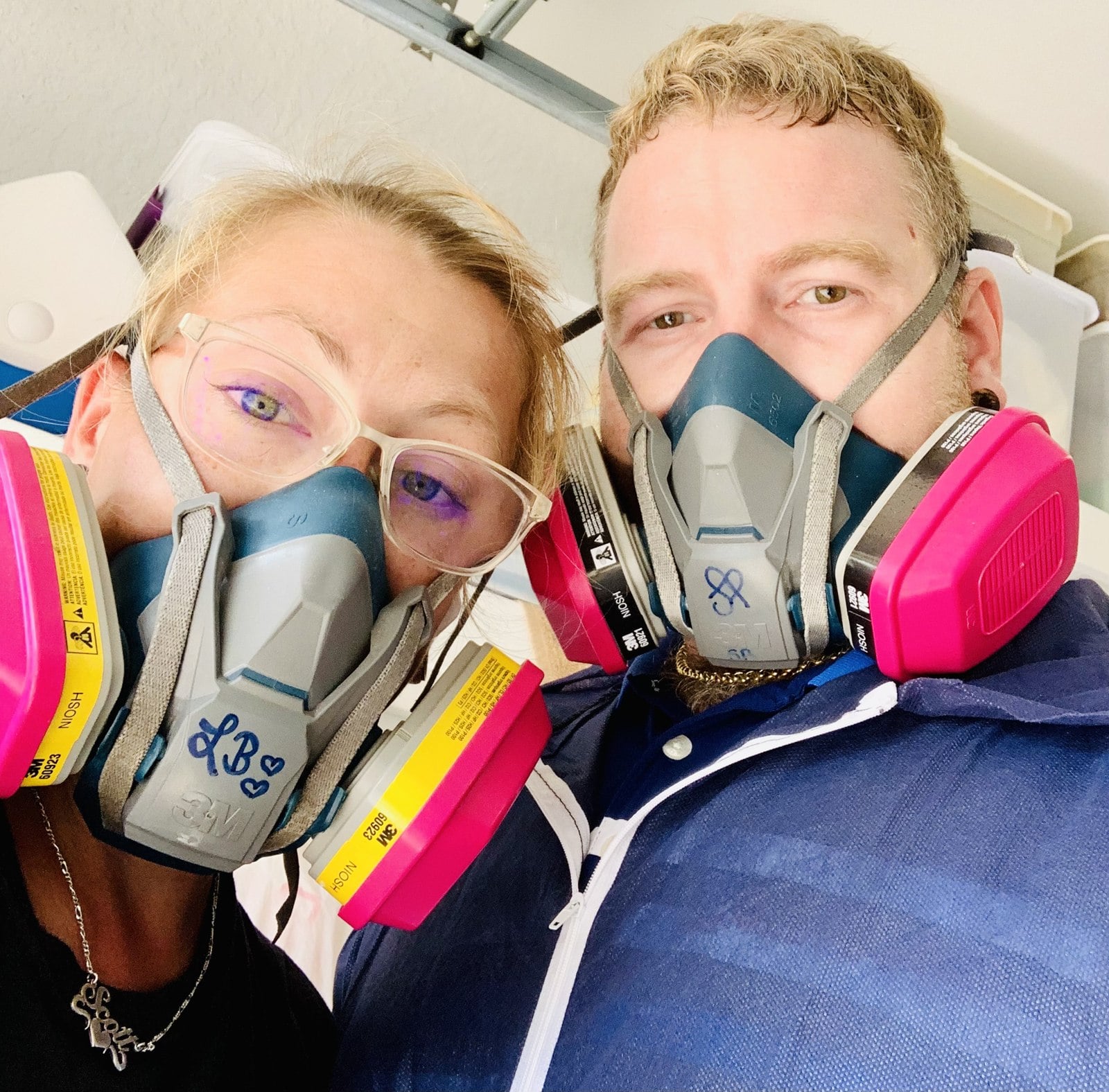
American Mold Experts SWFL is owned and led by Scott Allen Briggs, President and Owner, and Leigh Ann Briggs, Partner and Owner. Scott holds Florida licenses as a Mold Assessor (MRSA) and as a Mold Remediator, License MRSR4824. Florida licenses both roles because the state wants the person who judges a job separated from the person who profits from it — so on any single project AME works in one role only, assessing or remediating, and the other role belongs to an independent licensee. Across 4,500+ jobs, the company has built its name in Southwest Florida — known locally as the Gold Standard in mold removal — on the unglamorous disciplines: measured moisture, sealed containment, saved belongings, and paperwork that holds up.
Read what Fort Myers and Southwest Florida clients have said about working with us: AME SWFL Google reviews.
What Remediation Does Not Do
Straight answers are part of the service, so here is one: remediation fixes a building problem. It removes mold, its residue, and the moisture conditions that fed it, and it documents that work. It is not a medical treatment, and AME will not promise that anyone’s symptoms will change. Health questions belong with your doctor. The building questions — what is growing, where the water is coming from, and what it takes to make the house right — are ours, and you will get them answered with measurements and records you can hand to an insurer, a buyer, or a court if it ever comes to that.
A Note From the Owner
I’m Scott Allen Briggs, president and owner of AME — and I’ve been where you are. I moved to Florida in 2022, the year Hurricane Ian hit, and rebuilt my own condo with new cabinets and flooring. I’ve also lived through mold toxicity myself. That’s why I specialize in contents cleaning: I know what it means to face losing your things, so we work to save them instead of throwing them away. Across 4,500+ jobs, our approach hasn’t changed: we contain it, destroy it, and make sure it does not return.
Frequently Asked Questions — Mold Remediation in Fort Myers
How much does mold remediation cost in Fort Myers?
Price in this city tracks three things: how much material is affected, how old the construction is, and how the water got in. Opening a plaster wall in a 1920s Dean Park bungalow is slower, more careful work than cutting drywall in a Gateway subdivision home, and a contained single-bathroom job is a different universe from a first floor that took river water. What does not change from house to house: you receive a written scope with a line-item price before work begins, and you can set it next to any competing quote and compare the two honestly. To get yours, call (239) 539-3997 and schedule the assessment.
Can I stay in my home during remediation?
In a typical Fort Myers job, yes — the containment and negative air exist so that daily life can continue on the other side of the plastic. The exceptions are honest ones: if the work swallows your only bathroom, your kitchen, or most of the sleeping rooms, or if the air handler itself is part of the job, a few nights elsewhere may be the sensible call. That conversation happens at the scope stage, with the floor plan in front of us — never as a surprise after the barriers go up.
Will the mold come back after remediation?
Mold is a moisture symptom, so the truthful answer is conditional: keep the source repaired and the indoor humidity in the 30–50% RH range, and the remediated area stays clean. Let a new leak run, or let the house sit at elevated RH through a Lee County summer, and growth can start again — which is exactly why our warranty is written the way it is: lifetime renewable coverage on the work, voided on new work if sustained humidity reaches 55%, because no company can warrant a house against water it is still taking in.
Do I have to throw away my furniture and belongings?
Usually far less of it than people fear. Fort Myers homes carry a century of accumulated life — estate furniture in Edison Park, family pieces in the ranch neighborhoods — and contents cleaning is the specialty this company was built around. The enzymatic treatment cleans belongings item by item wherever that can be done safely. Some heavily colonized porous pieces cannot be rescued, and when that is the answer you will hear it about that specific item, with the reason — not as a blanket verdict on everything you own.
My Fort Myers home has had a musty smell since Hurricane Ian but I cannot see any mold. Can you help?
That pattern — odor, no visible growth, four years after the storm — is one of the most common calls we take in Lee County, and it usually means a cavity that never dried in 2022 or a slow leak the storm started. The right first move is an assessment built on moisture readings, not guesswork: meters find the wet material, and sampling can confirm what is growing before a single wall is opened. Shining a flashlight into an attic hatch only shows where to look; it cannot tell you what is in the wall. Readings and lab work can.
Do you work with insurance claims in Fort Myers?
Regularly — a large share of Lee County work traces back to Ian, a roof failure, or a plumbing loss, and insurers ask for the same package every time: a written scope, photographs, moisture readings, and laboratory documentation where sampling was performed. AME produces that package as a standard part of the job. Whether a given loss is covered is the carrier’s decision under your policy, and we will not predict it. What we control is that the record of your home’s condition and our work is complete, dated, and defensible.
What if I find mold or water damage after hours?
Call (239) 539-3997 — in Southwest Florida AME is open 24 hours, and the night line is answered live for genuine emergencies: a burst pipe, an active leak, water coming in. If water is running, shut it down at the main valve if that can be done safely, and stay out of rooms where water has reached outlets, fixtures, or the electrical panel. A stain, an odor, or a suspicion can also be called in any time; if it reaches us after hours and it is not an emergency, leave the details and the call comes back to you.
Is the treatment safe for my air and ducts?
Yes — and in Fort Myers this matters more than in most places, because the air system is so often part of the problem. The treatment is a non-toxic, plant-based enzymatic product approved for use throughout the air system: duct interiors, coils, and the air handler itself, as well as on the surfaces and contents of the home. It is made for occupied houses, including homes with children and pets. The one boundary is during the work itself — while remediation is running, people and pets stay out of the contained area until AME clears the home for re-entry.
What does the treatment remove?
The enzymatic treatment is applied against the full list of what a mold event leaves in a home: the mold itself, the mycotoxins it produced, settled spores, volatile organic compounds, and bacteria, gram-negative bacteria included. It can be fogged through the air volume of a room, worked across surfaces, and used directly on personal belongings — the same belongings a traditional tear-out company would send to the landfill. Paired with fine-particle cleaning, it is the core of how AME handles sensitive homes: remove the contamination, keep the household intact.
Doesn’t an air scrubber take care of the mycotoxins?
An air scrubber is a good tool with a narrow job: while it runs, its HEPA filter pulls particles out of the air passing through it, and AME runs them on every contained job. But mycotoxins sitting in dust, on surfaces, and inside belongings are not in the air column — a scrubber never touches them, and the turbulence of moving air can actually lift mycotoxins off the spores they rode in on and redistribute them. When the machine switches off, whatever was settled is still settled. Scrubbing supports the work; the fine-particle cleaning and enzymatic treatment are the work, and verification afterward is what proves it.
Will you check the rest of my home, or just the damaged area?
The whole home, because Fort Myers houses rarely keep a moisture problem in one room. The bathroom leak is the call; the condensate line sweating in the attic and the Ian-era cavity in the back bedroom are the findings. Spores, bacteria, and mycotoxins travel on air currents and dust, and the area that prompted the call is not always the worst area in the house — sometimes it is not close. We would rather hand you the complete picture, priced and documented, and let you choose the scope than repair the one room you noticed and leave a worse one sealed in a wall.
Schedule a Mold Remediation Assessment in Fort Myers
Moisture problems in this climate do not pause while you decide — a wet wall in June is a bigger tear-out by September. Start with a written scope and measurements you can trust. In Collier County, start with mold remediation in Naples.
American Mold Experts SWFL
Call: (239) 539-3997
Web: ameswfl.com
Reviews: Read or leave a Google review
Tell us what's going on
A mold specialist will call you back.
Not sure yet? Try the free AI Mold Risk Check