
Southwest Florida guide
Mold in a Florida rental: tenants and landlords
Florida's rental law doesn't mention mold by name. Here's what it does say, and how to handle mold fairly.
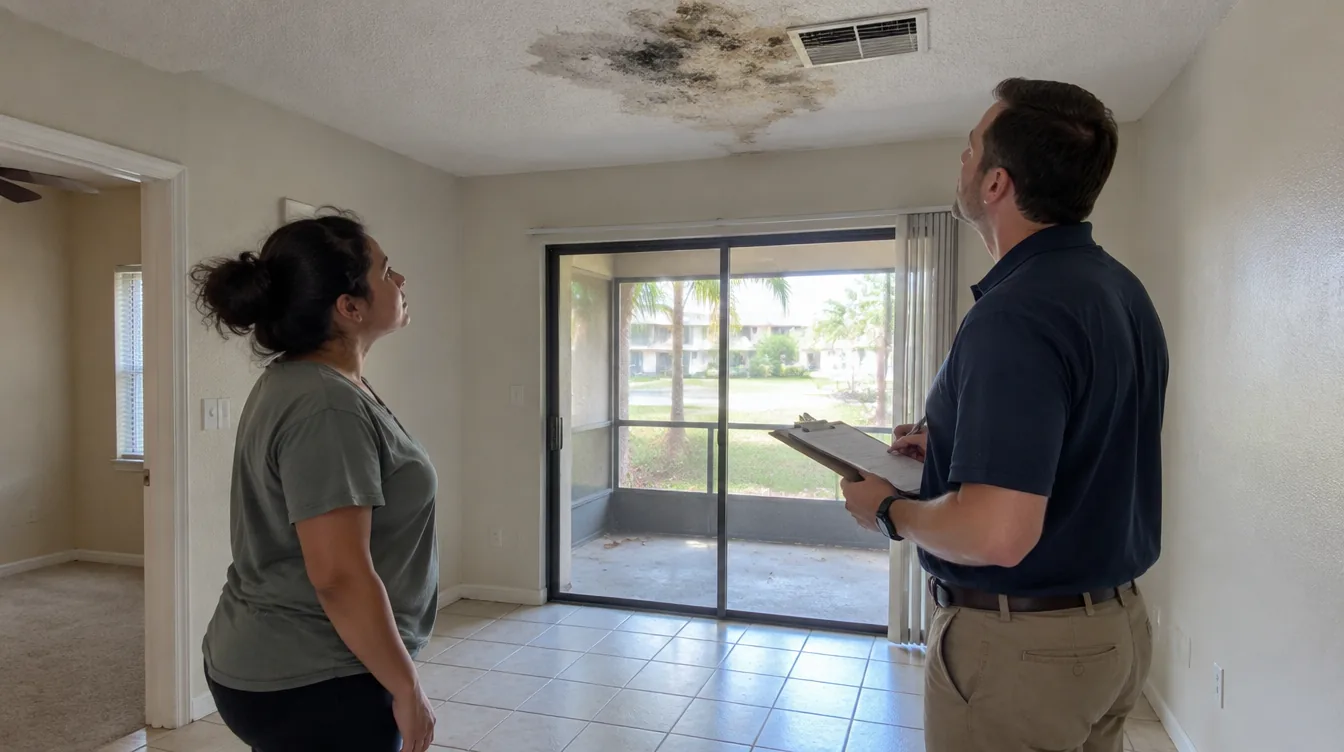
Who is responsible for mold in a rental in Florida?
Mold in a rental in Florida usually comes down to its cause. Florida Statute 83.51 requires landlords to comply with applicable building, housing and health codes, or where there are none, to keep the roof, windows, exterior walls, other structural parts and plumbing in good repair. The statute doesn't mention mold by name. Tenants must keep their unit clean and use the AC and plumbing reasonably, and landlords aren't responsible for conditions the tenant caused.
Why rental mold turns into an argument
In Southwest Florida, mold in a rental can come from a roof leak, a failed AC drain, storm water or simple humidity, and each points to a different party. Tenants often feel ignored. Landlords often feel blamed for how a unit was lived in. Without moisture readings and an independent assessment, both sides are guessing, and guesses make disputes worse.
Sound familiar?
- You reported mold weeks ago and nothing has happened.
- Your landlord says it's your fault for not running the AC.
- The maintenance fix was a coat of paint.
- You own the rental and a tenant says the unit is making them sick.
We do it differently.
| How it often goes | A better way | |
|---|---|---|
| Reporting | A text or a phone call | Written notice with dates and photos |
| Cause | Each side blames the other | Moisture source found and documented |
| Fix | Bleach and paint | Source repaired, growth removed under containment |
| Proof | Looks clean | Independent clearance testing |
| Records | Scattered | One file both sides can see |

Why families trust us with their homes
-
Family-owned since 2008
A multigenerational family business. Not a franchise, not a private-equity rollup.
-
Trained and certified
Our team holds IICRC, CMR, CRMI and CCMI credentials in mold remediation and inspection.
-
Called on as experts
Attorneys bring us into legal cases involving mold and mycotoxins.
-
Documentation at every step
Photos, moisture logs and lab reports you can hand to your insurer or FEMA.
- IICRC Certified Firm
- CMR
- CRMI
- CCMI
- BBB A+ Accredited
- NAMRI
- IAQA
- NORMI
- AMMA
- PMII
The AME Clearance Method
Handling mold in a Florida rental, step by step
Fair to both sides, and useful whichever side you're on.
Talk to a specialist-
Document what you see
Dated photos of the mold, any leaks or stains, the AC closet and humidity readings if you have a hygrometer.
-
Report it in writing
Tenants should notify the landlord or manager in writing and keep a copy. Florida's landlord-tenant law relies on written notice for several tenant remedies.
-
Find the moisture source
Roof, window, plumbing, AC condensate or humidity. The source usually decides who is responsible and what fix will last.
-
Get an independent assessment
A licensed Florida mold assessor, independent of whoever does the removal, can show both parties what is there and write a scope.
-
Remediate and repair
Fix the cause, then remove the growth under containment. Painting over mold doesn't solve it.
-
Confirm with clearance
Clearance testing by the independent assessor gives both sides a clear record that the work passed.
What tenants and landlords should keep on file
- The lease, including any maintenance clauses
- Move-in photos or inspection checklist
- Written mold or leak reports, with dates
- Photos of the mold and any water source
- The landlord's written responses
- Repair and AC service records
- Humidity readings, if taken
- The independent assessor's report
- The remediation scope and invoice
- The clearance report

Proof you can hold in your hands
When we finish, you don't get a handshake and a promise. You get the paperwork your family, your doctor, your insurer or your buyer can rely on.
Inspection report
What we found, where it is coming from, with color photos.
Written remediation plan
Scope, timeline and what will and won't be removed, before work starts.
Clearance lab report
Air, surface and mycotoxin results after the work is done.
A report for your doctor
With your permission, we share results directly with your care team.
Florida rental mold, explained
This guide summarizes parts of Florida’s residential landlord-tenant law as it relates to mold. It is general information, not legal advice, and we’re not lawyers. Leases, local codes and the facts of each case matter. If you’re considering withholding rent, ending a lease or filing an eviction, speak with a Florida attorney or a local legal aid office first.
What s. 83.51 actually says
Florida Statute 83.51, titled “Landlord’s obligation to maintain premises,” does not mention mold. In summary, it says:
- The landlord must comply with the requirements of applicable building, housing and health codes.
- Where there are no applicable codes, the landlord must keep the roofs, windows, doors, floors, steps, porches, exterior walls, foundations and other structural components in good repair, and the plumbing in reasonable working condition.
- For a single-family home or duplex, those obligations can be changed in writing.
- For other rental units, such as apartments, the landlord must also make reasonable provision for things like extermination of certain pests, the clean and safe condition of common areas, garbage removal, and heat, running water and hot water, unless otherwise agreed in writing.
- The landlord isn’t responsible for conditions created by the negligent or wrongful act of the tenant, the tenant’s family or guests.
So the statute doesn’t settle mold directly. What it does is put the landlord in charge of the roof, windows, walls and plumbing, which are exactly the things that let water in when they fail. Whether mold from a particular leak falls under that duty, or under a local housing or health code, is a question for an attorney.
What tenants are responsible for
Section 83.52 sets out the tenant’s side. Tenants must keep their part of the premises clean and sanitary, keep plumbing fixtures clean, and use the electrical, plumbing, heating, ventilating and air-conditioning systems in a reasonable manner. In Southwest Florida that last point matters. A unit left with the AC switched off through a humid summer, or with bathroom fans never used, can grow mold without any leak.
Written notice is the thread that runs through it
Several tenant remedies in Chapter 83 depend on written notice and a waiting period. Under s. 83.56(1), a tenant may terminate a lease if the landlord materially fails to comply with s. 83.51(1) or material lease terms within 7 days after written notice describing the problem and the intent to terminate. Under s. 83.60(1)(b), a tenant can raise a landlord’s material noncompliance as a defense to an eviction for nonpayment only after a similar 7-day written notice, and s. 83.60(2) may require the tenant to pay rent into the court registry. These rules are technical, and getting a step wrong can cost a tenant their home. Get legal advice before acting on them.
Where Southwest Florida rental mold comes from
- AC condensate problems. A clogged drain line or rusted pan in the AC closet can soak the closet floor and wall long before anyone notices.
- Leaks from above. In multi-story buildings, water from another unit or the roof can show up on your ceiling.
- Storm damage. Units repaired quickly after a hurricane may have been closed up before walls were fully dry.
- Humidity. Closets, bathrooms and rooms with closed vents in a unit where the AC is set high or turned off.
For condos, the association may also be involved. Our page on condo and HOA mold in Southwest Florida covers how responsibility is often split under the condominium documents.
An independent answer helps both sides
Florida keeps mold testing and mold removal separate. Under s. 468.8419, a company generally can’t assess and remediate the same structure within 12 months, except certified Division I contractors. On our Southwest Florida projects, an independent licensed mold assessor inspects and samples the unit, writes the scope, and performs clearance testing. We do the remediation to that protocol. For tenants, our national guide on getting a landlord to fix mold has practical tips on communication.
This guide is general information, not legal or medical advice. For your rights and obligations as a tenant or landlord, speak with a Florida attorney or legal aid office. We remove mold and mycotoxins from buildings and don’t diagnose or treat medical conditions.
Common questions
Have a question that isn't here? Call a specialist
Does my landlord have to fix mold in Florida?
Florida Statute 83.51 doesn't use the word mold. It requires landlords to comply with applicable building, housing and health codes, or where none apply, to keep structural parts and plumbing in good repair. Mold caused by a leak or failure in those systems may fall under those duties. Ask a Florida attorney or legal aid office about your situation.
Can I stop paying rent because of mold?
Be very careful. Florida law allows a tenant to raise a landlord's material noncompliance with s. 83.51(1) as a defense only after specific written notice and a 7-day wait, and tenants who raise defenses in an eviction may have to pay rent into the court registry. Talk to an attorney before withholding rent.
Can I break my lease over mold?
Under s. 83.56(1), a tenant may terminate if the landlord materially fails to comply with s. 83.51(1) or material lease terms within 7 days after written notice stating the problem and the intent to terminate. Whether mold qualifies depends on the facts, so get legal advice first.
What if the mold is my fault as a tenant?
Under s. 83.51(4), landlords aren't responsible for conditions caused by the tenant's negligence. Tenants must keep their unit clean and use the AC, ventilation and plumbing reasonably under s. 83.52. Turning the AC off for weeks in summer can be part of that picture.
Is a landlord required to test for mold?
The landlord-tenant statutes don't require mold testing. An independent assessment is still the fairest way to settle what's there and why, and in Florida it's done by a licensed mold assessor separate from the remediation company.
I own a rental. What should I do when a tenant reports mold?
Respond in writing, inspect promptly, find and fix the water source, and use licensed professionals for anything beyond a small area. Keep every record. For questions about your obligations, speak with a Florida landlord-tenant attorney.
We're done when the lab says so.
Every remediation ends with clearance testing, and our work is backed by a complete-removal guarantee. We don't close a job on a failed result.
Talk to a specialistMold in a rental you live in or own?
Tell us what's happening and whether you're the tenant or the owner. A Southwest Florida specialist will call you back.
Not sure yet? Try the free AI Mold Risk Check