
Can doctors test your house for mold?
Short answer
Not usually in person. Doctors don't typically come to your home to collect samples. What they can do is ask for specific home tests, such as an ERMI or HERTSMI-2 dust test or a mycotoxin panel, and tell you what result they'd like to see. An inspector or remediation company then collects the samples, a lab analyzes them, and the reports go back to you and your doctor.
How the pieces fit together
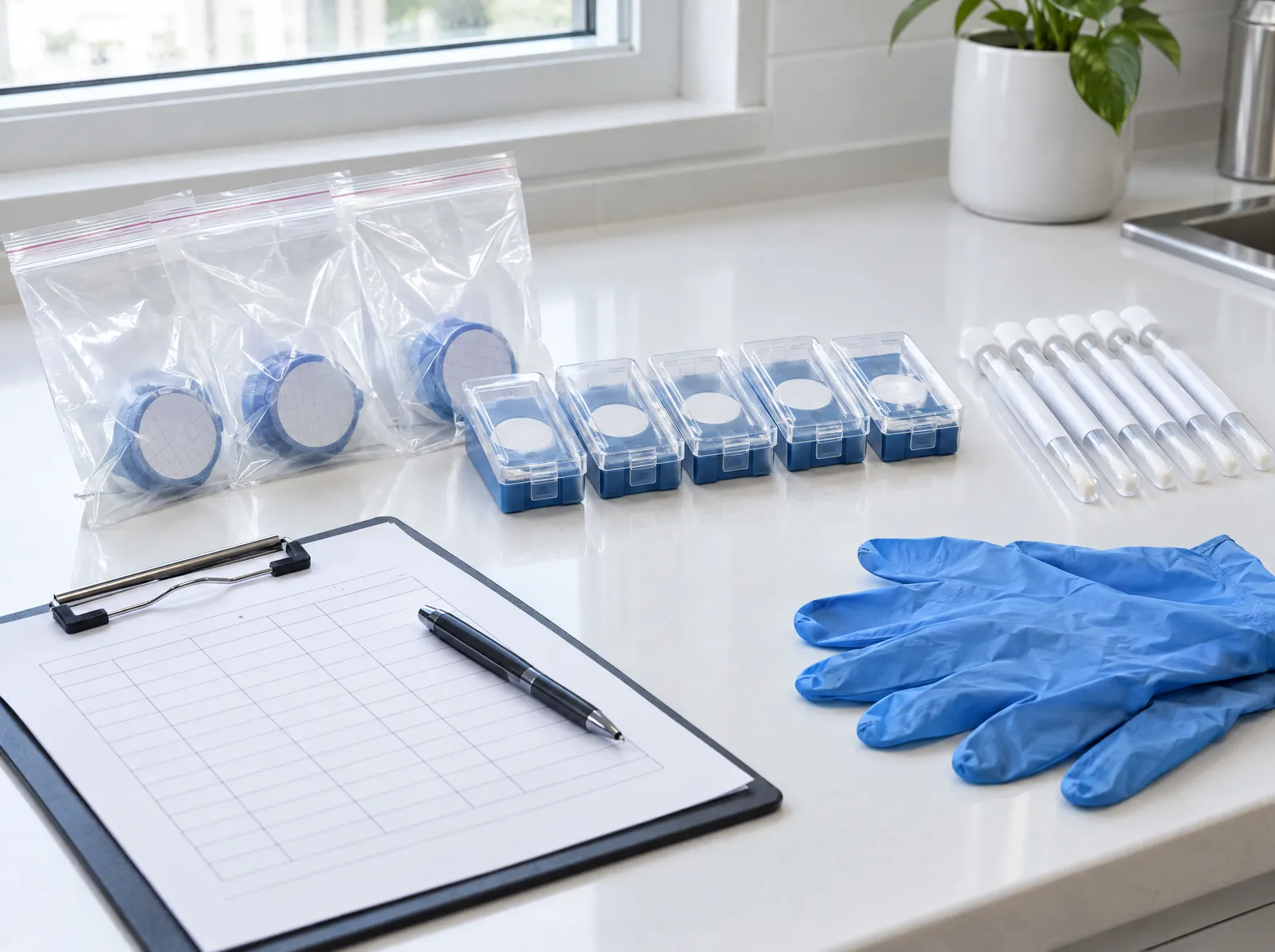
Two separate kinds of testing can be involved when mold comes up, and it helps to keep them apart. Any tests on you, the patient, are your doctor’s area, and we don’t comment on them. Testing the house is a building job. The doctor decides what they’d like to know about the home, and someone who works in buildings collects the samples and sends them to a lab.
| Role | Who usually fills it |
|---|---|
| Deciding which home tests would help | Your doctor |
| Collecting dust, air and surface samples | A mold inspector or remediation company |
| Finding the moisture source | The inspector, through a moisture inspection |
| Analyzing samples | An independent laboratory |
| Explaining what the lab found in the building | The inspector or remediation company |
| Deciding what the results mean for your health | Your doctor |
Tests doctors commonly ask for
- ERMI. A dust test that measures the DNA of 36 mold species. See ERMI testing.
- HERTSMI-2. A shorter score built from a handful of species, often calculated from the same dust sample.
- A mycotoxin panel. A lab test on dust or surfaces for specific toxins produced by mold.
- Air sampling. Less often requested on its own by doctors, but useful alongside the dust tests.
Doctors differ in which of these they prefer, so ask before anything is collected. Our page on mold testing for people with mold illness goes through each one in more depth.
Getting the request right
The most useful thing you can bring to whoever tests your home is the doctor’s request in writing. A short note or a patient portal message is enough if it answers three things: which tests, which rooms if any are especially important, and what result the doctor would consider acceptable later on. With that in hand, the samples are collected to match, and you don’t end up paying for a round of testing that answers a different question.
Some families also like to ask whether the doctor wants the reports sent directly to their office. With your written permission, a remediation company can do that, which keeps you from having to relay numbers you weren’t trained to read.
What to expect on testing day
A home assessment usually starts with questions about the house: past leaks, flooding, roof or plumbing repairs, musty rooms and anything your doctor mentioned. The inspector then walks the house with moisture meters, checks the basement or crawlspace, attic and HVAC system, and collects the samples your doctor asked for from the agreed rooms. Dust samples are often taken from surfaces that haven’t been cleaned recently, so it helps not to deep-clean in the days before. Lab results usually come back in 24 to 48 hours, and you receive the complete reports, not a summary.
Can I collect the samples myself?
Some labs sell dust collection kits directly to homeowners, and some doctors are comfortable with them. Results depend heavily on where and how the sample is taken, and a kit won’t find the moisture source. Our answer on whether home mold test kits are accurate covers the tradeoffs. If a doctor will be setting targets from the result, ask them which approach they prefer.
We remove mold and mycotoxins from buildings. We don’t diagnose or treat medical conditions, don’t interpret medical tests, and nothing on this page is medical advice. Please bring health questions to your doctor. With your permission, we’re glad to share test results and our plan with them.
We're done when the lab says so.
Every remediation ends with clearance testing, and our work is backed by a complete-removal guarantee. We don't close a job on a failed result.
Talk to a specialistBring your doctor's request to us
Send us the tests your doctor asked for. A specialist will call you back to explain how the samples would be collected and what the reports include.
- (833) 772-6653
- info@americanmoldexperts.com
- Open 7 days, 8am to 8pm