
What does mold in a house smell like?
Short answer
Mold in a house usually smells musty and earthy, like damp cardboard, wet socks, old books or a forest floor after rain. The odor comes from gases mold gives off as it grows, called microbial volatile organic compounds, or MVOCs. It's often strongest in closed rooms, basements and closets, when the heating or cooling first turns on, and during humid weather.
Why mold has a smell
As mold grows and digests the material it’s on, it releases a mix of gases known as microbial volatile organic compounds. Some of them, like the compounds behind the smell of a damp forest or a wet basement, are noticeable to most people at very low levels. The exact smell depends on the type of mold, what it’s growing on and how much moisture it has. Mold that is actively growing tends to smell stronger than growth that has dried out, which is why an odor often comes and goes with the weather.
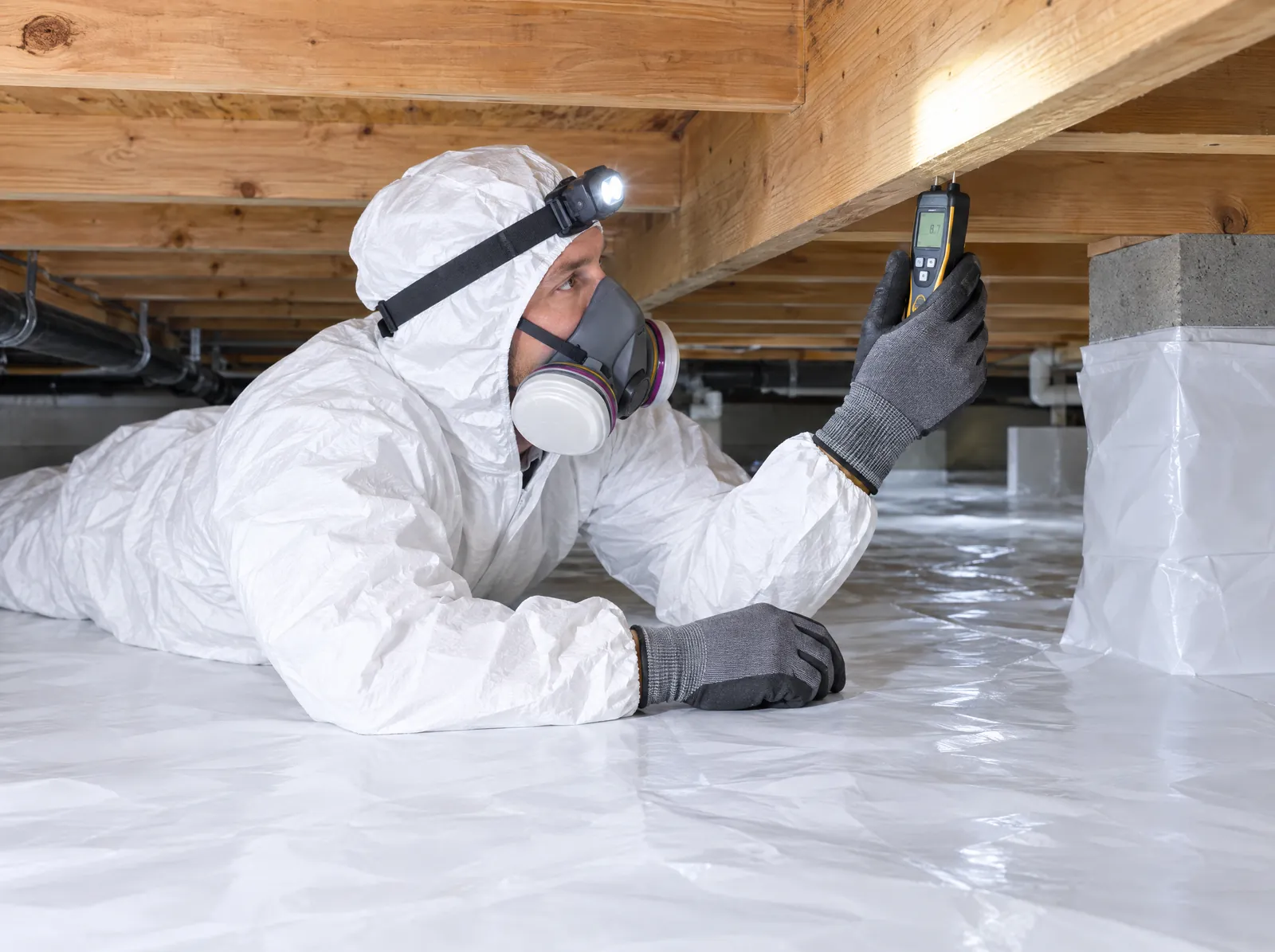
That also means the smell can reach you from places you can’t see. Gases pass through small gaps around outlets, baseboards and trim, and the air moving through a house carries them from a wet wall cavity or crawlspace into living areas.
How people describe it, and where it tends to come from
| What it smells like | Where it’s often found |
|---|---|
| Damp cardboard or old paper | Basements, storage areas, boxes stored against foundation walls |
| Wet socks or sour laundry | Carpet pad after a spill, washing machine gaskets, bathrooms |
| Earthy, like soil after rain | Crawlspaces, basements with dirt or damp floors |
| Stale and heavy, strongest when the air starts | The air handler, drain pan or ductwork |
| Musty only in one closet or corner | An exterior wall with condensation or a leak behind it |
| Musty in a room that’s been shut for a while | Guest rooms and closets with little air movement and high humidity |
Following your nose
Your nose is a real inspection tool. NIOSH has found that tracking a musty odor to its source is often more reliable for finding mold problems than air sampling alone. A few ways to make it work better:
- Check first thing in the morning or when you come home, before your nose gets used to the house.
- Open closets, sink bases and cabinets on exterior walls and smell inside them.
- Notice whether the odor gets stronger when the furnace or air conditioner starts.
- Smell near the floor along walls that back up to bathrooms, kitchens and laundry rooms.
- Compare before and after rain. A smell that spikes in wet weather points to water coming in from outside.
Smells that can be mistaken for mold
Not every musty odor is mold. Bacteria in damp materials, a wet crawlspace floor, stale air in a closed house and old books can all smell similar. Our answer on whether a musty smell always means mold covers how to tell them apart.
What to do when you smell it
Don’t cover it up. Air fresheners, candles and odor sprays mask the one clue you have, and they’re a warning sign in themselves when a home seller uses them heavily. Instead, put a hygrometer in the room; if humidity stays above 60 percent, that alone is worth fixing. Look for staining, peeling paint and warped materials near where the smell is strongest. If the odor stays after you’ve dried and aired out the area, the source may be hidden, and can you have mold without seeing it? explains how it’s confirmed. If anyone in the home feels unwell, mention the smell to a doctor.
We test and remediate buildings. We don’t diagnose or treat medical conditions, and a home test result isn’t a medical diagnosis. If you have symptoms, please work with a doctor. With your permission, we’re glad to share test results with them.
We're done when the lab says so.
Every remediation ends with clearance testing, and our work is backed by a complete-removal guarantee. We don't close a job on a failed result.
Talk to a specialistSmell it but can't find it?
Tell us where the odor is strongest and when you notice it. We'll trace the moisture behind it and test where the evidence points.
- (833) 772-6653
- info@americanmoldexperts.com
- Open 7 days, 8am to 8pm