
Home mycotoxin testing in Southwest Florida
Mycotoxin testing for Southwest Florida homes
Dust testing for the toxins mold leaves in a building. Not a medical test, and independent of the removal.
What is mycotoxin testing for a home?
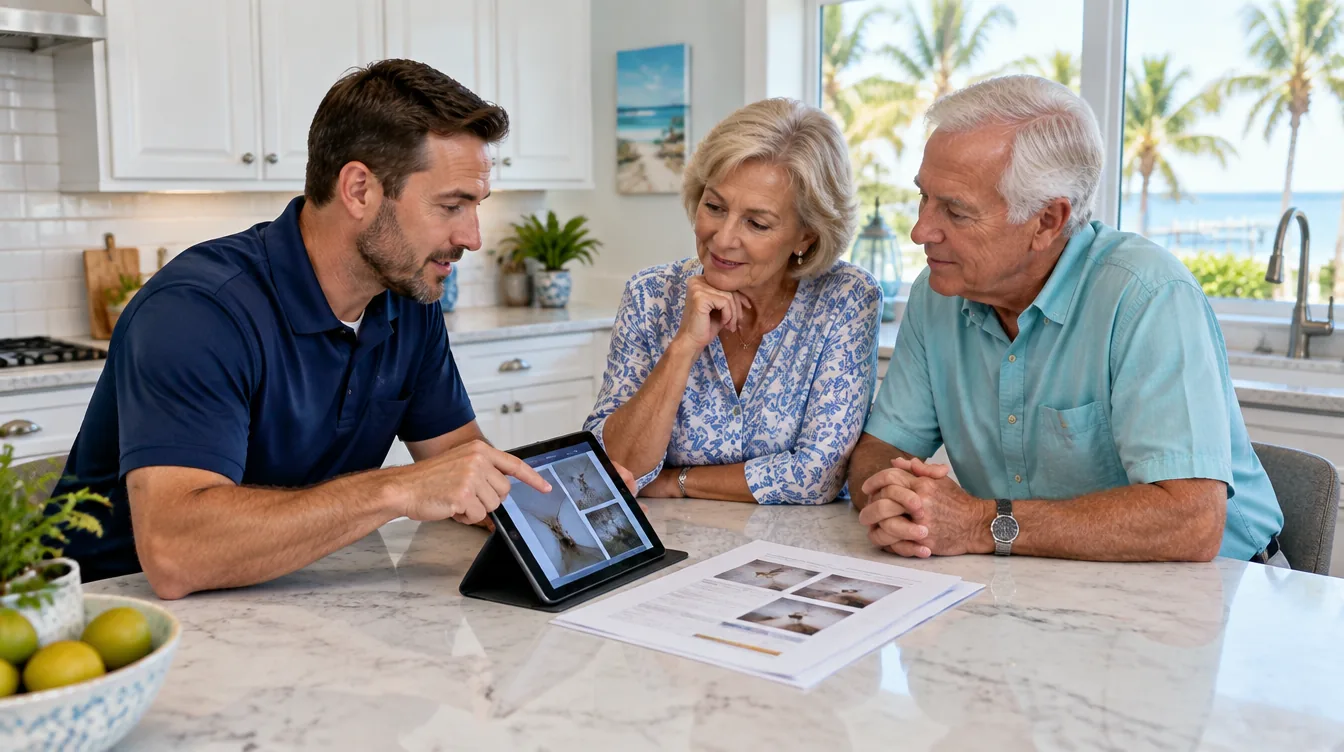
Mycotoxin testing for Southwest Florida homes measures the toxic compounds some molds produce, such as trichothecenes, ochratoxin A, aflatoxins and gliotoxin, in the home's settled dust. It isn't a urine or blood test. Samples are collected from surfaces where dust has built up and analyzed by a lab. On Florida projects, an independent licensed assessor collects them, and the same panel can be repeated at clearance.
Why a mold test alone can miss the problem
Standard mold testing counts spores or identifies mold types. It doesn't measure mycotoxins, and mycotoxins don't go away when mold dies. A home that was sprayed, fogged or partly cleaned can show modest spore counts while its dust still carries toxins from mold that grew for months behind a wall or inside the air handler. For a family whose doctor has asked about the home, that gap matters.
Sound familiar?
- The air test came back normal, but someone still feels worse at home.
- Your doctor asked whether the house has been tested for mycotoxins.
- The home was remediated, and you want proof the toxins are gone too.
- You found a clinic urine test but nothing for the house itself.
We do it differently.
| Mold-only testing | Testing that includes mycotoxins | |
|---|---|---|
| What's measured | Spores or mold types | Mold plus the toxins it produced |
| Sample type | A short air sample | Settled dust that built up over months |
| After fogging or bleach | Can look clean | Shows what's still in the dust |
| Clearance | Spore counts only | Mycotoxin panel repeated after the work |
| Who collects | Often the remover | An independent licensed assessor |

Why families trust us with their homes
-
Family-owned since 2008
A multigenerational family business. Not a franchise, not a private-equity rollup.
-
Trained and certified
Our team holds IICRC, CMR, CRMI and CCMI credentials in mold remediation and inspection.
-
Called on as experts
Attorneys bring us into legal cases involving mold and mycotoxins.
-
Documentation at every step
Photos, moisture logs and lab reports you can hand to your insurer or FEMA.
- IICRC Certified Firm
- CMR
- CRMI
- CCMI
- BBB A+ Accredited
- NAMRI
- IAQA
- NORMI
- AMMA
- PMII
The AME Clearance Method
How home mycotoxin testing works
Where the dust comes from decides what the result can tell you, so sampling is planned before anything is collected.
Talk to a specialist-
Talk through the history
Water damage, storms, past mold work, which rooms feel worst and whether a doctor has asked for specific testing. It all shapes the plan.
-
Plan the sample locations
Dust that has settled undisturbed tells the most: door-frame tops, high shelves, return grilles and furniture in the rooms used most.
-
Independent collection
On Florida projects, an independent licensed assessor collects the samples with sealed kits and fresh gloves at each location.
-
Pair with mold testing
A mycotoxin panel means the most alongside air sampling and dust-based mold tests such as ERMI or HERTSMI-2.
-
Lab analysis
The lab runs a panel for the mycotoxins most often found in water-damaged buildings and reports each one it detects.
-
Plan the removal
We go over the report with you and explain what it means for the remediation scope. With your permission, it goes to your doctor.
-
Retest at clearance
After remediation, the assessor repeats the panel in the same locations, so the before and after results can be compared directly.
What mycotoxin testing should include
- A conversation about the home's water history
- A sampling plan built around the rooms you use most
- Settled-dust samples from undisturbed surfaces
- A dust sample from the AC return or air handler area
- A lab mycotoxin panel
- Air and dust-based mold testing alongside it
- The original lab report, not just a summary
- A plain-English walk-through of what it means for removal
- A repeat panel at clearance, from the same locations
Proof you can hold in your hands
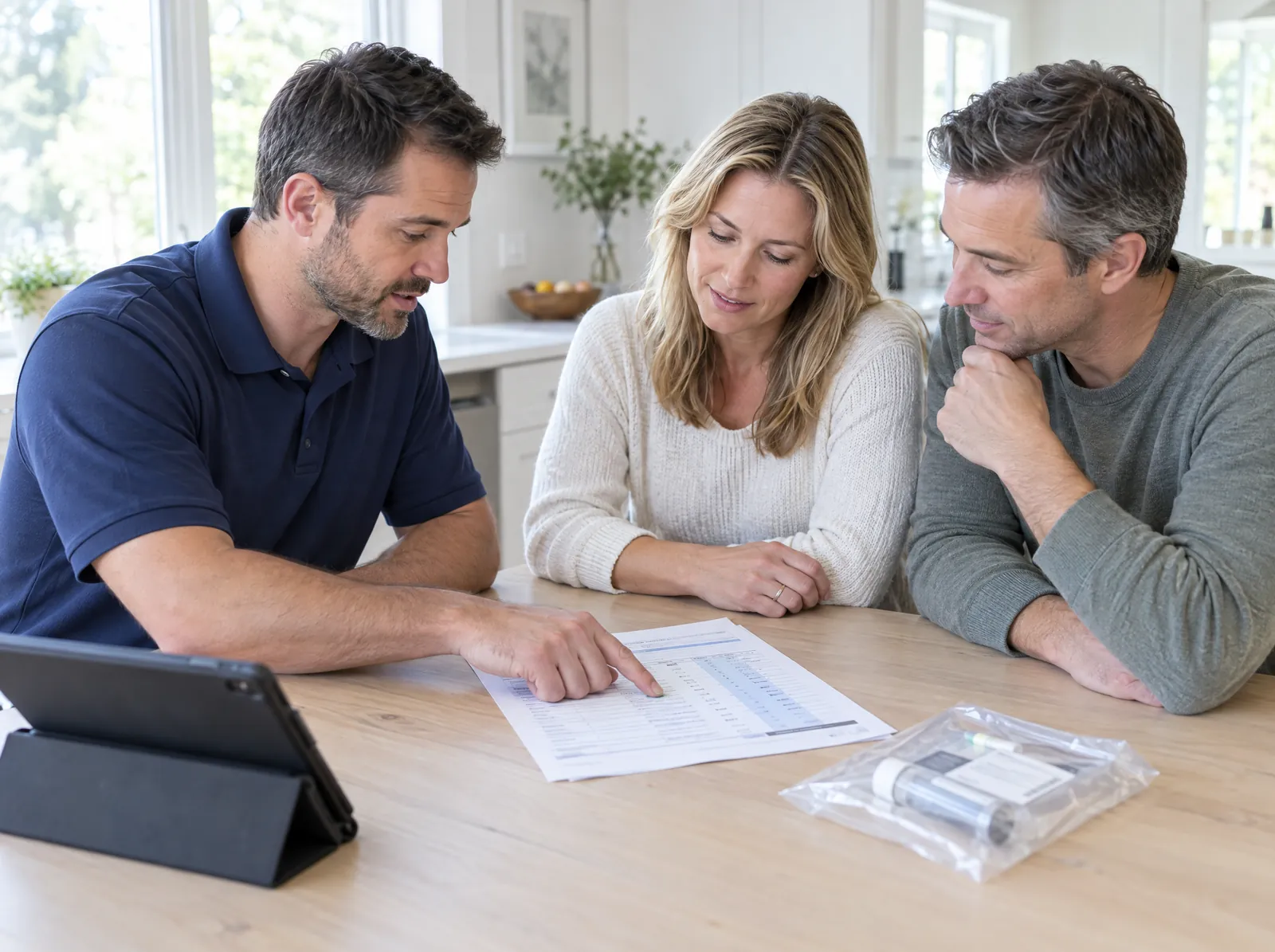
When we finish, you don't get a handshake and a promise. You get the paperwork your family, your doctor, your insurer or your buyer can rely on.
Inspection report
What we found, where it is coming from, with color photos.
Written remediation plan
Scope, timeline and what will and won't be removed, before work starts.
Clearance lab report
Air, surface and mycotoxin results after the work is done.
A report for your doctor
With your permission, we share results directly with your care team.
Mycotoxin testing in Southwest Florida, explained
What mycotoxins are, and why they stay behind
Mycotoxins are chemical compounds some molds produce as they grow. They aren’t living organisms, so they can’t be killed. They attach to spores, to tiny mold fragments and to ordinary household dust, and they stay chemically stable for a long time. When mold dies from bleach, a biocide or simply drying out, its mycotoxins remain in the building.
That’s the reason we care about testing for them. A home can look clean and pass a basic spore count while its carpets, upholstery, ductwork and the tops of door frames still hold toxin-laden dust. Our guide to mycotoxins covers the science in more depth.
Why it matters in Southwest Florida
Three things make mycotoxins a bigger question here than in many places. First, the storms. After Ian, Helene and Milton, a lot of homes stayed wet for days or weeks before anyone could dry them, and mold that grows that long has time to produce toxins. Second, the AC. The air handler runs most of the year, and when mold grows in it, the system spreads contaminated dust into every room. Third, homes that sit closed for months. Mold can grow through a whole summer before anyone notices.
In each case, the visible mold might be cleaned up quickly. The dust it left across the house is the part that gets missed.
Dust panels, air samples and what each tells you
Most home mycotoxin testing uses settled dust, because dust holds a record of what has been in the air over months, while an air sample captures a few minutes. A mycotoxin panel reports which toxins were detected and in what amounts. It works best alongside two other tests:
- Air sampling, which compares indoor and outdoor spore counts and shows whether mold is actively growing inside.
- Dust-based mold DNA tests such as ERMI or HERTSMI-2, which show which molds have built up in the home over time.
Together they answer three questions: is mold growing now, which molds have been there, and what toxins did they leave. Our page on reading mycotoxin test results explains how the numbers are reported.
Testing and removal stay independent in Florida
Florida licenses mold assessors and mold remediators separately. Under Florida Statute 468.8419, an assessor may not remediate a structure it assessed within 12 months, and a remediator may not assess a structure it remediated within 12 months, clearance included. Certified Division I contractors are the exception.
On our Southwest Florida projects, an independent licensed mold assessor inspects and samples the home, including the mycotoxin panel, writes the scope, and performs clearance testing. We do the remediation to that protocol. The company testing your home has no reason to find more than is there, and the company removing it can’t grade its own work. When the work is done, the same panel from the same locations shows whether the toxins are actually gone. See mold inspection and testing in Southwest Florida for how the assessment side works.
When the results show mycotoxins
A positive panel isn’t a reason to panic, and it isn’t a reason to throw out everything you own. It tells you where to focus. The source of the mold has to be found and removed, then the dust has to go: HEPA vacuuming and detailed cleaning of surfaces, the AC system and belongings, followed by enzyme treatment designed to break down what remains. Our mycotoxin remediation page walks through that work.
Working with your doctor
Many families come to mycotoxin testing because a functional or integrative doctor has asked about the home. We don’t interpret medical tests, and home results aren’t a diagnosis. What we can do, with your permission, is send the home’s lab reports and our remediation plan to your doctor, so the decisions about your health and the decisions about your house are made with the same information.
We remove mold and mycotoxins from buildings. We don’t diagnose or treat medical conditions. If you have symptoms, please work with a doctor. With your permission, we’re glad to share test results and our plan with them.
Common questions
Have a question that isn't here? Call a specialist
Is home mycotoxin testing the same as a urine mycotoxin test?
No. A urine test is a clinical test ordered through a doctor, and it looks at the person. Home mycotoxin testing looks at the building, measuring toxins in settled dust. Some families do both, and a doctor may use the home results to help make decisions.
Which mycotoxins are tested for?
Panels usually cover the mycotoxins most often found in water-damaged buildings, including trichothecenes associated with Stachybotrys, ochratoxin A and aflatoxins associated with some Aspergillus and Penicillium species, and gliotoxin. The exact list depends on the lab.
Who collects the samples in Florida?
On our Florida projects, an independent licensed mold assessor collects them. Florida Statute 468.8419 keeps assessment and remediation of the same structure separate, with an exception for certified Division I contractors, and that includes testing done to clear the work.
How much does mycotoxin testing cost?
It depends on how many samples are taken and which panel the lab runs. Mycotoxin panels usually add to the cost of standard mold testing. Ask the assessor for a written quote that lists each sample and panel.
Can I test my home for mycotoxins myself?
Dust-collection kits are sold directly to consumers, and they can give you a first look. Where and how the dust is collected changes the result, though, and on a Florida remediation project the results that count for clearance come from the independent assessor.
Do mycotoxins go away on their own?
Not reliably. Mycotoxins are chemically stable and can stay in dust and on materials long after the mold that made them is dead. Removing them takes physical cleaning, removal of contaminated materials and treatment of what's left.
Is mycotoxin testing part of clearance?
On our mycotoxin projects, yes. Along with visual inspection and mold testing, the assessor repeats the mycotoxin panel after the work, so the job is judged on the toxins as well as the mold.
We're done when the lab says so.
Every remediation ends with clearance testing, and our work is backed by a complete-removal guarantee. We don't close a job on a failed result.
Talk to a specialistWant to know what's in your home's dust?
Tell us about the home and what's prompting the question. A Southwest Florida specialist will call you back and walk you through the options.
Not sure yet? Try the free AI Mold Risk Check